Wednesday, June 10, 2015

Paul's Favorite Films - Number 21


"As far back as I can remember I always wanted to be a gangster."

Quite possibly the best opening line in cinema history. Couple that with the opening scene, as our main characters are driving to upstate New York, when all of a sudden they hear bumping and think that they hit something. When they stop to check it out, there is a bloody body wrapped in towels in the trunk, and it is alive. But not for long, as Joe Pesci repeatedly stabs it with a large kitchen knife and Robert De Niro finishes it off with a few shots to the face.

"To me, being a gangster was better than being President of the United States," as Henry Hill (Ray Liotta) describes to us.

And to me, Martin Scorseses' 1990 gangster classic "Goodfellas" is a sermon on why it is amazing to be a gangster. From the beginning of the film, we are transported to this world where anything and everything is just a phone call away, the law does not apply to you unless you want to get away from your crazy wife, and you are free to kill, destroy, say and do as you please.

It is not because of the ability to hold that power, but the respect and authority that comes with it. The narration by Liotta is overflowing with examples of why he adores the lifestyle and how he could not live life any other way. From a bunch of neighborhood kids carry his mother's groceries all the way home out of respect, to his first taste of authority over the mailman so that his parents didn't learn that he was skipping school to hang out with the mobsters.

goodfellas1_group

The problem that I have with most gangster films is that they feel so removed from reality. That these seem like heartless men who are only interested in themselves and could care less about anything that isn't the mafia. It comes across like they don't like being gangsters.

While this can be the same thing in "Goodfellas," this film does leave one defining characteristic - the basic humanity in its characters. The need for these wise guys to go out and acquire more of everything. Not because they need to, but because they love to do it.

All three main characters - Liotta, De Niro and Pesci - are so gleeful anytime something works out in their favor. When they pull off a heist and return home with a fat stack of cash, distribute it among their friends and family, there is nothing better for them. Except for maybe the actual act of getting the money. It reminds them that they are alive and that they hold this tremendous power. To control lives and being someone in an area of nobodies.

These three love every minute of being gangsters.

jfk25n-3-web

Like with so many other gangster films, they live in their own little world, separate from ours. One that they probably think is above ours, so that they can look down on us and laugh at how we live from paycheck to paycheck, and they can buy ten safe houses in a day and a beautiful woman for each house. In this world, everything is influenced by the mafia and their whims. Their mad, crazy and mostly random whims.

Early on in the film, our cast of characters hang out at a local bar, where the owner asks for Pesci to pay his $3,000 tab. Pesci smashes a glass over his head and pushes him away. Afraid and left with nothing to do, the owner turns to Paulie (Paul Sorvino), the head of the mafia, to purchase protection for the bar. Paulie agrees, so now the bar is protected from rival gangs, cops, etc. But at a hefty fee, and one that seems to increase on a daily basis. Soon enough, the amount becomes too much for the owner to pay and he can't do anything about it.

So Liotta and Pesci burn down the bar.

This is the perfect example of what I'm talking about - Gangsters could not care less about the petty problems of anyone who isn't a wise guy. Gangsters will use them for all they've got, until you either run out of money or open your mouth. And then it's time to cut you lose.

Whether these people know it or not, their lives are at the mercy of these fickle, greedy gangsters, who only have one interest - power.
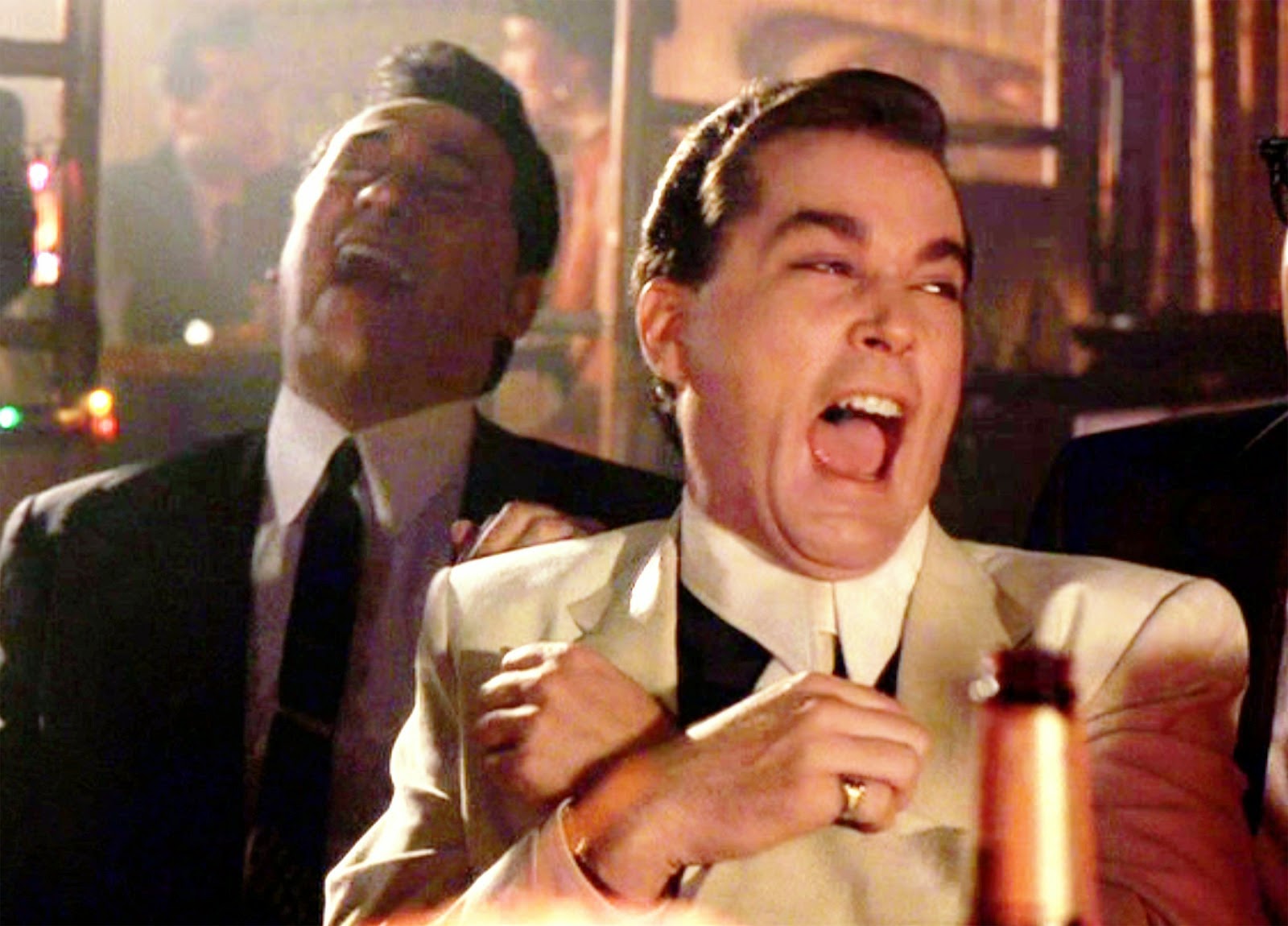
Ray Liotta Laughing In Goodfellas

"Goodfellas" captures this better than any other gangster film. While it does make them seem a bit alien, it certainly does make them more appealing than most gangsters.

On top of that, the visual style of "Goodfellas" is intriguing, as it adds to the atmosphere of power and control that these wise guys exude. In particular, the long tracking shots that this film relies on. Uninterrupted takes where the camera must navigate long corridors and show dozens of character interactions, to show the scope of this world.

One that comes to mind is when Liotta and his girlfriend are on a date at an insanely popular restaurant and performing center, and Liotta nonchalantly works his way through the long line of people attempting to get in, gets in through a back door through several long hallways, into the kitchen while the chefs are hard at work, to the stage where the waiter recognizes Liotta and sets up a table right in front of the stage. All without ever cutting away and capturing every interaction along the way.

Joe Pesci Goodfellas

It is as if the camera is in love with this gangster and does not want to leave his side, because it respects his power and control as well. The entire world just unfolds in front of him and bends to his every desire.

Later on, as Liotta's life begins to fall apart, due to drugs and prison sentences, the camera style turns from stoic and broad, to frantic and claustrophobic. Always looking up at the sky to see if a helicopter is following him, excessively moving to get through his routine of selling drugs while still making time for his family and mistress.

The camera style matches Liotta's perspective of the gangster lifestyle. From the high points and rise to fame and power, to the prison years and paranoia, to the realization that his friends might turn on him. This not only makes the story of "Goodfellas" exciting, but also the cinematography.

Ultimately, "Goodfellas" is a tale of Martin Scorsese's love for gangsters and his need to share their story with us. From the expensive suits and shined shoes, to the joy that these fellas show while stealing, to the expansive and always pleasing narration that goes into elaborate detail about what makes this life so wonderful. Gangsters may be cruel, selfish and greedy people, but I'll be damned if they don't lead fascinating lifestyles.

MV5BMTY2OTE5MzQ3MV5BMl5BanBnXkFtZTgwMTY2NTYxMTE@__V1_

Monday, June 8, 2015

Paul's Favorite Films - Number 22


This pick is a bit more personal than the last three films on this countdown. By that, I mean that I can accurately describe why films like "Seven" and "Mr. Smith Goes To Washington" deserve to be here in full detail and give you guys a good idea of how I feel about that film. Not so much with this one.

Why? Because my feelings on this film can be summarized up in four words - It is kick-ass. But let's try to be more descriptive than that, shall we?

I've never been great at picking a favorite genre of cinema. For a long time, it was giant monster films, then science fiction, followed by film noir, thrillers, over to animated, and recently to a streak of epics. But when I started to gain a deep interest in cinema, one of the films that I first watched was "Once Upon A Time In The West," an insanely long and padded western by the great Italian director Sergio Leone.

Once-Upon-a-Time-in-the-West1

At that point, I became hooked on westerns. The idea of the hero in a place that did not deserve a hero. Where even the good guys had a crooked sense of morality and ethics. The tales of a time long since passed by law, order and society.

Westerns were as artistically pleasing as they were entertaining.

I bring this up because, like most people do with certain genres, when I think of westerns, there is always one movie that sticks out and reminds me how awesome and captivating the old west was - Sergio Leone's 1966 film "The Good, The Bad And The Ugly." To me, that is the quintessential western on how to create eternal characters in a world of everlasting violence and greed.

The strange thing is that "The Good, The Bad And The Ugly" wasn't even shot in America. Most of it was filmed in Spain by an Italian film crew. Yet it never once feels like anything more than an American product.

It is the middle of the Civil War, and it is not looking pretty for either side. But in the middle of all this chaos and waste of life, word gets out about a hidden cash box, buried deep in a cemetary, worth over $200,000. Through pure coincidence and word of mouth, three drastically different people hear about the gold - The hired gun who "always sees his job through," also known as Angel Eyes "The Bad" (Lee Van Cleef), the double-crossing Tuco who is only out for himself and his interests "The Ugly" (Eli Wallach), and the man with no name but never misses a shot "The Good" (Clint Eastwood). Now all three must work their way to the gold, through both sides of the war, as well as anyone who might get in their way.

image3

Everything we need to know about these characters is given to us from the start, and not just because of their names. Tuco is ambushed by three unknown guns, supposedly after the massive bounty on his head, but gets away with a turkey leg in hand and leaves the others to die.

Angel Eyes interrogates a family man for information that he was paid to get, and then murders him, but only after the man gave Angel Eyes even more money to kill the sick old man who wanted that information in the first place. Which he does, gladly.

the_good_the_bad_and_the_ugly_57739-1440x900

The Man With No Name (or "Blondie" as Tuco calls him), brings Tuco into the authorities to collect the reward money, and promptly save him from being hung by shooting the noose, then gives Tuco half of the reward money so that they can do it all over again. But when Blondie thinks that Tuco's bounty has reached its highest point, he cuts Tuco loose. Of course, he can't bring himself to kill Tuco "after all the times he saved him" so he leaves Tuco stranded in the middle of the desert.

But Blondie probably didn't count on Tuco surviving the long walk from that barren wasteland into the nearest town. And now Tuco wants revenge.

"If you are going to miss (the noose), you had better miss well," says Tuco at one point. "Because whoever double-crosses me and leaves me alive, he knows nothing about Tuco. Nothing."

From that point on, we have three characters who are charming in their own unique way, yet so different enough that you want to see more of how they'll interact with each other. Just what does Tuco have in mind for revenge? Can he even catch Blondie? How does Angel Eyes figure into all of this? Have these three had a history together? All of these questions are buzzing in my head and they are all answered.

1118full-the-good,-the-bad-and-the-ugly-screenshot

And all this time, they are in the center of the civil war. We see more of the aftermath of this conflict than the battles, which helps to paint a picture of this world of confusion, hatred and self-interest. This serves as an amazing backdrop to an already classic western story of revenge, treasure-seeking and backstabbing.

One scene that helps to elevate "The Good, The Bad And The Ugly" above most westerns is one that could have cut entirely. Tuco has just escaped and is on the trail of Blondie and Angel Eyes, but he's decided to stop in at a house that has nearly been reduced to rubble to take a bath. But a man who had been wronged by Tuco spots him and follows Tuco inside, where the one-armed man confronts Tuco while he is in the tub and leads to a hilarious moment in the film.

From a certain point of view, this scene didn't need to be in the film. It doesn't add anything to the narrative and goes on for some time, longer than it needed to. But it adds a new level of atmosphere to the film, to remind us of this big world out there and that Tuco has done some pretty terrible things. The film is stopping for a moment to let the audience sit back and appreciate what it has to offer. To let the audience breath and take in the surroundings.

Little moments like that can go a long way.

But upon my most recent viewing of "The Good, The Bad And The Ugly" something occurred to me while I watched many sun-scortched faces stare into the camera as they prepare for a showdown, or how Angel Eyes is half way through a meal before he says anything - This is a story of images and not words. Any words exchanged are very brief and necessary. Everything else is done visually and through the vast Spanish landscape.

There are very few westerns that can say that they let a bridge explain more about a film than a long monologue.

This is best shown through the greatest scene in the film - the final standoff. All three characters have gathered at the cemetery, ready to collect the gold, and none of them are keen on sharing it. Without ever saying a word, an epic showdown is performed through expert editing and a heart-pounding score by Ennio Morricone. As the scene progresses, the camera gets closer and closer to the character's faces and we can see Tuco's face turn from confidence to fear, as well as Angel Eyes thinking about pulling his gun at the right moment.

gbu47

So much is said, without ever saying a word.

To pull off something like that takes a lot of passion and imagination. The same kind of imagination that would set a western gold hunt in the middle of the civil war. The kind of passion that would take the time to develop its main characters so accurately and without saying more than a few sentences. The kind of imagination that would have its climax be shot through close-ups of actors staring into the camera.

In the hands of anyone else, "The Good, The Bad And The Ugly" probably would not work. But Sergio Leone had just the right mix of character development, western homage, creative settings, cinematic technique, passion and an "always go big" attitude to pull off something like this. And in the end, Leone gave us one of the greatest westerns of all time.

good-the-bad-and-the-ugly

Sunday, June 7, 2015

Mini-Review - "The Babadook" (2013)

MV5BMTk0NzMzODc2NF5BMl5BanBnXkFtZTgwOTYzNTM1MzE@__V1_SX640_SY720_

Scares are often at their best when they are fresh, innovative and tend not to repeat. If films try to rely on the same type of horror, then it will inevitably draw comparisons to other work and make you forget about the film you are watching.

The Australian horror film "The Babadook," for example, is a psychological horror film about a single mother who must raise her inventive and socially awkward son, who gets paranoid when they read a bedtime story about a dark monster known as the Babadook. As her son begins to act out more, she gets less and less sleep and becomes irritable with everyone, including her son.

Much of the tension comes from the house playing tricks on this little family, and the mother thinking that this mysterious creƤture might be followed her to get after her son. But nothing is ever confirmed or denied about the existence of the Babadook. For all we know, the mother was making up the monster due to lack of sleep.

Or was the house haunted? It did seem a bit run down and could fall apart at any moment. All of this is left up to interpretation.

However, my problem with "The Babadook," was that it did not offer anything new on this tale of paranoia and ambiguity. Almost everything attempted here was done in films like "The Haunting" or "The Shining," where you are never truly sure if we are dealing with something supernatural or if our cast of characters are slowly going crazy. It would be fine if "The Babadook" had a tense or unforgiving atmosphere, but most of the film felt like the mother dealing with her own problems without ever coming to any realization that wasn't forced.

"The Babadook" is worth watching for how ambiguous it is, but offers little outside of that.

Final Grade: C+

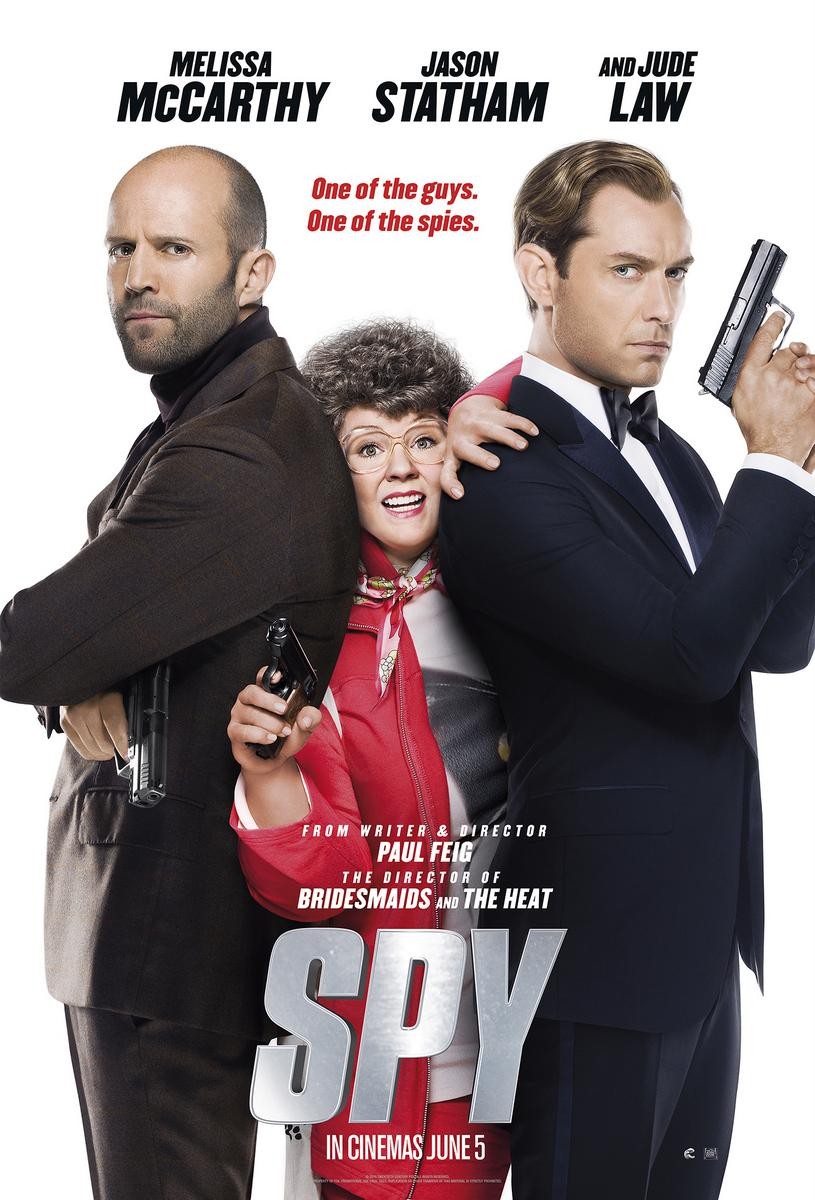
Movie Review - "Spy" (2015) - I Spy, With My Little Eye...

Spy

Melissa McCarthy really has come into her own over these last few years, mostly thanks to the work she has done with director Paul Feig, including "Bridesmaids" and "The Heat." McCarthy's success has been largely dependent on her ability to play fairly similar roles - a hot-headed, loud-mouthed loner that wants to help others, but mostly ends up just hurting herself due to her awkwardness.

Under the direction of Feig, McCarthy has seen a lot of success. But, many have pointed out, myself included, that the comedy of this role from McCarthy has run its course and has become predictable. We saw this happen in films like "Identity Thief" and "Tammy" where she is clearly playing the same role as in "Bridesmaids," but we just are not laughing.

Perhaps the reason for this is because Paul Feig was consistently putting her character in entirely new settings and letting McCarthy run rampant in this new world. Which is why their new collaboration, "Spy" is not only their funniest work together, but stands as Melissa McCarthy's greatest comedic performance to date. Instead of a film about a loner who feels bad about herself yet doesn't like most people, we get a film about a loner who stands up for herself and what she believes in, while also dishing out many verbal onslaughts that supply endless laughs.

Susan Cooper (McCarthy) works for the CIA as an analyst for one of their top spies, Bradley Fine (Jude Law). The two make a great team together, and both admit that they would be nothing without the other. But when one of Fine's missions goes horribly wrong, he is killed and the only person who knows the location of a nuclear bomb goes into hiding. This woman, Rayna Boyanov (Rose Byrne), also knows about every top CIA agent, so now the CIA must send in a fresh face to gather intel. Cooper insists on taking the mission, much to the dismay of fellow agent Rick Ford (Jason Statham).

spy-image-melissa-mccarthy-rose-byrne

As I have mentioned in the past, I do not like to review comedies, since what makes someone laugh could make another person cringe. The success and failure of these films lies in the comedy and whether it made you laugh. That being said, I can honestly say that "Spy" is the funniest film that I have seen in years, as the jokes never stop and almost all of them hit the nail on the head.

From Bradley Fine's ignorance to the fact that Cooper secretly loves him and only thinks that she is in love with her cats (even though she doesn't own one), to Rayna's inability to remember any of her henchmen's names, "Spy" is never short on jokes.

One of the most consistently funny actors in the film is Jason Statham, which really shouldn't come as a surprise to anyone who has seen "Crank." Statham plays a tough as nails spy who thinks that he should be doing Cooper's mission, as she might screw it up at any moment. To prove that he is more qualified, Statham goes into elaborate detail about all the horrific ordeals he had to endure, like having an arm torn off and having to re-attach it with his other arm. This scene goes on for what feels like five minutes, with Statham's intensity always on display. I would not be surprised if he did not blink during that scene.

jason-statham-in-spy-movie-4

But the funniest part in the film is Melissa McCarthy. Part of this because it comes across like she was dumped into this world by accident, and she does not know how to handle any thing other than what she learned in action movies. She has her own ideas for what her code name would be, but is always disappointed to find out that the CIA has already given her a boring name with a depressing back story, to explain why a 40-year old woman would be traveling through Europe by herself.

This gets even better later when McCarthy is finally allowed to use her brand of insult comedy. During these scenes, she holds nothing back and lets her full fury loose on anyone in shouting range. This not only made my crack up, but made me smile as this comedy also fit for McCarthy's character and all the rage she was holding in. Everything was building up inside of her and it was only a matter of time before she could let lose.

home-page-feature-thumbnail-image-front-featured-films-slider-2

Clearly I was not the only one who found the comedy in "Spy" hilarious, as the audience I watched the film with was busting a gut as well.

There are so many varying forms of comedy to enjoy in "Spy" that it is hard not to get behind it. From insult comedy, to intense monologues, to slap stick action sequences, to hilarious uses of editing and perspective, to parodies of the spy and mystery genres. For crying out loud, the main spy is named Bradley Fine, has several chessy catch phrases and takes every opportunity to make sure that his hair looks good.

If I did have one complaint for "Spy," it would be that the plot does get a bit stale near the end. It feels like there were one or two action sequences that got added on just give the film a bit more of a run time. There were a few scenes that could have been cut, even if that did take away some good jokes. In particular, any scene featuring 50-Cent, which felt incredibly tacked on.

Overall, "Spy" is the best work to come out of the Feig/McCarthy duo. This film plays to both of their strengths and gives us consistent laughs from start to finish. Nearly every character has a moment or two to shine, and it is nice to see the comedy flow naturally without ever feeling forced or unnatural. If you liked "Bridesmaids" or "The Heat," then you'll love "Spy." Even if you didn't, I would say this one is still worth checking out.

Final Grade: A-

Saturday, June 6, 2015

Mini-Review - "Dark Passage" (1947)

5be5b6658ff36f3b32c6638d1fe7eb2b

Right off the bat, this film intrigued me. I knew going in that this was a film that starred Humphrey Bogart and Lauren Bacall, which was the Hollywood acting power couple in the 1940s. But now we get something completely different - For the first hour of the film, we don't ever see Bogart's face.

In fact, for the first thirty minutes, "Dark Passage" is entirely from his point of view. Every character stares directly into the camera, talking to Bogart's character. I can see something like this being done in the 1990s or early 2000s, but in 1947? When Bogart is playing a fugitive on the run, as he attempts to find the murder of his wife, having the first third of the film be from his perspective gets us invested in his struggle and makes it feel like we're the ones on the run.

This just might be one of the best cases of interactive cinema.

On top of that, "Dark Passage" takes full advantage of the Bogart/Bacall relationship. It is often unsettling, yet passionate, as Bacalls' character goes out of her way to support Bogart in his efforts. She was sympathetic to his cause, even while it was in the courtroom, and never gave up her fight to make sure that he was given a fair trail. But it did not seem like either of them counted on falling for the other in the process.

"Dark Passage" is a film noir way ahead of its time, and gives us a "who-dun-it" that never feels stale or repetitive. It takes advantage of Bogart constantly being on the run, as some of the best scenes are him evading the police or having other crooks attempt to bring him in to get the reward money. Consistently entertaining and always imaginative.

Final Grade: A-

Friday, June 5, 2015

Paul's Favorite Films - Number 23


Violence is many disgusting yet necessary things. Some will tell you that it is the only thing that can shake people out of apathy and make true change in the world. Others will say that it is self-destructive, petty and hateful. But there is one thing that violence is - ugly.

Violence often takes the worst parts of our humanity and has a nasty habit of sharing it with the rest of the world, reminding us of how terrible humans can be at times. Yet, for a moment, we may need a reminder of our worse traits, to bring out the better aspects and to give us something worth living for.

When it comes to violence in cinema, that stance is shared and given a new meaning. If there is a purpose or reason behind the gross and disturbing imagery in a movie, then it can give that film a unique visual style. Take for example the recent "Mad Max: Fury Road," which features humans being mutilated, disfigured, destroyed by radiation and scavengers. But all to address the point of how savage we can be when our basic necessities, like food, water and proper medical treatment, is taken away from us. That we resort to caveman instincts when society is removed.

To me, that makes any amount of violence in the film not only okay, but also necessary. It is when the movie goes overboard with bloodshed and cruelty that it becomes obscene and not worth pursuing. Finding that proper balance of disorder can be tricky, but when it is pulled off just right, then you have a masterpiece.

One such film is David Fincher's "Seven." An often disturbing and hard to watch thriller, but one that you cannot take your eyes off. Once the motive behind these violent crimes is revealed, and we begin to learn more about this strange and disgusting world, everything starts to make more sense. While this certainly is not a film for everyone, those who enjoy films that creatively use violence will fall in love with this film like I have.

In an unnamed metropolis, where crime and violence is apart of the social norm, Detective William Somerset (Morgan Freeman) is a week away from retirement and intends to get far away from this filthy city. His replacement arrives, a fresh yet very brash Detective David Mills (Brad Pitt), who operates very differently from Somerset and intends to change the city. But their first crime scene together changes that, as they find a strange set-up for a homicide that seems to be more than just a crime of passion. Now Detectives Somerset and Mills must work together to stop a serial killer that has a bigger agenda than just murder.

maxresdefault4

Unlike the last two films on this countdown, which I adored for their lead characters, "Seven" is here because of the world that it creates and how dank, disturbing yet appealing it can be. From the opening scene, where Somerset attempts to fall asleep, but the screams and cries of crimes in the street keep him awake, so he uses a metronome to help relax him, this film has me hooked.

It's not that Somerset is tried of his job and does not want to help people anymore, but that he feels like he cannot make a difference. No matter how hard he tries, no matter how many crimes he stops, that won't stop the violence from coming. He even admits that most of the evidence and clues that he finds are never used in court, if his case even makes it to court.

In his eyes, this town is beyond saving. That it has gone passed the point of a "hero-villain" relationship, and that a hero could do nothing to help it. The villains had won, and Somerset is now realizing that.

Mills, however, wants to play Batman and save Gotham from these superstitious and cowardly criminals, as naĆÆve and chest-pounding of a gesture that is. And this serial killer has become his Joker.


se7en-sloth

Speaking of the serial killer, he just might be the most entertaining and methodical I have ever seen. Part of that is because of the actor playing him, whom I dare not spoil, since that was part of the marketing strategy when the film came out in 1995 - keeping him shrouded in mystery and intrigue. But let's just say that his cold lifeless stare is terrifying, as if he is looking into my soul attempting to find my sins.

Because our sins is how this killer gets at us. He amps up the dire situations of this city, by showing that his victims were not "innocent," and was merely punishing each of them for being an embodiment of one of the seven deadly sins. This guy goes through some of the most elaborate and extensive ways to kill these people, which obviously took at least a year of commitment, resources and patience. He is not doing this for personal gain or vengeance, but to give the world new meaning to these basic sins.

The strange thing is that, when Mills and the majority of the police department learn that these murders are based off of the seven deadly sins, they all act as though they've never heard of them. As if to say that they don't think there is anything wrong with being greedy, prideful and lustful. Which just might explain why this city is as dark as it is - even the protectors have never considered their sins.

3594372_std

All the more reason for this serial killer to remind them.

This pushes "Seven" beyond the regular entertainment of a thriller, and gives it a mythology and symbolism. It fascinates through being disturbing yet necessary.

"Seven" is the darkest film by David Fincher, which is saying something, considering that he would go on to direct "Fight Club," "The Girl With Dragon Tattoo," "Zodiac" and "Gone Girl." But what puts "Seven" on this countdown, and makes it a better film than his others to me, is not that it is his darkest, but because it provides us with a dark reflection of our own world, where we let our basic desires to control and reign get the better of us. Without actually showing much violence - the film knew when to cut away from violent imagery but still give us just a taste of it - we are given a world where darkness overpowers the light, and it is a struggle to fight for what is right.

seven_poster

Wednesday, June 3, 2015

Paul's Favorite Films - Number 24


Films about filmmaking fascinate me. The lengths that a director would go to to create his magnum opus, especially the personal sacrifices and giving up one's character, just for the sake of art. Where does the film we're watching end and the film that is attempting to be made start? Or is it the other way around?

We'll see a few of these types of movies on this countdown, but we begin with the most personal and down to earth one, as well as the only one based off of true events - Tim Burton's 1994 picture "Ed Wood."

To appreciate "Ed Wood," one must also be aware of the cult classic director, Edward D. Wood Jr. From the 1950s through the 1970s, Wood wrote, produced, directed and even starred in dozens of his B-movies, all of which were made on a shoestring budget, shot in just a few days, had poor production quality and even worse acting. Wood is known for many films, several of which would end up on "Mystery Science Theater 3000," but the movie that everyone remembers him for is "Plan 9 From Outer Space," which is often put in the category of the worst films ever made.


Ed Wood is called one of the worst filmmakers of all time, his films ranging from laughably awful to painful and irritating. From the unnatural and stiff acting of everyone in his film, to the low production quality that really makes it look like everything was done as fast as possible. There are very few good things to say about an Ed Wood film.
 
So how is it that a film about Ed Wood's career could be any good? Well, for many reasons, but the key is to make Mr. Wood a delightfully charming and optimistic persona and show the absolute joy he gets out of making a film.

The film chronicles Edward D. Wood Jr. (Johnny Depp) as he attempts to make it big in Hollywood. We watch as he makes three of his most infamous films, "Glen Or Glenda," "Bride Of The Monster," and "Plan 9 From Outer Space," and all the trials and tribulations he must endure along the way. He also takes this time to befriend an aging and drug-addicted Bela Lugosi (Martin Landau), who ends up starring in these films.

ed-wood-1

Johnny Depp as Ed Wood is a delight to watch, as he embodies both passion and optimism. His passion is making movies in his own way. Always trying to bring in the ideas and movies that he wants to see, like a man realizing that he is a woman on the inside or grave robbers from outer space. So what if the sets and costumes get messed up along the way? Who cares about a little thing like that? It is not apart of the big picture, so there is no need to focus on that. As long as the audience can grasp the story and relate to heart pounding drama, that is all that matters.

Even during the filming of these movies, the camera will focus on Ed to show him mouthing the lines of dialogue. Just to show how he is utterly in love with his own creation. He'd probably want to star as every major character if he could, but that wouldn't look good on camera.

But the crowning moment comes early in the film when Ed goes to his usual hook-up for copious amounts of stock footage, and he gets his hands on a new reel with random assortments of footage, including buffalos stampeding, explosions, a large octopus and the military preparing for combat. On the spot, he comes up with an elaborate plot for a film that could combine these random images into one film.

There is no doubt about it - Ed Wood loves to make movies. It's just that all of them are terrible.

Which brings me to his other great trait - his eternal optimism. We see this early on, as he reads reviews of his recent theatre performance, which is of course a negative one, but Ed only reads off the good things it had to say, in particular the costumes.

vlcsnap2012092818h49m22

When he faces difficulties in the filmmaking process, like forgetting the motor to work a giant octopus' tentacles, he just has Bela Lugosi flail the arms around. All while having the biggest smile on his face, as if he has just recorded the greatest piece of film that the world has ever seen.

"That shot was perfect," says Ed at one point during filming and asked if they should do a second take. "What would be the point shooting it again?"

I don't think Ed ever had anything negative to say during the film, always choosing to stay positive and understand that he is bringing his visions to life and gets to share them with the rest of the world. How could he not be positive about that?

But, once again, this brings up the point that his "visions" sucked. Not in his eyes. Ed, like so many artists, knew going in that there was always a chance that his work could fail. But that doesn't stop him from pursuing what he loves. Ed Wood is not in the film business for the money or the fame, he does it because he simply loves making movies. Even if it turns out nobody enjoyed it, that was not the reason he did it to begin with.

hqdefault3

Ed Wood does not necessarily live in his own little world, like Jordan Belfort from "The Wolf Of Wall Street," he just lives to reach his own goals and does what he loves, no matter what other people think of him. Because filmmaking is his life and his love. He loved every second that he was on set and was never mean or cynical about it. Even if obstacles got in his way, Ed would shrug them off and find another way to finish his film. That was show business and he had to make the best of it.

That type of character and emotion is such a delight to watch that it makes "Ed Wood" contagious and makes me want to be an artist in my own way.

"Ed Wood" serves as a reminder to all artist that you have to enjoy what you do and not pursue art for all the wrong reasons. That you will face tough challenges and there is a good chance that others will not like your work, but you have to do it for yourself. Because you're in love with art and want to make your visions a reality.

With great performances by Johnny Depp and Martin Landau as an incredibly convincing Bela Lugosi, the actor who played the original Dracula, consistently funny, and the film still manages to poke fun at the ridiculous nature of Ed Wood's cheap and insanely fast work. "Ed Wood" serves as a love letter to 1950s filmmaking, and to the king of bad movies.

MV5BMjAzODM1MDMxN15BMl5BanBnXkFtZTgwOTgwNTc2MDE@__V1_SX640_SY720_