If some films age like wine, while others age like wet bread, then William A. Wellman's "Wings" is just about the finest vintage a movie can get. Released in 1927, "Wings" was the first film to ever win the Academy Award for Best Picture (technically, it wasn't called the "Best Picture" Oscar yet, and they had a similar award that same year that went to "Sunrise: A Tale of Two Lovers, but this film still won the award) and I feel in many ways it is just as historically significant as other films from that era like "The Birth of a Nation" and "The Jazz Singer," except with far less insulting racism. Watching this film over 90 years after its release, I can say this film not only holds up, but is just as engrossing as many action films made today.
"Wings" tells the tale of two young men, Jack (Charles "Buddy" Rogers) and David (Richard Arlen), from a small American town who immediately enlist in World War I when they get the chance to fight for their country. Both are assigned to the air force, where they learn to become pilots and very quickly become two of the best pilots fighting for their side. Meanwhile, Mary (Clara Bow) is madly in love with Jack, who barely even gives her the time of day, and eventually decides to join to the war in her own way, by being an ambulance driver.
"Wings" was the only silent film to win Best Picture (until "The Artist" bucked that trend in 2011), but the film still has a very effective use of sound, as well as color. The only noises we hear throughout the film are the sounds of engines, mostly those of a biplane, and the sound of gun fire. It works in the opposite way of the comedic sound effects of a late Charlie Chaplin film - it draws your attention, making the spectacle of war feel far more real than it ever felt before. While the film uses lots of colored tints and lenses, the color that sticks out is the burning yellow flames of a crashing biplane, making that carnage stand out even more.
But what's truly impressive about "Wings" is its camera work and how it perfected filming airplanes in motion. We might take shots of multiple airplanes flying in formation for granted these days, but in 1927 when cameras weighed hundreds of pounds and were mostly never in motion during a shot, that makes the cinematography of this film even more impressive. There were no miniatures or fake explosions in this film - if a plane rams into the ground with the pilot still inside, that really happened.
Multiple aerial dog fights are shown throughout this film, all with beautifully crisp camera movement, always using the vast emptiness of the sky to its advantage. On top of that, there are loads of shots within the cockpit of Jack and David's planes, which Charles Rogers and Richard Arlen had to film themselves, since the camera was so heavy they couldn't carry another person. So while they were flying the plane and acting at the same time, they also had to be the camera men too.
"Wings" is the most impressive and awe-inspiring movie of its time, mastering techniques in the 1920s that are still dangerous today. Everything about this film feels authentic, helped by William A. Wellman's superb direction and experience in aviation. It has the utmost respect for those who served and the hardships they went through, no matter what they did during the war. I strongly recommend this, not just to film or aviation buffs, but to those who want to see an example of how you don't need talking or much of a story to have a wonderful movie.
Imagine if "The Four Horseman of the Apocalypse" combined with the creepy factor of "Seven Brides for Seven Brothers" and you'd probably be left with something like these two films "The Sheik" and "Son of the Sheik." Both of these films propelled its star Rudolph Valentino into the realm of living legends at the time, having previously been known for the tango scene in "Four Horseman." But what Valentino had was a very strange aura of sex appeal - he wasn't macho or damaged, but he was brave and vibrant, almost brooding, like James Dean.
Both of these films follow Valentino's titular Sheik, an Arab leader that roams the deserts of North Africa along with his faithful soldiers, taking what they want along the way. In the first film, the Sheik kidnaps a young, independent woman from London and attempts to woo her so that he may win her heart. The second film follows the Sheik's son (also played by Valentino, who also reprises his role as the Sheik), as he attempts to do basically the same thing his father did, only this time he tries to win the heart of a woman that wronged him.
In other words, like "Seven Brides for Seven Brothers," these films' version of romance is to have men kidnap women that they find attractive, hold them against their will, and just wait until they ultimately fall in love with their captors. Because Stockholm Syndrome is the greatest form of love!
Ultimately, I couldn't get into either of these films, mostly because of how these romances are formed on such terrible barbaric acts, yet they try to play it off like the Sheik was acting purely out of love and that he was doing the right thing, when he most certainly was not. Valentino's performances only make this even creepier when he has this face that looks like he's one bad day away from becoming the Joker.
I would say that "The Sheik" is slightly better than "Son of the Sheik," if only because of how the title cards make the desert feel far more alive than it should, with very detailed descriptions to give this pile of sand its own character. It also uses tints of different color to effectively describe the mood and tone of a scene, while "Son of the Sheik" is entirely black-and-white. While that film has double the Valentino and some better comedy, all charm and charisma he had at that point was thrown out the window when he fell in love with the woman that ruined his life for good reason.
I'm not sure if I would recommend these films to anyone outside of film buffs who want to see how Rudolph Valentino became a big star in the 1920s. They're not bad movies, but they are uninteresting and dull movies. While the Stockholm Syndrome romances made these ones feel icky, they just feel like uninspired action set pieces of the silent era.
Born to a half-French, half-German family, Julio (Rudolph Valentino), the son of an Argentinian cattle baron, is forced to reconsider his decadent and uncommitted way of life with the advent of World War I. "The Four Horseman of the Apocalypse" is a continent-spanning epic that drew in a worldwide audience and was one of the first films to try its hand at the anti-war genre, as well as the anti-German sentiment at the time of its release.
The film established Rudolph Valentino has a bonafide star, giving him the nickname of the "Latin Lover," after his famous tango sequence early on in the film, making Valentino has well known in the Hollywood as other action stars such as Douglas Fairbanks.
"The Four Horseman of the Apocalypse" has a vast ranges of sets and locations, including the high-society Paris and the South American pampas, even a full scale World War I battlefield of a French village being attacked by German soldiers. The visuals truly do compete with anything that D.W. Griffith had created up to that point with "Birth of a Nation" and "Intolerance" helped even further with a booming live soundtrack and orchestra.
With all that being said, "The Four Horseman of the Apocalypse" moves at a snail's pace its interesting scenes are few and far between. While the visuals and color filters are impressive for the early 1920s, the story has not aged as well as one would imagine, but gets better when viewed through the time capsule of World War I. Not a great movie, but one worth checking out just for the history and attempt to make an epic that spans multiple continents in the 1920s.
A long time ago I said that unfunny comedies were the hardest films to review, since there was little to say outside of how the jokes didn't work. That was before I realized that documentaries could be reviewed as well.
I find films fun and harmless to review and talk about, because they are recreations of life, but not perfect replicas of reality. Most of the time, movies are imaginative attempts to make the impossible seem like they could happen and not meant to be taken too seriously. But documentaries are the exact opposite of this philosophy - it takes the possible and makes it seem like it could never happen.
There is little to say about a documentary outside of "Yup, that sure happened," without repeating exactly what the movie already said. But then a review becomes a written transcript of the film.
So bare with me while I take a look at the first documentary, "Nanook of the North."
Released in 1920 by Robert J. Flaherty, a man who fully admitted he had no filmmaking experience prior to making this film, "Nanook" follows a family of Eskimos as they do their best to survive the harsh arctic climate and make a living of the little food and supplies they have. Flaherty had been making this film for years and took several trips up through the northern most parts of Canada, after spending a lifetime fascinated by the lives Eskimos lead.
Since this is the first feature-length documentary, the rules of filmmaking had not been established yet. Since documentaries as supposed to be as close as possible to reality, the filmmakers are to do as little as possible with their environment. But Flaherty openly admitted that many of the scenes in "Nanook" were staged, like the opening scene were Nanook and his family come into port and five family members, including a baby and a puppy, are all laying inside their small canoe.
As such, it is difficult to call this a documentary when so many scenes were done for dramatic effect, rather than what Eskimos would actually do.
There's also a strange shift in narrative near the end of the film. The first fifty minutes follow Nanook and his family (though most of them were not related, these were just the most photogenic Eskimos), as they fish, hunt for walrus and build igglos. But suddenly, there's a fight among Nanook's dogs for dominance and there is a focus on the dogs from that point on. While Nanook skins a seal, they continually cut to the dogs who are growling for some of the seal meat, leading in to another fight amongsts the dogs that delays the Eskimos and gets them caught in a big snow storm. The title cards even admit that it's the dogs fault.
For a film that wants to show all the hardships of living in the arctic, there is a big focus on dogs by the end of the film.
Overall, "Nanook of the North" is a strange documentary that would set the ground work for every documentary to come. It's like "Birth of a Nation," which took the many aspects that filmmaking had established up to that time and combined it, giving us the best that film could bring us up to that point. For 1920, "Nanook" is a massive achievement, even if many scenes were staged. For that, it earns my respect.
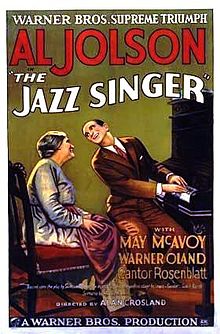
It is strange that two of the most important movies of all time are also uncomfortably controversial. 1915's "The Birth of a Nation" is the first feature-length film, as it was the first "film" rather than just a short 20-minute picture, yet the film portrays the African American community as evil, soulless barbarians who must be stopped and the KKK are the heroes of the film. Similarly, 1927's "The Jazz Singer" is the first movie to feature sound and active dialogue, yet its main character is a white-male in black-face for most of the film.
But I give "The Jazz Singer" far more leeway than "The Birth of a Nation."
In the 1927 film, Jackie Rabinowitz (Al Jolson) is a struggling singer trying to make it make it big outside of being a Cantor. He makes it big when a young woman on Broadway hears him sing and tells him to perform for their latest jazz show, on the condition that sing in black-face and have his name changed to Jack Robin. Much to the dismay of his traditionally Jewish family, with his father believing that he shouldn't sing outside of a Synagogue, Jack takes the job but is disowned by his father.
As I said, this the first "talkie," to which every film between 1928 and now owes everything to. The only scenes that feature any audio though are when Al Jolson is singing, with the rest of the film remaining silent with title cards are exaggerated silent-era acting. While some might find this distracting, "The Jazz Singer" makes it work due to the dual nature of Jack's character living in two different worlds - One filled with overbearing parents stuck in tradition that remains silent, and another that is loud, vibrant and full of life and sound.
It is fitting that the only time we hear Jackie is when he is singing, because that seems to be the only time he feels alive. While this was probably done due to technical limitations and still learning how this whole "sound" thing worked, the choice to go back-and-forth between silence and singing works well for "The Jazz Singer."
Still, there's no denying this film hasn't aged well. The black-face is always off-putting, but understandable for the times since that was a common practice among Broadway performers in the 1920s. I'd say only watch this one if you're interested in film history and wish to witness the first talkie.
If you love classic cinema, this question is bound to come up - Who is funnier? Charlie Chaplin or Buster Keaton?
This answer always varies from film buff to film buff. Chaplin was more emotional in his comedy and love to have exaggerated body movements, like a Looney Tune. Keaton, on the other hand, was far more story-driven and was known for his stone-face expression, like all these crazy shenanigans had no effect on him. Chaplin was known for his sketches and segments, while Keaton was a stunt-man, pulling off insane jumps and moves that had audiences reeling and terrified back in the 1920s.
Both certainly had their strengths over the other, and it was easy to see why the two of them were the leaders in silent comedy. While I consider myself a bigger Chaplin fan than a Keaton fan, there is something to admire about the stunts that Keaton was able to pull off, most coming either "The General" or this film, "Steamboat Bill Jr."
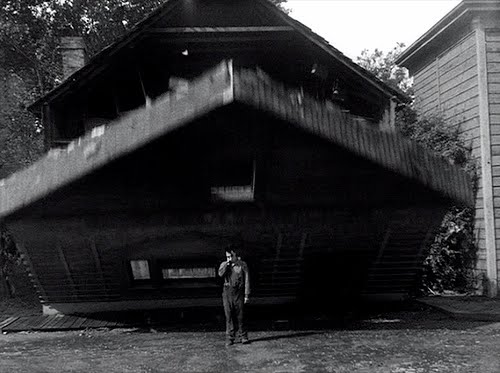
This is where Keaton perfected the famous cyclone sequence, where an entire town is destroyed by a storm and Keaton is stuck right in the middle of it. His bed is blown throughout the collapsing city, while he is later forced to move against the hurricane-force winds, while a large truck comes barreling the other direction. But perhaps the most notorious part is when the side of large stone building is about to fall right on top of Keaton, only for him to be standing exactly where the window is.
As with every other Buster Keaton film at this time, there was no trick photography with this segment. That was a real building falling down on top of the real Buster Keaton. No wires if anything went wrong, no editing to make sure Keaton wasn't in danger, and no stuntman.
This scene has been parodied so many times that it has almost lost all meaning, but this is something to be truly admired. To pull off large-scale stunts like this, creating a miniature town only to have it be torn apart by a gigantic windstorm, in 1928 when nothing to that scale had been done before, says a lot when people are still parodying it. Almost 80 years later, and we're still impressed by Keaton's skill as a comedian and a stunt-maker.
However, outside of the cyclone sequence, "Steamboat Bill Jr.," does not have much else going on for it. There are a few other cute comedic sequences, like Keaton trying on a bunch of different hats and his strict father turning down every hat his son liked, but that's about it. Nothing too impressive about the rest of the film, but it is worth it for the final cyclone scene.
If there was one genre of film that silent German cinema was best at, it was tragedy.
Tragedy in film often works best when witness someone's life literally fall apart by the choices they make and not listening to it, and watch how the world goes from loving them and adoring what they've accomplished, to tossing them away like a moldy piece of bread. Several German films captured this perfectly, like "The Cabinet Of Dr. Caligari" and "Faust," but now I can say that "Pandora's Box" joins that group.
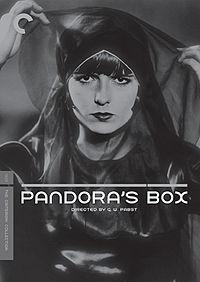
For a long time, I thought "Pandora's Box" was a fantasy about the literal box given to Pandora that contained the world's evils, but the film is actually about a young woman, Lulu (Louise Brooks), a temptress who enjoys using her ability to woo any and every man she comes across. Lulu isn't afraid to flaunt this power over men in front of other men she has seduced, which leads to many of her men becoming jealous and resorting to dirty tactics to keep Lulu, which does not always work out in her favor.
Very quickly, the title of the film becomes clear - Lulu is Pandora's box. She tempts men to do terrible and evil things, just for the sake of lust and jealousy. To win her over and be with her is to become one with your inner evil, whether you know it or not. Lulu convinces a man twice her age to marry her after the two are caught at his son's gala event. But even during their wedding reception, Lulu sneaks off to make out with several different men, including the groom's son.
Personally, I hated Lulu from the moment the film started. That is, until we reach the final act and we see Lulu at her lowest point.
After everything that has happened to her and all the people she dragged down with her, she cannot give up her lifestyle. She is living in an attic with a broken window and snow pouring into her only living space, with week-old bread that is almost frozen, and here she is getting ready to "go out on the town."
Suddenly, everything became clear - She cannot change who she is, a temptress. She has accepted this lifestyle and willing to live it to the end. Even if she's dirt poor and on the run from the police, that's not going to stop her from conquering another male. And in the end, she pays for that.
That's what makes "Pandora's Box" a fascinating silent tragedy that is certainly worth checking out. Rather than relying on seduction through words and physical touch, this film is entirely about Lulu's look and movements, yet she is able to do so much through that alone. While it is a bit slow at the beginning, it picks up near the end and has a great climax when Lulu's fate becomes clear.
If you've followed my blog for most of 2015, you may have noticed that I've released a lot more reviews than I usually have. The reason for this is because, one of my many New Years Resolutions was to watch 100 films I have never seen before, and write reviews on as many of them as I can. These movies did not have to be new theatrical releases, but any film that I had not already seen at some point in my life.
And after I released my review of "The Exorcist," I had finally reached my goal. After nearly seven months of watching nearly five new movies every week and then finding the time to write my extended thoughts on each of them, 100 new movies have been seen.
This was one of the most fun and exciting times, since nearly every day I got to witness something new and watch kinds of filmmaking unfold. From old and nearly lost silent films, to animated films released only weeks ago, to everything in between, this has been a wild ride.
So, for your viewing pleasure, and to put down in a record, here are each of those 100 films, and my grade on each of them. As I recall, all but five of these movies have a review somewhere on the site. The only ones that don't are the first three, an animated trilogy released straight to DVD that was based on a manga in Japan, and "The Room" and "Sharknado 2," both of which were a Rifftrax Live experience, from the same creators as "Mystery Science Theater 3000," while they ripped apart a terrible movie, so it is hard to properly judge the movie when I could barely distinguish the movie from the riffing.
Other than that, all the other 95 movies have proper reviews. The grades in this list might be modified from my original reviews, as my thoughts on them might have changed over time, though only slightly.
1. "Berserk: The Egg Of The King" - B- 2. "Berserk: Battle Of Doldrey" - B+ 3. "Berserk: Advent" - B
4. "Wild" - A-
5. "Big Eyes" - A- 6. "Top Five" - B
7. "Election" - A- 8. "Selma" - C 9. "Attack Of The 50-Foot Woman" - B+
10. "American Sniper" - A- 11. "War Of The Worlds" (1953) - C+ 12. "Foxcatcher" - B
13. "The Way We Were" - B- 14. "Boyhood" - A 15. "Dale & Tucker Vs. Evil" - B 16. "Inherent The Wind" - B- 17. "The Imitation Game" - C+ 18. "Zodiac" - B 19. "Whiplash" - A 20. "Top Hat" - C+
21. "King Kong Vs. Godzilla" (Japanese Version) - B+ 22. "The Theory Of Everything" - C+
23. "The Interview" - F+
24. "The Odd Couple" (1968) - C-
25. "Jupiter Ascending" - C- 26. "Father Of The Bride" (1950) - B
27. "Philadelphia" - B-
28. "The Hustler" - C+
29. "Project Almanac" - D+
30. "Easy Rider" - C- 31. "Kramer Vs. Kramer" - B
32. "Barbarella" - C+ 33. "Kingsmen: The Secret Service" - B+
34. "Dr. Horrible's Sing-A-Long Blog" - A-
35. "An American Werewolf In London" - A- 36. "Them!" - B 37. "The King's Speech" - B+ 38. "Nosferatu The Vampyre" - C 39. "The Fugitive" - B
40. "My Man Godfrey" - C
41. "Melancholia" - C+
42. "The Second Best Exotic Marigold Hotel" - D+
43. "In Bruges" - B-
44. "Now, Voyager" - B-
45. "Superman II" - B-
46. "Wall Street" - D+
47. "The Public Enemy" - A- 48. "The China Syndrome" - B
49. "It Follows" - A-
50. "Viva Zapata!" - C+
51. "Die Hard 2" - C+
52. "Run All Night" - D+
53. "Chef" - B 54. "The Secret Of Kells" - B-
55. "Rushmore" - A-
56. "The Ghost & Mrs. Muir" - C
57. "Unfriended" - A-
58. "Crank" - B
59. "The Nightmare Before Christmas" - B
60. "Ex Machina" - C
61. "The Man Who Knew Too Much" (1955) - B- 62. "The Magnificent Ambersons" - C+ 63. "Avengers: Age Of Ultron" - B-
64. "The Room" - B 65. "Schindler's List" - A
66. "El Mariachi" - C+ 67. "My Dinner With Andre" - B
68. "Unbreakable" -B
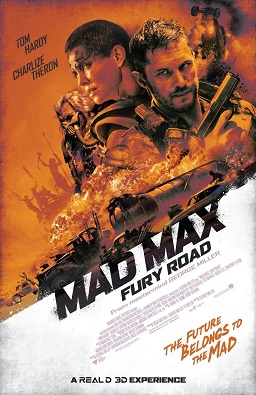
69. "Stella Dallas" - A- 70. "Mad Max: Fury Road" - A
71. "The Hunchback Of Notre Dame" (1939) - B- 72. "Papillion" - C+
73. "Time After Time" - B+
74. "Dark Passage" - A-
75. "Spy" - A- 76. "The Babadook" - C+
77. "Jurassic World" - C
78. "Greed" - B+
79. "Dirty Harry" - A- 80. "Equestria Girls: Rainbow Rocks" - D+
81. "Inside Out" - A-
82. "Hotel Transylvania" - B 83. "Soylent Green" - B
84. "Kung Fury" - B-
85. "Hannah & Her Sisters" - D
86. "Rubber" - C+
87. "All-Star Superman" - B 88. "Terminator: Genisys" - D 89. "Sharknado 2: The Second One" - D+
90. "Miami Connection" - C+
91. "The Shop Around The Corner" - B 92. "Varan, The Unbelievable" - C- 93. "Atragon" - B-
94. "The Giant Claw" - C 95. "Mortal Kombat" - C+
96. "Ant Man" - B-
97. "Mr. Holmes" - B+
98. "The Incredible Shrinking Man" - B-
99. "The Red Shoes" - C-
100. "The Exorcist" - A-
Since the selection of movies is so fruitful in this list, and because there were so many that I adored, it seems applicable that I count down my ten favorite. So, just for the sake of argument, here are my ten favorite of these 100 films.
10. "Election"
9. "Dark Passage"
8. "The Public Enemy"
7. "The Exorcist"
6. "An American Werewolf In London"
5. "Whiplash"
4. "Inside Out"
3. "Boyhood"
2. "Schindler's List"
1. "Mad Max: Fury Road"
And, because I'm sure this question will get asked as well, here are the five films that I hated the most out of the bunch.
5. "Project Almanac"
4. "Hannah And Her Sisters"
3. "Wall Street" 2. "Terminator: Genisys"
1. "The Interview"
So that is what I've been working on for the last seven months. When I wasn't working or spending time with my family and friends, I was mostly watching these movies. What you can expect from me in the future is to finish up my Favorite Films countdown, as we will soon be reaching my top ten.
Thank you to every last one of you for your continued support and interest in my passion. I wouldn't be here without you guys and hearing each of your thoughts on my opinions and reviews keeps me going. All of you are amazing people and don't ever forget that.
Nowadays, the story behind "Greed" is more fascinating than this already intriguing silent film. The director, Erich von Strohiem, wanted to make a movie that was more than just immediate gratification and made the audience think. What he created was his nine-hour masterpiece of a family torn apart by its own avarice, ending in a desperate duel for money in the middle of Death Valley.
However, the producers and heads of MGM Studios wouldn't allow Strohiem to début his film unless he cut it down, because they insisted that no one would want to watch a nine-hour movie. So he cut it down to roughly five-hours, but the studio still wasn't happy. They had someone else cut down the film again to a much more manageable two and a half hours. von Strohiem was understandably pissed off, as the studio had destroyed his vision and was not interested in what he wanted to use cinema to say about humanity.
It was believed that von Strohiem initially held on to the original nine-hour film, but one night, in a drunken rage, he burned and destroyed his copy of the film and his true vision of "Greed" was forever lost. All we have now is what MGM had in mind.
To be fair, MGM's version of "Greed" is still wonderful to watch, as we watch a family slowly devolve into madness and paranoia, while still using fantastic silent cinema techniques to capture so much without ever saying a word. From the cat preying on the caged birds, to the gold-tint on every valuable possession throughout the film.
Like most great silent films, "Greed" is simple yet effective. It understands the visual appeal of movies, but lacks the technology to create a truly encapsulating experience. The film makes up for that with striking images that range from triumphant to heart-breaking to downright terrifying. It knows what it wants to do, and does so to the best of its ability.
Film is a medium that has multiple interpretations and meanings, which is one element that makes it so interesting. I tend to see cinema is a mirror of our reality. As a way for us to convey our deepest emotions and inner thoughts through images and celluloid. Like life itself, a film can be exciting, poignant, bleak, thrilling, horrifying or anywhere in between.
Of course, some movies use this bridge to describe reality better than others. Some don’t even try to blur the line, while others just aren’t made well at all. This is why there is a significant difference between good movies and bad ones. It is also why people keep track of the greatest films of all time.
Now I will attempt to throw my hat into the ring by creating my list for the greatest movies ever made. I’ve racked my brain and resources, thinking of every movie that I considered great in one way or another, which made it stood out from other works of cinema. In the end, I was able to come up with 225 films, all from a different range of eras and countries, made by a wide assortment of filmmakers.
There are a few things which should be known on what I’m about to present. First of all, I will be presenting these by decade, along with a few thoughts on each interval of time. Along with that, there will be clips to accompany each film that I can find.
Second, these are what I consider the greatest works of film. I will give a brief description for each film, explaining why it belongs here. As such, there will be films that others may adore and cherish but just don’t make it on my list.
Third, this is an incomplete list. I have not watched every film ever made, nor have I even watched every well-received movie ever made. One of my policies on film criticism is to not talk about a movie that I’ve never watched. To save criticisms and judgment for after a film is finished.
So if you feel I missed a particular film, it’s most likely because I either haven’t seen it or feel that it isn’t all that special. I will do my best to remain objective with this, but I’ve always believed that it’s impossible to be completely objective with cinema. Like telling a joke, if a film doesn’t work, it doesn’t work for that particular person and there is little that can be done about it. So please, if you have reservations with me or what I have to say, know that this is merely my opinion.
Greatest Films of the 1920s:
Watching films from the 1920s is an incredibly interesting process nowadays. This is due to the majority of well-known films from this era being silent, relying entirely upon images and the emotions on the actors faces to tell the story. This is part of the draw of silent cinema, as this opens up a world of possibilities for ways to tell the story.
It can also be a hinderance, because filmmakers back then did not hold the same moral and filmic values that we do. Some movies just don’t translate well, while others are timeless classics that show they don’t need sound to tell a good story. It’s really about how they use their lack of noise and their presentation. For example, every film listed below is an excellent example of not only silent cinema, but moviemaking. There are a diverse range of stories, each with a unique way of telling their tale, while others have cinematography or techniques that are still impressive to watch. Such is the power of silent films.
"The Cabinet Of Dr. Caligari" (1920)
This is the height of the German Expressionist era, where reality seems warped and dark, as well as the characters. In a story where a mad doctor uses hypnotism to get others to commit crimes for him, the setting of a small German town works wonders, especially when you’re unsure of what is real or not. Effectively using color filters to add atmosphere, it also works as a thriller when the main character is dubious of his own actions and what really lies in the doctor’s cabinet.
“The Kid” (1921)
Ah, Charlie Chaplin. Always finding that perfect ground between comedy and drama to convey a multitude of just the right emotions. This is one of Chaplin’s first attempts at a full-length feature film, rather than his usual shorts, and it is one of his best, where his classic persona, The Tramp, takes it upon himself to raise an abandoned child. This works so well because of a very young Jackie Coogan, who plays the kid, and his relationship with Chaplin. He’ll mimic the Tramp but still laugh at his crazy antics, all with the most innocent of looks. The film hits all the right notes and remains a great example of Chaplin’s work.
“Nosferatu” (1922)
The first film attempt at telling the story of Dracula, without ever mentioning the word “vampire.” This film works so well because of atmosphere alone. Because of the lack of sound, the film relies on its striking cinematography and landscape of Nosferatu’s castle. Just his stance and shadow alone is enough to give me nightmares. And because of the lack of vampire, the film keeps you guessing what Nosferatu really is. Is he a bloodsucking creature of the night? Or is he an eccentric pale-faced weirdo who loves to kill?
“The Battleship Potemkin” (1925)
I’ll freely admit that I don’t exactly care for this one, as the story is nothing groundbreaking and I can’t remember anything about the characters. This one makes the list because of how it revolutionized the way in which films were shot and edited. Sergei Eisenstein, the film’s director, always pushed the boundaries of what a film could do. Before this film, most filmmakers would shoot with the actors in the center of the frame and end the shot when it had served its purpose. Eisenstein would focus on the specific body parts, like the head or hands, and make many quick cuts to signify a characters’ thought patterns. This may seem like nothing now, but we owe many filming techniques to this film, whether we know it or not.
“The Gold Rush” (1925)
Another Chaplin piece, this one being a bit more ambitious than “The Kid.” This time, the Tramp travels to Alaska in the hopes to strike it big by finding gold deep in the wilderness. What is most memorable about this one are the set pieces and the large variety of gags that come from it, including scenes where the Tramp must eat his own shoe and does a wonderful dance with two pieces of bread. Though this may not be as touching as “The Kid” or as funny as other Chaplin works, this one is certainly memorable for defining just who the Tramp is.
“Faust” (1926)
Wow, this film looks amazing. Right from the opening scene with the devil’s wings closing around an enormous city, only to be saved by the light of a gigantic angel, I can’t help but be impressed. Not to mention, the story of an angel and demon fighting over a man’s soul is simplistic yet right at the core of the human struggle between good and evil. Faust, the man whom the deities are fighting over, wants to do the right thing with the power given to him, but is overcome by his own greed and pride. The film works with both its story and cinematography to make for an experience that won’t be forgotten.
“The General” (1926)
Buster Keaton is one of the greatest entertainers of all time. The man perfected silent comedy, with his stone faced approach to any situation and an athletic ability that might only be matched by Jackie Chan. “The General” is his best work, because not only does it have a plethora of excellent comedy, but also has an intriguing story of reclaiming lost love during the Civil War. Plus, Buster Keaton taking down an entire fleet with just his train. But let’s be honest, we all know he would have won the war anyway.
“Sunrise” (1927)
This film does something that I thought was impossible. It tells a compelling and heartfelt love story, without ever saying a word. I don’t mean because its silent, but because there are large breaks in the film where the two romantic leads never say anything to one another. These two, who had drifted apart and the husband attempting to kill his spouse for another woman, merely spend time together and relearn why they fell in love through each other’s company. Shots were the two smile at one another go a long way in this innovatively shot romance.
“Metropolis” (1927)
Other than a film that we’ll look at in the 1930s, I consider “Metropolis” the greatest silent film and is certainly one of the crowning achievements of science-fiction filmmaking. Nearly every shot of this film is impressive and breathtaking. You really get an understanding of the landscape and scope of this futuristic world, whether the future means improvement or deterioration. “Metropolis” is able to find the best of both silent worlds, by doing what “Faust” did with its cinematography and the thrill and suspense of “The Cabinet Of Dr. Caligari.” Furthermore its emotional core and message still speaks true nearly 90 years later, making the film even more powerful than Fritz Lang intended.
As I said, the 1920s can be an interesting watch these days, since silent cinema can really shine through and surprise you, or it can leave you unimpressed and wanting more. This is mostly due to being around so many great films that differ from the ones that stand out in 1920 and growing up with a different set of values. Still, there are plenty of films that have stuck around and still continue to entertain audiences to this day, for one reason or another.
How many well executed elements does it take for a movie to become more than just good? Can it really take just one fantastic performance from a wonderful actor for the film to transcend so many other ones that came before it?
I believe the answer is no.
I’ve always felt that truly great cinema always has more than one element that makes it worth watching. For example, when I wrote my review of “The Passion Of The Joan Of Arc,” it lead to an interesting discussion about the film and silent cinema where I realized that Maria Falconetti, who played Joan of Arc, did give a performance that changed how acting was pursued from that point on. Yet, even with this revelation, I still couldn’t bring myself to say the film does anything for me. “The Passion Of The Joan Of Arc” may have a revolutionary performance, but that’s about it. That’s not enough for me to recommend the movie to others.
We have another beloved silent film from the 1920s that falls into the same category, “The Phantom Of The Opera.” I can understand why this would be so well received upon its release and could continue to entertain audiences even today, through the makeup and performance of Lon Chaney, also known as “The Man Of A Thousand Faces.” The problem is that once the initial affect of Chaney and his sunken-in eyes and massive jaw have faded away, the film doesn’t have much to offer.
I think most people are aware of the story of the Phantom (Lon Chaney), of a man who was once a great composer and intellect yet became badly scared and was rejected by society, forced to live underground and hide within the catacombs of the opera house.
One day though, the Phantom discovers a new talent of the play, Christine (Mary Philbin), and is smitten by her. He begins to send cryptic and angry messages to the directors, saying to give Christine larger roles or else terrible fates will befall them. As Christine’s fame begins to soar, the Phantom makes his presence known to her and wishes to make her the greatest star in the world, if she promises to accept him as her master.
First off, the performance of Lon Chaney is wonderful. He did his own make-up and design for the Phantom, and it works to keep him intimidating yet mysterious. I can understand why his face in this film has translated to one of the most iconic images of horror. It is a difficult face to forget and the moment of his eventual reveal is suspenseful and perfectly paced.
Also, I enjoy the use of color filters used throughout the film. As you can tell, this is a silent film but it takes full advantage of using filters to add atmosphere and tone to many of the scenes. The brightly lit opera house has a yellow filter, while the dark torture chambers deep below Paris are a dark purple. Though it is strange during the giant party when everything is in proper color, only to go back to filters once the scene is over.
However, outside of those elements, I couldn’t find myself getting drawn into the film. The story is rather unremarkable and the characters, outside of the Phantom, don’t have much going for them. Christine is mostly reduced to playing the damsel in distress, while her boyfriend Raoul is merely set on saving her. Many of the scenes that lack the Phantom just leave me wanting to see more of the only interesting character.
So while Lon Chaney is the vehicle that drives the greatness of the 1925 version of “The Phantom Of The Opera,” it is honestly not enough for me. A great performance and make-up can only take a film so far, especially when the remaining story and characters fail to pull their own weight.
If you enjoy the story of the Phantom, really like great make-up or are interested in learning more about horror icons, try this one a try. If you’re in it for an involving story like me, don’t be surprised if you don’t exactly what you came for.