Showing posts with label Film Pet Peeves. Show all posts

Tuesday, October 21, 2014

Film Pet Peeves: Update on Michael Bay and Roland Emmerich

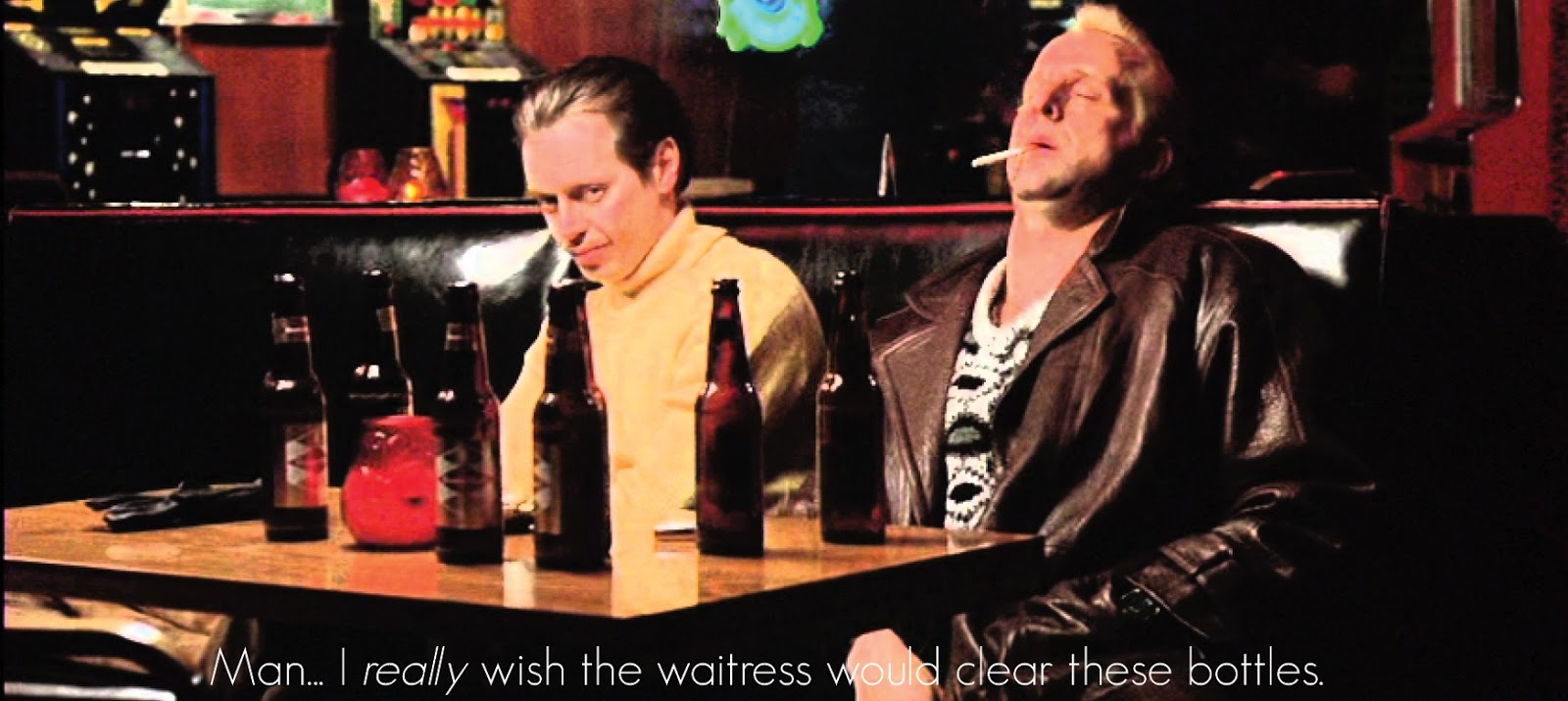
Fargo movie Steve Buscemi

A while ago, I wrote an editorial on one of my biggest film pet peeves; the continued success of "filmmakers" Michael Bay and Roland Emmerich. In that editorial, I talked about why they continue to piss me off and how appealing to the lowest common denominator might work for box office success but makes for poor filmmaking success.

Looking back on it, I believe a more solid point is that Bay and Emmerich are good businessmen, but poor filmmakers. They know how to make a film look enticing to audiences. To make them want to go see their film, through clever marketing, bringing in big name stars and, of course, lots of mindless action that anyone can enjoy. To them, film is nothing more than an outlet to make money.

My problem with this is there is so much more to cinema than just a business. Filmmakers like Quentin Tarantino, the Coen Brothers, David Fincher and Christopher Nolan don't keep making movies to get some money (though that does certainly help), they do it because they're passionate about movies and love to make films that they can be proud of. Films that they can look back on and realize that it is an accomplishment that they can proud of. As opposed to Bay and Emmerich, who probably look back on "Transformers: Age Of Extinction" and "The Day After Tomorrow" as a big paycheck.
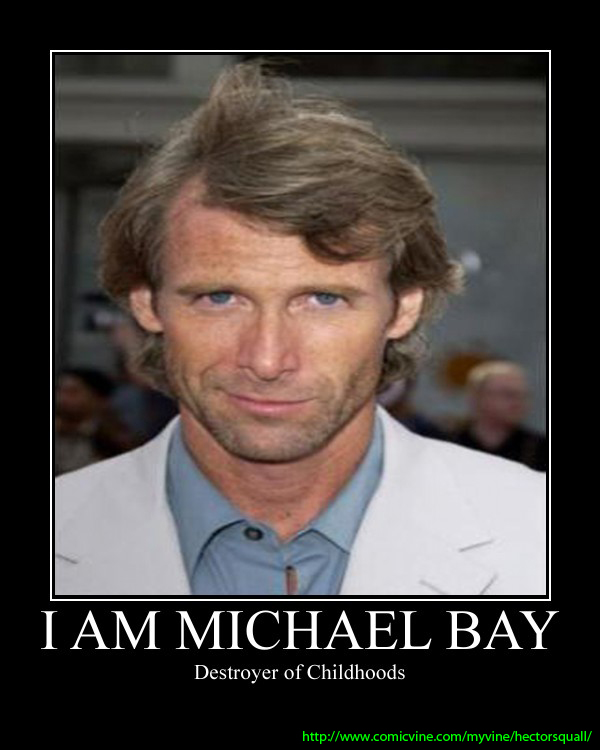
2249726-i_am_michael_bay_destroyer_of_childhoods_by_hectorsquall

Some responses to my earlier editorial have made the point that Bay and Emmerich's films are glorious eye candy that can be a pleasure to view. That people love to watch eye candy and their films personify that feeling.

I both agree and disagree with this assessment. I agree that people like to watch eye candy and that films by Emmerich and Bay encapsulate that feeling. But I disagree that this makes their films "good" or redeemable in anyway.

Film is, among other things, another form of storytelling so story, characters and substance should always take precedence over effects and style, unless the film is trying to be different like "Gravity" or "The Wind Rises." However I don’t think any film by Bay or Emmerich has tried to be different in that regard. Their films are high on adrenaline and extremely low on intelligence. There is certainly a time and place for that, but it always gets old fast and never has any staying power. The more you watch their films and you watch these racist characters and bland-colored characters fight, the more you realize just how irritating their movies can be.

A good film grows on you. The more you watch it, the more you end up loving it and appreciating. A good film is not just a waste of time or a way to keep you distracted, like many Bay and Emmerich films.

Their films may have made lots of money at the box office, but I do not care about that. It does not tell me anything about the movie, other than a lot of people went to go see it. These days, tons of people go see terrible movies, like "Transformers 2: Revenge Of The Fallen" and "Teenage Mutant Ninja Turtles" so box office success means even less.

bay_bluray

The whole point of my editorial was to say that I can’t say I like any Michael Bay or Roland Emmerich film. Instead of making the type of film they would want to see, they make the film that’ll make the most money. Their films come across like they have no passion for filmmaking and are just in it for the money. It is disrespectful to the art of filmmaking.
Finally, I understand this opinion is contrary to the majority opinion out there. Most people enjoy Bay and Emmerich's films, which is why they gross so much at the box office. As a result, my opinion may come off as biased.

To that I say, of course it is biased. There is nothing wrong with that though. It is impossible to do something like this and not be biased. Any time you give your opinion on anything, it will be biased. Your opinion is your bias. But that doesn’t stop me from believing it, even if it is contradictory to the majority. I don’t believe Bay and Emmerich are bad filmmakers just to be contradictory. I believe they’re bad filmmakers because that is how I legitimately feel. I have never enjoyed watching their films, even when I was younger and didn't understand film that well.
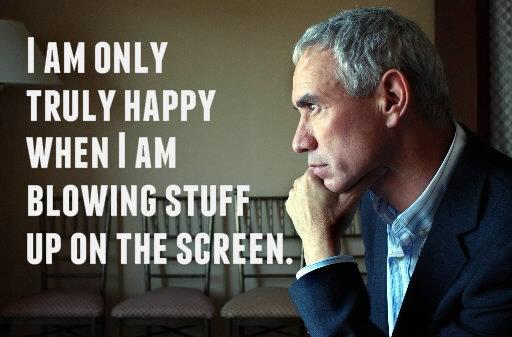
roland_emmerich_likes_to_blow_shit_up

I remember watching Emmerich's "Godzilla" and immediately hating it. As I left the theater, I contemplated what was wrong with it, but couldn't see anything other than the monster not being anything like Godzilla. But now I see that the characters are nothing more than stereotypes, the story is poorly paced and makes no sense, the sad attempts at humor are pitiful and the action sequences are ripped straight from other better films.

Let's face it; From a critical perspective, there are no good Michael Bay or Roland Emmerich movies. Every single one of them is tedious, repetitive, filled with far too much CG and not enough life in the actual human beings and are nothing more than dumb excuses to watch lame action sequences.

Roland Emmerich and Michael Bay are terrible filmmakers.

Thursday, May 22, 2014

Film Pet Peeves: Money Is Everything!

PetPeeves

If you were to ask me what my biggest complaint with Hollywood is, it would be its constant hunt for fast cash instead of making a worthwhile movie.

This has slowly but surely creeped in since the invention of the summer blockbuster, such as with "Jaws" and the "Star Wars" movies. Movies were being marketed more and more towards getting a huge payoff for one film, especially when multiplexes were introduced and audiences did not have to go far to watch multiple movies in the same theater.

But back in the 1970s and 1980s, this wasn't that big of a problem. Most of the huge summer blockbusters were still solid and well-put together movies. For example, in 1982 the highest grossing film was "E.T. The Extra Terrastrial", with the next highest being "Tootsie," only grossing roughly half of "E.T." In fact, that isn't even Steven Spielberg's highest grossing film, with "Jurassic Park" gaining the edge.

posterextra_terrestrial

This doesn't even count all of the tie-ins, toys, product placement, games and so on that probably made more money than the movie.

But this wasn't so much a problem back in 1982, because "E.T. the Extra Terrastrial" was loved by everyone and is still accepted today as one of Spielberg's best films and a wonderful achievement in filmmaking.

Now let's look at some of the highest grossing films of the last twenty years: "Star Wars Episode I: The Phantom Menace," "Pirates Of The Caribbean: At World's End," Tim Burton's "Alice In Wonderland," "Spider-Man 3," "Independence Day," "The Dark Knight Rises," The Twilight Saga and, everyone's favorite, Michael Bay's "Transformers" series.

I'm just going to put this out there: None of these movies were made to add something to cinema or even to be watched years later and looked upon fondly. These movies were made with the intention of making money and nothing else. They were designed to put the most butts in theater seats as possible and to get their money. The filmmakers could not care less about whether the audience actually enjoyed the movie, because they just the big bucks.

There is an old saying I heard and have lived by for a while now: If you make a great movie, you don't have to worry about advertising or anything. Audiences will pay to see a great movie. That is why there was not much advertising for films like "12 Years A Slave," this years' winner of the Best Picture Academy Award.

But the more I look at the highest grossing films of the year against the reviews those same films are getting, the more I realize that saying isn't true any more. Some of the biggest blockbuster hits of the last few years are terrible movies, yet audiences go to see them in droves.

There is something wrong with this picture when more people are watching the rage-inducing, unfunny and insulting "The Hangover: Part II" over the clever, well-written and engaging "Kung Fu Panda 2." Both of these films were released on the same weekend, yet more people saw the carbon-copy than they did the great animated feature.

the-hangover-part-2-still

I don't know about you, but I'd rather spend my money on a movie that I know will be entertaining and thought-provoking than one that is sure to be brain-dead and boring. I'd gladly take one "Pacific Rim" over ten "Pirates Of The Caribbean: Dead Man's Chest" anyday.

The problem with cinema is that, when you're going to watch a film for the first time, you're not sure if you're going to like it or not. You are literally spending money to find out whether this film is going to be good or not. You don't know if its going to be entertaining or boring and you are gambling ten dollars to find out.

But nowadays, that risk is far less effective. With the abundance of sequels, reboots and focus on computer-generated images, you can often tell when a movie is destined to fail. Just look at the "Transformers" films. Each film is doing the exact same thing as the previous entry: Shaky-cam fight sequences between two giant robots that look exactly the same, with a brief cutaway to Shia LaBeouf being confused and screaming at the top of his lungs.

The movie is going to make plenty at the box office, but that does not mean it is good or that it was a success.

Now don't get me wrong, there have been plenty of good movies over the last decade or so that were huge hits at the box office and were still well-made films. For example, the previously mentioned "Jurassic Park," "The Avengers," "Skyfall," "Toy Story 3" and "The Dark Knight." So just because it makes a lot of money does not suddenly mean it sucks.

MV5BMTMxNTMwODM0NF5BMl5BanBnXkFtZTcwODAyMTk2Mw@@__V1_SX640_SY720_

What I am saying though is that I am disappointed in seeing all of these terrible movies and continued remakes and reboots get money simply because of nostalgia or clever marketing.
While I think this could say something about the kind of audience that watches these films, I think it says more about Hollywood and their continued need to make these bad movies. Their motto now seems to be quantity over quality, and that is what really pisses me off.

Filmmakers should make movies that they want to see. Movies that they can come back to, again and again, and never get tired of, like "E.T. The Extra Terrastrial." That movie has survived for over thirty years now and still entertains audiences as much today as it did back in 1982. Not because of flashy effects or appealing to the lowest common denominator, but because it treats its audience like adults and tells a compelling story with timeless and relatable characters.

My one comfort is knowing that movies like the Twilight series are just passing fads. The thing about all fads is that they will fade away after a while. They might have some momentary success, but over time people will realize that these stories do not hold up and go back to the good ones.

Breaking_Dawn_Part_1_Poster

The good news is that Hollywood has gotten better over the past few years, with some of the bigger hits being good movies, like "Iron Man 3" and "Frozen," but there are still some stinkers that sneak in there, like "Grown Ups 2" and "The Lorax."

In the end, this is my biggest film pet peeve. When a movie makes a lot of money at the box office, it does not tell you anything about the film anymore. Only that a lot of people went to see it. Nowadays, a terrible film like "Transformers: Dark Of The Moon" can make just as much money as a great film like "Finding Nemo." Something just is not right about that.

Wednesday, May 7, 2014

Film Pet Peeves - Bullies


In my recent review of "Stand By Me," I failed to mention one thing that did get on my nerves, but only looking back on it: The bullies which pick on the group of kids.

This gang of teenagers, led by Keifer Sutherland, is the typical case of rebels and punks that you come to expect in any movie about kids. There always has to be some kind of bully to antagonize our little main characters, or else there would be little to no conflict in the film.


But the film always fails to address the most basic question: Why are these people bullying them?

What did these kids do that deserves so much aggression, physical violence and verbal beatdown? Do they have nothing else going on in their lives and bullying is the only item on their schedule? Why do they act this way?

The simple answer people like to give is, they bully because they are children and children are cruel. Except that children are a lot smarter and more complex than people like to give them credit for. They are certainly emotional, stubborn and only often think about themselves, but they have reasons for everything they do. Like all of us, they have needs, wants, desires and want to live just like everyone else.


Bullying is not a matter to be taken lightly, especially if you're a kid. When you are being bullied, it may seem like it is happening for no reason, but there always is something going on. Perhaps the bully is having a bad time at home and wants to take out his aggression at school, or they want to fit it with the popular crowd and picking on you will get them in.

I'm not trying to justify their actions, just merely see it from their perspective and try to understand why they do it. This makes bullies seem like more than just aggressive jerks, and more like people.

Which is why portrayals of bullies in film is so annoying to see and why films like "Easy A" and "Godzilla's Revenge" don't work for me: A big part of the movie relys on the antagonists being bullies, and they have no real motivation to do what they do other than being called a bully.


I don't necessarily want to get into the head of the bully, but I do want to understand where they are coming from. Why they've chosen this lifestyle and how they feel about it. Do they feel bad for picking on a defenseless kid, or do they do it as a way of getting revenge? Or is it something else? There is certainly room for bullies to be interesting characters, but that route is hardly ever taken.

Thus it makes the writing of these characters seem incredibly weak and lazy. It doesn't make the bullies feel like characters, but just stereotypes or, even worse, cardboard cutouts. I want to see the writing of bullies in cinema improve. I wish to understand why they do what they do. Even if they are picking on other kids, they are still apart of the film and are often the villians. A villain is just as important to a film as the hero is, so their motivation and incentive to attack others should be more than just early signs of going to the dark side.

Monday, April 14, 2014

Film Pet Peeves: One Book = Multi-Movie Deal


While turning books into movies is nothing new at this point, a recent trend in Hollywood has been to take the last book in a critically acclaimed series and turn it into multiple movies.

This phase in Hollywood began when adapting “Harry Potter And The Deathly Hallows,” the finale of the seven Harry Potter books. At the time, it made sense. The series had lasted this long, had been filled to the brim with memorable characters and needed proper buildup to the final climatic battle between Harry and Voldemort. Furthermore, this way they could add in even the minor scenes in the book that would otherwise be cut from the film, so you’re pleasing both diehard fans of the movies and the books. 


But then they started to go a bit more crazy with it. 

This recently happened with finale in the Twilight franchise, “The Twilight Saga: Breaking Dawn.” The Twilight film series has far less ground to stand on than the Harry Potter movies, because by comparison, the source material is much more lively and captivating, the world is far more fleshed out and the characters are likable. Not to mention, the Twilight films are laughable at best and painful at worst. 


So to break up the last book into two movies does not seem like a way to talk about the novel’s points in greater detail, but just as a way to cash in on a fade and make twice the money they would have otherwise. 

Then you get an upcoming attempt to do this with the last “Hunger Games” book, “Mockingjay.” Yes, there are going to be four “Hunger Games” movies, even though there should only be three. This one also doesn’t get me excited, because I still feel that the idea of the Hunger Games has been done many times before and done better, like “Battle Royale.” Though “Hunger Games: Catching Fire” did do something new and added some charm to this otherwise uninviting world, I’m not holding my breath with either “Mockingjay” films.


The worst offender of this trend is Peter Jackson’s attempt to adapt “The Hobbit.” By far. Not only has he decided that to go back to Middle Earth and do a prequel to his excellent “Lord Of The Rings” trilogy, but he has decided to take one novel, and turn into three movies.

I have just one question for Mr. Jackson: Why? Other than the obvious answer of “money.”

Let’s put this in perspective. By comparison to any of the “Lord Of The Rings” books, with material and length, “The Hobbit” is miniscule. This novel isn’t even close to the length of just one in that massive trilogy. Yet Jackson was able to take all three books and turn each one into its own movie. Granted, each movie is close to four hours long, but to be able to cram so much of a gigantic book into that time span is a wonderful achievement. 


So how is that a book much shorter than any of the “Lord Of The Rings” trilogy must be turned into three movies, with each movie lasting over three hours?

There’s a point where covering every part of the novel just is not a good enough reason to make us wait well over six hours of film just to get to Smaug finally attacking a town. Is it really necessary to add Legolas to the story? Or Radagast?

At some point, it stops being entertaining and becomes merely a test of patience. Fans of the novel might eat it up, but others just keep looking at their watches waiting for something interesting to happen.


These types of films are being looked at as “adaptations.” Something based off of another source material being adapted to a different medium. I do not look at it like that. I see these merely as “movies.” A piece of entertainment done usually as a way to tell a story by camera, lighting, actors, editing, etc. As a film, I choose to look at the work on it's own individual merits, without ever being compared to any other piece of work, including something that this particular work might be based off of. If the film stands or falls, it would be by it's own words and values, not the values of others.

As such, this style of breaking up one book into multiple movies is unnecessary, annoying and only serves as a way to make lots and lots of money. I don’t care if the film is being as faithful to the source material as possible, that is not an excuse to make it longer an opera about turtles eating molasses in slow motion. 

Just because you can add in every scene from the novel into your movie doesn’t mean you should. Cut these movies down. Edit out scenes that don’t add anything to story and don’t look back. Do not break it up into multiple movies just for the sake of money, but for your art form. 

Thursday, April 10, 2014

Film Pet Peeves: Wrestlers As Actors


Imagine for a moment, during the 1950s and Hollywood is bigger than its ever been, that as a way to pull audiences in even more, studios suddenly started to hire boxers like Muhammad Ali in starring roles.

Any film like that would have been laughed off screen long before opening night. So why do we tolerate nowadays?

Since the late 1980s, Hollywood has certainly been hiring many wrestlers and martial artists for leading roles in their films. One of the first instances I can think of is Roddy Piper taking the star role in John Carpenter’s 1988 film “They Live.” This would eventually lead to acting careers for people like Dwayne “The Rock” Johnson, Hulk Hogan, “Stone Cold” Steve Austin and many others. 

Most of this came about when filmmakers realized that professional wrestling was, shock-of-all-shocks, fake. The fights were scripted and pre-planned far in advance, with most wrestlers having to memorize lines for speeches and pretending to have actual emotions and feelings towards other wrestlers. 


To Hollywood, this screamed that wrestlers had acting potential. If they could pretend to fight in the ring, then why couldn’t they pretend to fight on camera? 

Here’s the thing: While a good wrestler might be great at reading lines, that does not make them actors. A wrestlers job is to put on a good show; to entertain the audience while they are on stage and to contribute to the atmosphere of wrestling. 

The job of an actor is far different. An actor should not just entertain or please the crowd, but convince the audience that this is an actual person, with flaws, needs, wants, strengths and a past that we should care about. They are not just putting on a persona, like a wrestler, but stepping into the shoes of another life. 

Something like that is tricky to pull off and even more difficult to make the audience care and relate to this person. The sign of a great actor is when you believe you are no longer watching someone pretend to be another person, but that this is the other person. Tom Hanks does a wonderful job of this in many of his roles, including “Forrest Gump,” “Cast Away,” “Saving Mr. Banks” and “Saving Private Ryan.” 


While I don’t expect a wrestler to ever reach the level of acting of Tom Hanks, I do expect a certain level of quality acting when I watch any movie. I’ve yet to see any former wrestler give a decent performance in any movie. 

In the case of any performance by Dwayne Johnson, his acting is stilted, unnatural and often comes across like he’s filming a commercial instead of a movie, with him playing towards the camera as if he’s trying to break the fourth wall. Other wrestlers, like Hulk Hogan or Roddy Piper, just give cringeworthy pieces of dialogue that either make me squirm or laugh at the movie instead of with it. 


The only times I remember wrestlers being halfway decent actors is when they’re playing wrestlers, like Randy “Macho Man” Savage playing Bonesaw in the first “Spider-Man” movie. His exaggerated facial expressions match with an over-the-top performance to give us a fun little scene. It only lasts a few minutes but it is a hilarious few minutes. 

Outside of those types of roles, I do not think wrestlers should ever be used as actors. Performing to a crowd and performing for a camera are two very different things. If someone is able to pull both of those off, that is outstanding. I’ve yet to see a wrestler make the transition to cinema and make it work. 

Unless they have a history of acting classes, they should just stay in the ring.


Wednesday, March 12, 2014

Film Pet Peeves - Michael Bay and Roland Emmerich


If there are two filmmakers currently in Hollywood that I cannot stand, it is the work of Michael Bay and Roland Emmerich. How these two were able to make more than one movie in Hollywood is beyond me. 

Michael Bay is known for his many box office smash hits, including “Armageddon,” “The Rock,” the “Bad Boyz” movies and the Transformers film series. While Roland Emmerich is the guy that brought us “Independence Day,” “The Day After Tomorrow,” “Godzilla” and “White House Down.”

The reason I group them together is because they’re quite similar in their approach to making movies: Appealing to the lowest common denominator. They get success because they make their films flashy and filled to the brim with eye candy. Story, characters and logic take a back seat in their films, instead focusing on explosions and action sequences. 


I feel it is because of this line of logic that has led to the deterioration of the summer blockbuster. Studio executives are looking at how successful the Transformers films are doing at the box office and believe that this style of filmmaking works, and thus use it for many other movies. This is what created films like “Battleship” which looks and feels like a Michael Bay film without Bay’s influence. 

Here’s the thing about eye candy in cinema: Even though film is a visual medium and relies heavily on its images, that should not be the only thing to admire. If there is no substance to what I’m looking at, then it is the filmic equivalent of junk food. It might taste good while you’re feasting on it, but once you’re done you feel empty. You eat too much of it and you feel sick to your stomach and ultimately regret your decision.

Bay and Emmerich’s films mostly exist just to get to the action sequences. I give Emmerich a little more respect, because at least his action sequences can be comprehended. Bay, on the other hand, usually has the camera moving so rapidly and edits his shots so much that it is sometimes impossible to tell what is going on.


This is especially worse in the Transformers films, when many of the giant fighting robots are all the same color, gray or slightly darker gray. The only Transformers that can be identified in an action sequence is Optimus Prime, whose primary colors are red and blue, and Bumblebee, who is yellow. 

If you can’t tell which giant robot is which, then your movie sucks. If you don’t even bother to give half of your robots names and personalities, you fail as a filmmaker.

Not to mention, most of the “comedy” in Michael Bay’s films are questionable at best. Most of it just makes me tilt my head, wondering why anyone would laugh at Shia LaBeouf’s mom accidentally eating a pot brownie and getting high. Or showing us John Turturro’s butt. Or worst of all, useless sidekick robots that only serve to dish out the most racist personalities since Jar Jar Binks.


The fact that Michael Bay’s movies make so much money is not so much infuriating as it is fascinating, in an ironic way. I get little to no enjoyment out of his film, but I can understand why others would enjoy them. What I can’t fully understand is the truckloads of money they continue to rack in, all because they appeal to the lowest common denominator.

Instead of making a compelling story, or giving us relatable characters with a struggle that is all too real to many people or just giving us an interesting world can be both terrifying and awe-inspiring, Michael Bay is all about the eye candy in an attempt to make some money. And it works. 

This is almost like anti-filmmaking. Where instead of the creators doing it for the passion and love of cinema, Bay is handling it like a business, only interesting in the money. 

While the reason Hollywood continues to make movies for all the dough they create, the existence of well-made movies and quality products shows that not everyone is in it for money. Some just want to make a film that others will remember after they leave the theater. They don’t just want their money, but their hearts and mind as well. 

Not Michael Bay and Roland Emmerich though. 

Tuesday, March 11, 2014

Film Pet Peeves: Modern-Day Horror


Movies are not as frightening as they use to be. 

When I look at films like the recent remakes of “The Nightmare On Elm Street” or “Friday The 13th” or even the “Paranormal Activity” series, I see one thing that they all have in common: They rely way too heavily on jump scares.

A jump scare is exactly what it sounds like. It is something that comes up out of no where, is completely unexpected, and is meant to make the audience yelp in horror. 

Here’s the thing about jump scares. They are not scary. They are startling. It is the movie equivalent of me grabbing your ear and yelling as loud as I can into it. 


That is not horrifying, just unexpected. While catching the audience off guard is part of horror, that is far from the only aspect. 

Two of the most terrifying movies I can think of are Ridley Scott’s “Alien” and John Carpenter’s “The Thing.” Both of which deal with similar circumstances: An alien is stalking a group of humans who cannot escape and have no chance of rescue. The difference between the two is not only the type of alien that is stalking the characters, but also how they go about making the alien the most unnerving creature imaginable. 

“Alien” does this by presenting him as the ultimate killing machine. Acid blood, two sets of jaws to rip you apart, lightning fast and can hide in the ducts, and is just as smart as any human but only designed to kill. This is made even worse when he is hiding in a gigantic spaceship with thousands of places to hide. The alien could literally be hiding around any corner, waiting to strike, and you would never know. We have no way of understanding it or communicating with it, because it is alien to us. 

“The Thing” is takes a rather different approach, by making its alien a shapeshifter. It is essentially a collect of cells that work as a virus, infecting other living organisms and adding to its collect. He can take whatever form he chooses to, including other humans that it has assimilated. As such, most of the film relies on paranoia and mistrust. Who is the alien and who is human? How can we know for sure? What is the alien’s true intentions? Why does it want to assimilate all the humans? And what would happen if it were released on a major city?


The great thing about both of these films? Little to no jump scares. These movies are scary through atmosphere, tension and making you care about the characters who are being hunted.

That’s another thing about recent horror films: The characters serve little to no purpose other than to be a body count for the monster. They’re designed to be despised, so that when they do eventually die, you cheer and thank the movie for killing off an annoying character.

Except that by doing so, the movie is no longer horror. It falls more in line with being a comedy. You are literally rooting for the bad guy with the machete or chainsaw to continue his murder spree. Something is just not right about that.


The best example I can think of what is wrong with modern-day horror comes from Alfred Hitchcock. He gave an example of his form of suspense by comparing it to some gentlemen playing poker at a table, when suddenly a bomb explodes from underneath the table. That is a surprise that you didn’t see coming. Now, take the same situation, but show the audience the bomb underneath the table before it blows up and show some kind of countdown. Suddenly, that is suspenseful and thrilling. 

It is not the explosion or the dead bodies that makes a film worth seeing. It is the situations and dilemmas that the characters would get into, and asking, begging the audience if these people will walk out of this or not. It is the threat of danger and destruction that makes us want to see more, but necessarily the destruction itself.

Most modern-day horror films would be more tempted to just show the explosion rather than build it up, which is why most of them are so predictable and boring. You know exactly what’s going to happen before the trailers have even finished. 

It is sad that we have come so low that our primary way of scaring audiences is by yelling “Boo!” really loud and hoping that will spook them. 

Sunday, March 2, 2014

Film Pet Peeves: The Oscar Goes To...


A few years ago, Sandra Bullock won her first Best Actress Academy Award for her performance in “The Blind Side.” The problem though is that most people say it wasn’t specifically for that performance. Rather, for her entire body of work. 

That Sandra Bullock had never really given a “bad” performance in her entire career. The movies she is in might suck, but she is never the reason it sucks. So, even though “The Blind Side” may not be her best performance, they gave her the Oscar as a way to celebrate her career. 

Something about that doesn’t sit right with me. 

When you think of the Academy Awards, what comes to mind? Other than Hollywood glorifying themselves and making a big deal over their own egos, I mean. 

I believe that the purpose of the Oscars is to celebrate and congratulate the best that cinema had to offer over the past year. To give the people who truly deserve recognition a chance to shine. It is because of this belief that I feel an Academy Award should always go to whoever is the best in their category. 


Now, in that category in which Sandra won her Best Actress, the other nominees included Carey Mulligan from “An Education,” Helen Mirren from “The Last Station,” Gabourey Sidibe from “Precious” and Meryl Streep from “Julie & Julia.” Though I’m glad to see Meryl not win the award again, I do feel that there were more worthy candidates to win that award, particularly Gabourey. 

I don’t think it is fair to give the award to Sandra simply because she had a much bigger body of work than some of the other contenders and they wanted to celebrate that career. Unless it is the Lifetime Achievement Award, an Oscar should stand for one solitary performance, not a career. 

This isn’t something limited to just Sandra either. This has happened multiple times with other actors or actresses, in particular John Wayne for his performance as Rooster Cogburn in “True Grit” or Martin Scorsese for directing “The Departed.” For both Wayne and Scorsese, I would say that neither of those are their best work. 

The awards for both of them was the Academy’s way of saying, “Hey, sorry about all of those times we didn’t give the award and recognition you deserved. We hope this makes up for it.”

Something isn't quite right here.


Maybe it would be better and more beneficial to hand out honorary Oscars. Something given to actors, directors and filmmakers years after the film came out and has become a huge hit and is seen as one of the quintessential pieces of filmmaking, but something we didn’t see when the film came out. That way, Stanley Kubrick could have gotten Best Director for “2001: A Space Odyssey” instead of Carol Reed for “Oliver!” Kind of like a Hall of Fame for the Academy Awards.

This could also mean that truly great actors and actresses can get the praise they deserve, while we still honor and congratulate the best that film had to offer over the last year. Instead of giving Bruce Dern the Best Actor award for this year, simply because he is old and may never get this chance again, give Dern an honorary Oscar celebrating his entire career and then give the Best Actor to the one who did give the best performance. 

After all, the Academy certainly isn’t against changing the way they do their voting. Just a few years ago, they upped the number of Best Picture nominees from five to ten. So to make a change like this shouldn’t be too far out of line. 

Now don’t get me wrong, I’m not saying that people like Sandra Bullock, Bruce Dern and John Wayne don’t deserve to be nominated for their respective awards. What I am saying is that I would like to see the Academy judge a nominee not by their entire body of work, but instead on the single performance they are nominated for. 

Monday, February 24, 2014

Film Pet Peeves: Being campy and/or cheesy


One of the biggest and most common remarks I often hear about the Godzilla franchise is that it is campy and cheesy. That people often can’t help but laugh at the absurdity of these films and could never once take them seriously.

My common response to this is to ask, “Really? What is so campy about the Godzilla films?”

The problem with this is that there is no set definition of “camp” in films that people can agree on. Everyone has a different tolerance with cheese in cinema, but most people will often note that it involves a situation that is played for laughs while breaking the tone and flow of the film.

Which begs the question of why people often jump to the Godzilla franchise as an example of this. 

While there are certainly moments in these films that are ridiculous to say the least yet still get a laugh out of me, these moments are rare. The most notable one coming from “Invasion Of Astro-Monster” in which, after forcing King Ghidorah to retreat, Godzilla does a little dance directly into the camera.


This is an undeniable moment of camp. The filmmakers put this in because they felt it was funny. At no other point in the same film does it try to do something similar. So does that make the entire film campy? I say no. It makes that moment of Godzilla doing something ridiculous funny, but the rest of “Invasion Of Astro-Monster” is done competently and without ever winking at the camera. 

Some will define being cheesy as attempting any sort of comedy where it shouldn’t belong. This might explain why people use the Godzilla films as an example, as these films will often use comedy in giant monster movies. 

My question is, if a giant monster film attempts any sort of comedy, does that automatically make it cheesy or campy? If so, isn’t that unfair?

I can think of plenty of monster films that use comedy as a way to relieve tension or to make the film feel more human or to even set an entirely different tone and atmosphere. All without ever going over the top or being ridiculous. 

The best example of this comes from “Son Of Godzilla” where most of what Godzilla’s son, Minya, does is portrayed in a comedic way. He will kick and scream if he doesn’t get his way, he is incompetent in combat, he is happy when he gets fed and will often wag his tail, and when he is bored he will jump over Godzilla’s tail for amusement.


To me, none of that is campy. Minya is a child, and as such, he acts like a child. Children get bored easily and are prone to quick mood swings. They aren’t familiar with the world so don’t know exactly how to act. What Minya does is funny, but not ridiculously funny as to become cheesy. 

In my opinion, there are only three or four true moments of camp in all twenty-eight Godzilla films. The previously discussed moment from “Invasion Of Astro-Monster,” Godzilla using his atomic breath to fly in “Godzilla vs. Hedorah” and Godzilla using his tail to slide roughly a mile so that he can drop kick an enemy in “Godzilla vs. Megalon.”

These three moments are absolutely ridiculous and feel out of place in their own films. They break the rules that the film had set up and are all played for laughs. That makes those instances campy. 


To say the entire franchise is the same based solely on three moments of cheese seems a tad unfair. Especially when most of the films are done in a competent manner and trying to tell stories that try their best to relate to the audience. To start with a film that shows the impact and horrors of the atomic bomb and what that meant to the Japanese should tell you that the filmmakers are not making these films just to entertain, but to enlighten. To show the world just what our continued use of atomic power can do and the path that we are heading down.

A much better example of camp would be the Gamera series, which takes every opportunity to poke fun at the ridiculous situations of two giant monsters fighting. From Gamera using a skywalk as a swing set to a knife-headed monster cutting up another monster like sushi, the franchise is full of memorable cheese-fests. 


The difference between the Godzilla films and the Gamera series is how they chose to view their audience. While both franchises were often marketed towards children, the filmmakers of Godzilla respected their audience and often treated them like adults, by telling stories that weren’t afraid to hold back and had characters who often weren’t defined by being “good” or “bad.” Gamera, on the other hand, knew that these films were for kids and were simply making these films to entertain those kids. 

As such, the Godzilla films can be enjoyed by both children and adults, whether for their action sequences or the story. While I’d be hard-pressed to find an adult who enjoys the Gamera films without the camp. 

Sunday, February 23, 2014

Film Pet Peeves: "Based On A True Story"


Welcome to a new segment of Seeing Is Believing that I like to call “Film Pet Peeves.” These will be “short” editorials on subjects in films that I don’t care for or just outright hate. These opinions and feelings may not always be favored in the majority but I still feel these are statements worth looking at. 

This may be a shorter series since there isn’t many things that piss me off about movies, but we’ll see about that when we get there.

With that said, let’s look at one of my biggest pet peeves about movies: “Based On A True Story.”

Everyone has seen movies like these, where that particular phrase is totted around like its some kind of accomplishment worthy of praise. It is usually done in the trailer of a movie, but sometimes extends to opening narrations and even beyond that. 


Cinema has been doing this for quite some time, dating as far back as 1925’s “The Battleship Potemkin” being based on a 1905 mutiny aboard the battleship of the same name which lead to a rebellion, to as recent as 2013’s “Jobs” being based on the life and lessons of Steve Jobs. Other examples include “12 Years A Slave,” “Pain & Gain,” “Argo,” “The Blind Side,” “Changeling” and “Pearl Harbor.”

My problem with this is the air of smugness that films will often have when they use that phrase. They use it as if that’s the only thing they care about, or the one thing that is worth mentioning above all else. The direction, acting and cinematography might be piss poor, but at least we stayed true to what happened. 

“Jobs” is a good example of this. They might have gotten many points of Steve Job’s life correct (although that wouldn’t be hard since most of his life is already well-documented), but that doesn’t change the fact that Ashton Kutcher is lifeless, the director doesn’t know what to do with the actors and that there is nothing all that special about the film.


If I want to know about Steve Job’s life, I’ll read his autobiography. That makes the entire point of the movie irrelevant. 

Here’s another problem with being based on true events: Movies will often take artistic liberties with source material. They will often overlook certain events and omit points that are sometimes necessary for an audience to know. Film doesn’t do this just with books, but true events as well. They will literally change aspects of what happened so that audiences will enjoy the film more. 

However, if you change anything about what happened in real life, then it is no longer based on “true events.” It is just a story that as somewhat inspired by something that happened once, but heavily changed so that more people will go see the movie.

A great example of this is “Patch Adams” a film based on the life story of a doctor of the same name (played by Robin Williams) who at the time was one of the most controversial medical doctors by choosing to make his patients laugh before treating them. 


In the movie, Adams has a love interest who supports him throughout most of his career and is always a constant source of happiness and hope in a world that seems completely against him. One day though, she dies unexpectedly and Adams is sent into an emotional rampage. Yet this eventually leads him to rally up his strength and courage and defend what he believes in.

In real life, the love interest didn’t exist. This person was a man and there was never any romantic feelings between the two. Yet this movie still claims to be “based on a true story.” 

I’m sorry, but no. It is not based on a true story. Far too much is changed from real life. The filmmakers should be ashamed of themselves for thinking that it was okay to say it was based on Patch Adams real life. 

If you want to make a film based on events that happened, fine. Just make sure that you get absolutely every detail right, do not change anything just so more people will watch your movie and, most importantly, make sure that it is still a well-made and respectful movie. 

Better yet, stay clear of the phrase “based on true events.” 

When that is put on any movie, you are automatically putting a stamp on your film, asking for audiences to compare the film with what happened. 


This stamp always makes me roll my eyes in frustration, because this isn’t something that makes your movie any better. I may enjoy movies like “12 Years A Slave” and “Argo” but it is certainly not because they are so close to the source material. It is because they are still well-made movies, with “12 Years A Slave” being so brutal yet beautiful and “Argo” being tense, atmospheric and funny.

If either of those films had been based on events that happened or not, it would not have changed how I feel about them. I would still enjoy them either way. Just like “Jobs” doesn’t work because it is poorly made. 

This wouldn’t be such a big problem if there weren’t so many movies coming out every year that use this phrase like no other. In 1985, only four movies used that expression. In 2013, 27 films are supposedly “based on real events.” Each year, this number increases and each time it is used, I can’t help but wonder why filmmakers think this is something worth bragging about.