Showing posts with label Criticisms Of Criticism. Show all posts

Monday, May 27, 2013

Criticisms Of Criticism - Final (for now): Is Criticism of the Arts Necessary?


It all comes down to this. I’ve spent the last six weeks talking about the problems and merits of art criticism to build up to this final question: Is criticizing the arts necessary?
To answer that question, let me ask another question: Would we even know what “art” is if critics didn’t point it out?
As I said in my “What is ‘art’?” post a while back, the definition of art can be described as “a skill acquired by experience, study or observation.”
“When looking at film, book, painting, etc., and you can tell that there is a certain amount of skill, heart, effort, passion and hard-work put into it, then I believe that not only is it just a painting, but it’s also art. 
In other words, not all paintings or movies are art. Only some of them are. How do we know which ones are art and which ones aren’t? That’s one of the reasons critics exist.”
If it weren’t for critics to point out what is and isn’t art, then there would be no appreciation for the truly magnificent pieces of work humans have created over the years. Works like the Mona Lisa, “2001: A Space Odyssey” and The Thinker would go unnoticed. 
As Armond White said, “That's why we need film critics—to help us understand the sute of movies, our cultural life, and our general moral and political being.”
So to answer that final question: Yes. Criticism of the arts is necessary. 
It’s all about finding just the right people who have just the right words to describe why something either does or doesn’t work. It’s easy enough to tune out those who don’t have the right words, but it’s almost impossible to ignore those who are able to capture a work of art just right.

Criticisms Of Criticism: Findings and Quotes Part II: The Wrath of the Quotes


After dissecting Armond White’s “Do Movie Critics Matter?” in more detail, I found a few more standout quotes and statements that I think need to be addressed. As with the last one, there are parts which I agree with him on, but also parts that I heavily disagree with. 
“Over recent years, film journalism has—perhaps unconsciously—been considered a part of the film industry and expected to be a partner in Hollywood's commercial system. Look at the increased prevalence of on-television reviewing dedicated to dispensing consumer advice, and of magazine and newspaper features linked only to current releases, or to the Oscar campaign, as if Hollywood's business was everybody's business. Critics are no longer respected as individual thinkers, only as adjuncts to advertising. We are not. And we should not be. Criticism needs to be reassessed with this clear understanding: We judge movies because we know movies, and our knowledge is based on learning and experience.”
This one has parts that I both agree and disagree with.
While I have always considered film journalism part of the film industry (there is a reason why film schools have just as many film criticism classes as they do film production and screenwriting classes), I don’t necessarily agree that it has become a part of Hollywood’s commercial system. 
Hollywood and film critics have always been separate entities. While some critics might be bribed into saying something positive about a bad movie to make people go see an otherwise terrible film, those critics are the minority. Most critics will stick to their guns and beliefs and say whatever they want about a certain movie, despite what other critics or press might say. 
Sometimes those critics will do it through video, which lately has become a popular method for reviewing art of any kind, but that really doesn’t mean they’re selling out or buying into the system. It just means that they’re trying a different method of reviewing that more people can gain access to. 
And as for reviewing only movies that are currently in theaters, well yeah, that’s what people are most interested in. Even then, I’ve seen critics do video reviews of movies that have long been out of theaters, even on television by Roger Ebert. 
My point is that White makes some convincing arguments about art criticism in that quote, but there are also points to heavily disagree with. 

Monday, May 20, 2013

Criticisms Of Criticism: Disagreeing Critics


I recently had a discussion with Nathan Weinbender, film critic for Spokesman-Review's "7", about several different movies, including “Cloud Atlas” and the works of Paul Thomas Anderson, who directed films like “Boogie Nights” and “There Will Be Blood.”
During this discussion, Nathan and I disagreed on many different points, such as me believing that “Cloud Atlas” was the best film of 2012 and how we both felt about last few scenes of “Magnolia.”
While discussing this with Nathan, I began to think about one of the problems with critics: Because each critic has his/her own beliefs and feelings, they will each feel different about any given work. Critics will always disagree about some issue. And if that’s the case, why trust film critics?
The reason people still trust what critics have to say is because, when a certain critic has enough passion and heart behind their words, it gives their opinions power and strength that make it fun and entertaining to read or hear about.
Does that mean that particular critic is right about the film? No. When it comes to an art form, there is no clear cut answer to it being good or bad. That’s why critics disagree on any given issue with that work of art. 
Neither Nathan nor I were right about “Cloud Atlas” or “Magnolia.” It’s just simply how we feel. The proper way to address it in this case is to respect the work and feelings of others, but not to the point where you must agree with every little thing that person says. To have your own feelings, never compromising them, but still acknowledging the feelings and opinions of others.

Criticisms Of Criticism: The Future Of Film Criticism


So how does the future of film criticism look for the next Roger Ebert among us? Well, it depends on how you look at it.
When looking at it with the printed word, film criticism has been dying, much for the same reasons as newspapers themselves have been dying over the last few years. With the abundance of internet access, smart phones and 24-hour news media outlets, the need for newspapers have taken a dramatic toll. 
As such, to stay relevant and up-to-date, newspapers began to cut back and take away sections of the paper that they felt don’t need to be there. In many cases, that includes cutting the film criticism section of newspapers, where local critics would discuss the new releases in theaters. So long as this continues with newspapers, the need to printed film criticism will be very low.
However, when looking at film criticism with being online, it has never been stronger. With the blogosphere, Youtube allowing anyone to make videos and twitter, anyone and everyone now has their own voice on a film and anyone can make a great blog post discussing the latest film they watched. It gives a voice to the voiceless and can even strengthen critics reviews, now that they have video to discuss these films.
“In some ways, film criticism is dying,” said film critic Dan Webster. “But, in other ways, it’s as strong as it has ever been. Film criticism is always relevant if you watch lots of films and read what others have to say.”

Monday, May 13, 2013

Criticisms Of Criticism: "Everybody's a Critic..."


It’s safe to say that most people have heard the phrase “Everybody’s a critic...” at some point in their lives. But what does this phrase actually mean?
Some people have used this phrase to ward off criticism that contradicts their own feelings and opinions on anything. But there is another way of looking at it in a more positive light.
Everybody who buys a movie, a book, a painting - they’re all critics. We all hold an opinion about something. It makes that phrase true, even if it is used to brush off criticism. Customers and all movie-goers are critics, because it’s their money to spend and our voice to be heard.
We speak out, not for it’s own sake, but to hope that the next thing that comes along is better.
Everyone of us is a critic because we have our own opinions and feelings about any number of things. Not everyone needs to have a published piece of criticism to make them a critic. All they need is to watch, read, listen or even taste something and have a feelings about it.
Does that mean that people who have opposing opinions to your own feelings should be disregarded or tossed aside? No. Their opinions are still just as valid as anyone else. 
One important thing to always remember when it comes to opinions that contradict your own is to still respect and understand where they’re coming from, realizing that they’ve done nothing wrong in saying their feelings. If someone has the opposite opinion of yours, hear them out. See what makes them think that way, and maybe you’ll end up looking at that piece of art in a new light.

Criticisms Of Criticism: What is "art"?


How does one define what “art” is?
Webster’s dictionary defines “art” as “a skill acquired by experience, study or observation.” In this case, that definition could apply to a variety of things, like the art of bridge-building or the art of plumbing.
It is really because of the vagueness of what exactly constitutes art that makes it difficult to say what is and isn’t art. For example, are all paintings art? If so, that would imply there is little difference between a fantastic painting like the Mona Lisa, and something like little Jimmy’s finger painting that he made during art hour.
The same can be said for any other art form, such as movies. If all movies are art, then what’s the difference between “Vertigo” and “Transformers 3: Dark Of The Moon?”
And I believe the answer comes back to that definition of art - it’s a skill.
When looking at film, book, painting, etc., and you can tell that there is a certain amount of skill, heart, effort, passion and hard-work put into it, then I believe that not only is it just a painting, but it’s also art. 
In other words, not all paintings or movies are art. Only some of them are. How do we know which ones are art and which ones aren’t? That’s one of the reason critics exist.

Webster's Dictionary:

Monday, May 6, 2013

Criticisms Of Criticism: New York Film Critics Circle Constitution


While looking around for information on the subject of film criticism, I came across what the New York Film Critics Circle used as a constitution for what they stood for, as well as their motto.
“To represent, as an impartial organized working unit, the profession of film criticism; to recognize the highest creative achievements in the field of motion pictures and thereby to uphold the dignity and significance of film criticism."
While I see where this statement is coming from, and I’m eternally grateful that they adopted this motto, I also believe that it’s due time to update or add-on to this statement.
In particular, adding on to the “to recognize the highest creative achievements in the field” portion. True, that’s an aspect of film criticism, but I believe it’s just one component. Film criticism should not just recognize the best that cinema has to offer, but also recognize the bad or horrid elements of film as well, and be will to point out and prove why those bad films are so bad.
To do so would not only set goals and standards for the film circle, but also give filmmakers some guidelines or points to avoid while they’re making films. Thus, leading to filmmakers making overall better movies. 

Criticisms Of Criticism: Findings and Quotes


I recently found an article, entitled “Do Movie Critics Matter?” It was written by Armond White, who is the chairman of the New York Film Critics Circle. As one would imagine, he has quite a few interesting things to say. Some of which I agree with, others not so much.
Here are a few of the best quotes from White’s article.
“It's always a good year at the movies, even if the great films can be counted on a few digits and never get mentioned at the Academy Awards. That's why we need film critics—to help us understand the sute of movies, our cultural life, and our general moral and political being.”
While I don’t agree that every year is a good year at the movies (for example, 2011 was pretty awful, in my humble opinion), I do agree with him that film critics are necessary to help the general audience understand more about the world we live in.
“It seems that film critics, as a breed, survive even though so much else in our culture is moving further and faster away from intelligence, individuality, morality, and literacy: As the filmmaker James Toback put it, "the deterioration of life as we know it." Still, film critics persist, just as great movies—such as Jan Troell's Everlasting Moments, Michael Jackson's This Is It, and the Coen Brothers' A Serious Man—persist, in the face of technological changes that leave little room for art, reflection, or human expression.”
I certainly see where he’s coming from on this, but I also see that film criticism has “evolved” over the last few decades, mostly through the internet and how that’s made anyone be able to post their own thoughts and feelings on a movie through blogs or Youtube videos. You could argue wether this has been a change for the better or for the worse, but it has changed the way film criticism has been handled. 

Monday, April 29, 2013

Criticism Of Criticism: Primary Concern


Here is one of the initial problems of criticism of the arts: it’s almost entirely subjective. 

When you watch a comedy that makes you genuinely laugh out loud, that’s your own personal experience with that film. To you, that’s an effective comedy and you had an enjoyable time. Someone else could watch the same film, and never laugh once, and to that person the film wasn’t funny and they didn’t enjoy themselves.

As such, how can a critic rate his single experience and explain it to others as if they’re trying to describe how it will work for others? Everyone has different tastes and preferences. What maybe enjoyable to some could be unbearable to others and vice versa.

So how can a critic review something when it’s just their subjective viewpoint? The answer is to embrace that.

A critic should know that what they’re saying in their review is nothing more than their opinion. If it’s a weak opinion with no support or basis, then suddenly it’s a review that becomes unnecessary and bland. When a critic is passionate and heartfelt about what they’re saying, suddenly their opinion has power. People are interested in what you have to say just because of how much passion is behind the words.

Criticism Of Criticism: What do you see?

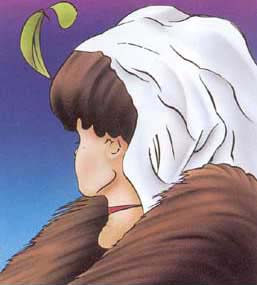
http://photos1.blogger.com/blogger/5639/2020/1600/chica_o_vieja.jpg


Look at this image very closely. Observe it and analyze it. Now, tell me, what to do you see?
Do you see a young woman? Do you see an old hag? Do you see something else? Why am I even bringing this up?
This optical illusion helps to demonstrate what art critics set out to do.
Let’s assume that when you look at this picture you see the old hag. A critic would ask, do you only see the old hag? Do you see more? Look at it from this angle, notice the structure of her jaw or the way her face bends. Now do you notice that it could be a young woman?
When it comes to this illusion, there is no right answer. It is neither an old hag or a young woman, yet both at the same time. It all depends on the person looking at it and how they interpret it. 
What a critic would do with something like this is to point out how there is more than one way to notice it. How to look at something from a different angle, to step back for a second and think of something in a different way than you normally would. To at least give yourself the possibility of seeing it from that new angle, and see where everyone else who doesn’t agree with you is coming from.

Monday, April 22, 2013

Criticism Of Criticism: What has art criticism changed?


One thing that someone new to art exploration and criticism might ask is if art criticism has actually changed anything to the world at large?

The answer to this question is that if you look within the fields of that particular art, criticism has changed their worlds very much. 

In particular, film criticism has set the bad films apart from the good ones. If it weren’t for critics like Leonard Martin, Gene Siskel and Roger Ebert, we wouldn’t hold films like “Citizen Kane,” “Vertigo” and “Casablanca” in such high regards. There would be no guidelines that set films like “Jaws” apart from other films like “Freddy Got Fingered.”

It is because of the words and passions of critics that make classic works of art what they are. If there was no one praising the work of the Mona Lisa, would the painting be nearly as influential and famous as it is today? Would the painting even be in a museum in the first place? 

Hell, would there even be art museums at all if it weren’t for critics to point out which ones are good and bad?

Criticism Of Criticism: Roger Ebert and his influence


On April 3, 2013, Roger Ebert, often regarded as on of the greatest film critics ever, passed away. Although his life has ended, he has left behind a legacy that will continue to resonate for quite a while. 
While there was film criticism long before Roger Ebert was born, Ebert helped to make film criticism interesting and exciting through his reviews and television show with Gene Siskel, entitled “Siskel & Ebert.”
Week in and week out, Siskel and Ebert would watch around five new movies, sometimes even more, write their own reviews, then come on the camera and then make a show about it, arguing with one another over which movies were good and which ones were bad. To do this for so long and to continue to have heated discussions with each other shows just how this meant to people like Ebert and Siskel. And if they didn’t continue to get the support and followers, then there would have been no show.
Obviously, people enjoyed watching these two argue about movies. So why did people keep watching? I think they came to watch their most defining characteristic: Their passion. Passion for films, passion for talking about films, passion for writing about films and simply a passion for life. 
If I take away just one thing from Roger Ebert’s life, it’s that everyone should find that one thing they’re truly passionate about in life and follow it. Follow it and center your life around it. That passion will not only bring you happiness, but a purpose.
Below is a link to one of my favorite internet critics as he bears his heart out to everyone about his feelings with Roger Ebert and the legacy that he leaves behind him.

Thursday, April 18, 2013

Criticism Of Criticism: Being Subjective and Opinions


Here’s the thing about criticism of the arts: It is all the thoughts and opinions of the person writing these reviews. When it comes to opinions, it’s important to remember that they’re often biased and only seen from one perspective, especially when it comes to criticizing the arts. It’s impossible for a critic to be absolutely objective with their opinions. 
Here is one way to differentiate what critics do from others: Criticism of the arts is almost entirely a subjective experience and practice, while science and math is almost entirely an objective experience. I say this because an objective experience is rooted in truth and fact. That you can calculate and measure out something to experience it. Two scientists can look at the same equation and come up with the same results. That’s science and being objective. Art criticism, on the other hand, has no truth or facts to it. Two critics can look at the same painting and have two entirely different impressions of it. That’s just having an opinion and being subjective. 
Some people like to think that there’s a science behind breaking down art and analyzing what makes them work and what doesn’t, when there never has been and there never will be. People only need to watch “Siskel & Ebert” to understand why there is no equation to truly great art. The closest thing people will find to that is the passion and heart that critics put into their work, and the passion critics have for their respective art form.

Monday, April 15, 2013

Criticism Of Criticism: Introduction


Have you ever read a review of a book, play, film or music album and completely disagreed with it? To the point where you stopped and thought about wether this review has changed anything and if it was even necessary to point out? These kind of thoughts can lead to an entirely different way of thinking that some people have adopted: Is criticism of the arts even necessary in the first place?
This is the kind of question that my blog will explore in detail. Many critics have labored over reviews and ways of describing why certain works of art are either good, bad or somewhere in between. Yet, it seems that these reviews and the work of critics does not change anything, or even if does change something it’s more often for the worse, not the better.
Overall, I hope that this blog would help to not only let others gain a deeper appreciation of the arts, but also to help me gain a deeper respect for those who work in arts and to better understand the work that I hope to do one day.