Wednesday, October 5, 2016

Movie Review - "The Bad and the Beautiful" (1952)


If you go back through some of my older reviews, you'll probably notice one of my favorite "genres" is the movie about movies. Or, more specifically, movies about Hollywood. Films that show how the filmmakers not only put their blood, sweat and tears into their productions, but also a part of their souls. What we see on the screen is not just a movie to them, but a representation of themselves and their life experiences.

And there are often consequences that come with doing that.

Films like "Sunset Boulevard," "Ed Wood" and "Rear Window" to a lesser extent, show Hollywood and filmmaking for what it truly is - A creative, brilliant world that is always selfish and far too focused on the next big thing. Now I can add another great film to that collection - "The Bad and the Beautiful."

In this film, Kirk Douglas plays cutthroat film producer Jonathan Shields, who starts out working for a low production film company that only makes B-films, but Shields works his way up the ladder to become the leading film producer in Hollywood. But he doesn't get there by playing nice and making friends. The film is told through three flashbacks, each one coming from a "friend" of Shields, including director Fred Amiel (Barry Sullivan), movie star Georgia Lorrison (Lana Turner) and screenwriter James Lee Bartlow (Dick Powell). Each story shows how Jonathan used each of them to his own needs and cut them loose when their usefulness ended.

In a way, "The Bad and the Beautiful"'s framing device reminded me of "Citizen Kane" - Playing up this great man for all his accomplishments and how he changed the world for the better, beloved by everyone, but over the course of the film we learn about the terrible things this man did to get to the top, and ultimately it was his own ego and stubborn pride that caused him to sink so low. By seeing this through the eyes of his friends, not through normal narrative means, it adds to the impact this convoluted and often-crazed man left on the world.

But the framing device is only part of what makes the film so wonderful. That would mean nothing if we got a weak performance from Kirk Douglas. Luckily, Douglas gives us his usual brand of over-the-top intensity that only William Shatner can match, and yet the quiet vulnerability of a man who realizes that he's made mistakes to get where he is. Douglas adds a nice layer of charisma to the role, as he makes it look so easy when the plays others to his own needs, making people like Georgia and James think they chose to be where they are. Shields might be a snake, but he's also a great charmer.

starmaker

But what I love the most about this film, and what makes it so admirable, is how the film justifies Shields' actions, to say what he was doing is the right thing. At the end of each flashback, the head of the film studio, Harry Pebbel (Walter Pidgeon), makes a sarcastic remake about how each story painted Shields as the villain, and then mentions how Shields led each of these three to stardom - Fred became one of the most reliable and decorated directors in Hollywood, Georgia is now one of the most beloved actresses in the world, and James went on to win a Pulitzer Prize.

This show that, while Jonathan might have been rotten to the core, he had people's' best interest in mind. He might have left many people behind, but he didn't leave them with nothing. Shields was just a man who loved filmmaking and wanted to continue making the best product he could, no matter what the consequences were.

I could go on and on about "The Bad and the Beautiful," especially about the similarities between these fictional characters and their real-life counterparts, like how Shields was supposed to David O. Selznick mixed with a bit of Orson Welles. This is the type of movie that I cannot get enough of, showing both the terrible and the tremendous sides to filmmaking and the ups and downs of a Hollywood career. "The Bad and the Beautiful" fights right in with many of the other best films about Hollywood.

Final Grade: A

Monday, October 3, 2016

Movie Review - "Blackboard Jungle" (1955)

blackboard-jungle-1-4

Is it safe to say, if you’ve seen one film about juvenile delinquency, you’ve seen them all?

That’s not to say all films from the 1950s about teenage delinquents were bad, but that these films were more-or-less about the older generation making sometimes vague and blanket-covering statements about teens and their lack of concern and intelligence.

They can be good time capsules for the 1950s, like watching an entire generation throw up an S.O.S. signal to their children.

"Blackboard Jungle" works in much the same way, but stays relevant by being one of the first films to use a rock-and-roll song, in this case "Rock Around the Clock," as well as being the breakout role for a young Sidney Poitier, who gives a cool-headed performance in a film filled with overacting teens.

Nothing too spectacular about "Blackboard Jungle" outside of its approach, with trying to be understanding to both teens and adults in trying to understand where the other is coming from. This is admirable, especially for 1955, and it would have been easy to paint one side as the villain and ambiguity was a rarity.

Final Grade: C+

Friday, September 30, 2016

Movie Review - "Don't Breathe" (2016)

dont-breathe-poster

Sometimes simplicity is the best way to scare and thrill an audience. You don't always need convoluted plans, big explosions and lots of plot twists (though that isn't always a bad thing). There are moments where putting two opposing sides in a dark and dangerous situation can give you the best results.

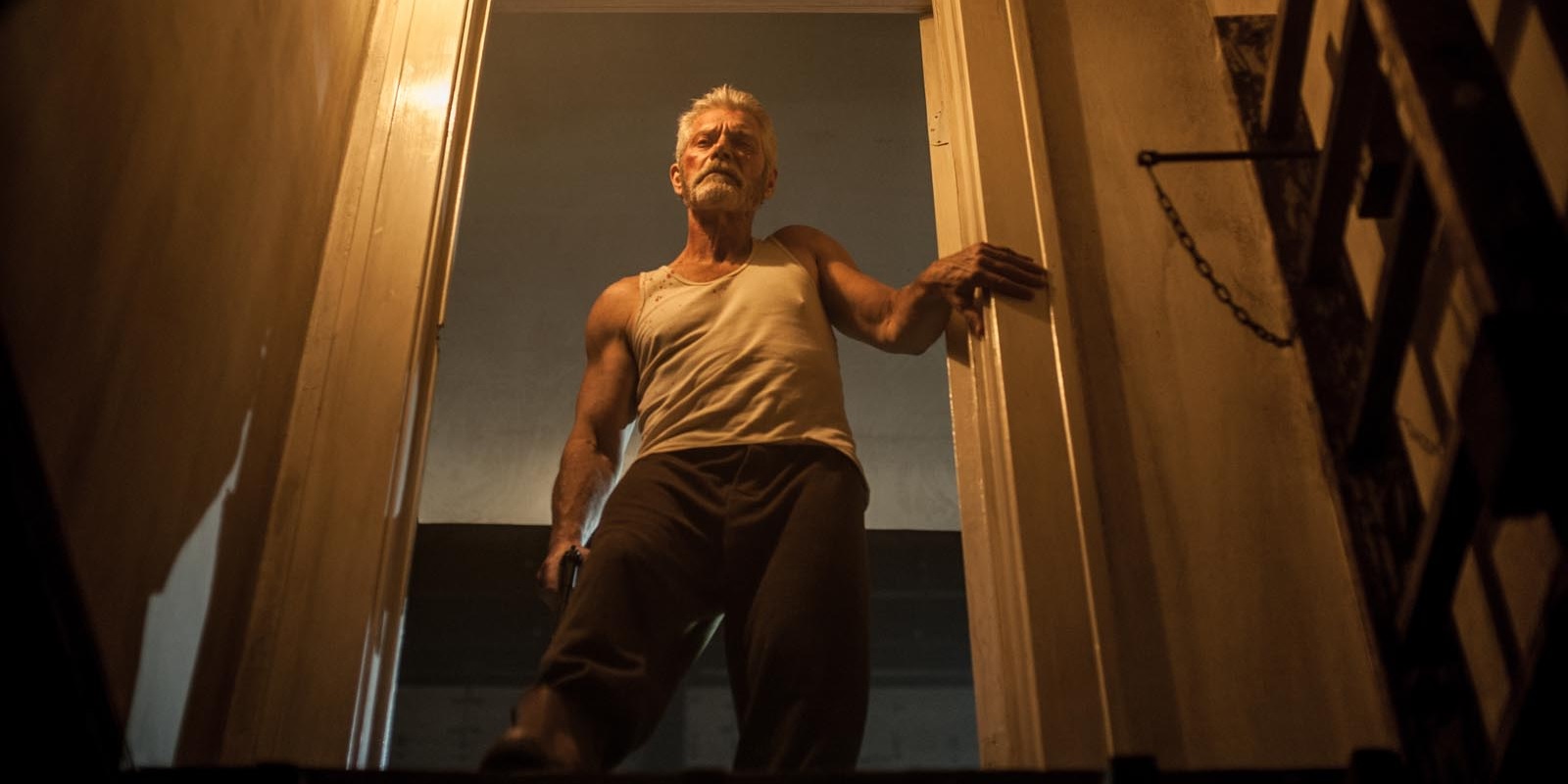
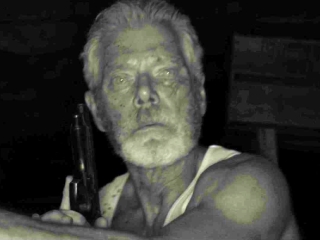
"Don't Breathe" lets every situation and scene speak for itself, without any scene overstaying its welcome and each one doing something fresh to its simple premise. At times, it feels like the film is pulling this off effortlessly, as we watch a group of teenagers break into the home of an elderly man who lost his sight in Iraq, with the kids knowing there is a lot of money somewhere in that house. But the man is not defenseless and uses his increased senses of hearing and smell to track the teens, forcing them to hide in this rundown shack from a pissed off army-veteran who has nothing left to lose.

What I loved the most about "Don't Breathe" was how it painted a distorted picture of both the teenagers and the blind man. Both parties have their reasons for doing these acts - The teens want to get out of Detroit and need the money to get all three of them down to California, where they can start their lives over again. They don't steal money, only valuables like watches and jewelry, and they only steal from the already wealthy. They don't want to hurt anyone, they're just sick of living their current lives and want to start over. And that isn't cheap.

dont-breathe-dylan-minnette-stephen-lang

This doesn't excuse breaking into people's houses and stealing from them, but you see where they're coming from.

As for the blind man, you'd think he would be the innocent party in all this. These kids broke into his house, are stealing his goods and are threatening his life. But, as the film goes on and we learn more about what this man has done, we realize this is a man who takes the law into his own hands. He doesn't believe in a proper justice system, since the girl who killed his daughter never saw the inside of prison cell, or in any sort of God - What kind of God would take away the eye-sight of a man who was only serving his country?

And then we see what this guy is doing to keep himself busy.

At that point, I knew that "Don't Breathe" was not trying to paint the teenagers as the bad guys or the blind man as the innocent victim, but showing shades of grey and ambiguity to both sides. They are not being written as protagonists and antagonists, but as imperfect people, who make selfish and sometimes terrible decisions in life. They believe they're in control of their own lives and nothing bad could go wrong, so long as they are prepared. Which is why these two groups must butt heads - so that both sides can realize the error of their ways.

dont-breathe-stephen-lang-as-the-blind-man

Outside of that, "Don't Breathe" never gets boring. Every scene flows neatly into the next one, and always finds a way to add something new to the tension, like when the teens are trying to escape through the basement, but the blind man turns off the lights and now both sides are blind. The elder is able to feel his way through the basement, recognizing familiar structures, while the teens stumble their way through the dark.

The film does not get bogged down in pointless moments, as everything we're shown does eventually come into play. Unlike most horror films, "Don't Breathe" has very few jump scares, and the ones that do occur are used well, like one involving the blind man's dog early on. Once the dog comes into play again, you're constantly on edge, wondering if the dog will pop up again. Jump scares are used at just the right moments to keep you wondering what might be lurking around the corner.

The blind man does not have many lines throughout the film, but he doesn't need many lines. He keeps his dialogue to basic questions, like asking his intruders how many are in his house. Instead, we see him tracking down the teens, by realizing there are multiple pairs of shoes in the house, and they don't smell like his shoes.

dontbreathe

"Don't Breathe" takes full advantage of its premise and works in some creative bits, using almost entirely visual queues to tell this story. This film is simple and yet ingenious at the same time, with how it portrays the small cast of characters who are all just trying to survive. This one is always thrilling, tense and claustrophobic, making it one of the best horror films in recent memory.

Final Grade: A

Wednesday, September 28, 2016

Movie Review - "Hell or High Water" (2016)

hell-or-high-water-poster

"Hell or High Water" is a tale of two well-written stories that run parallel to one another - One about a tired generation of farmers looking out for their children so they don't have to go through the same sorrows they did, and another about an aging Texas Ranger looking for one last chance for glory before he retires. All while having a "No Country For Old Men"-esque style, tone and pacing, giving the characters plenty of time to think about the wrongs they've made to get where they are.

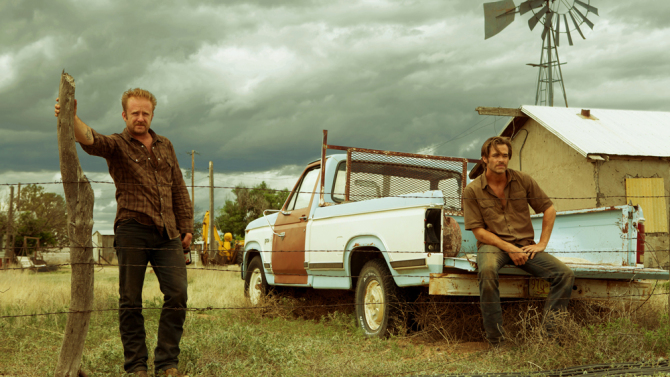
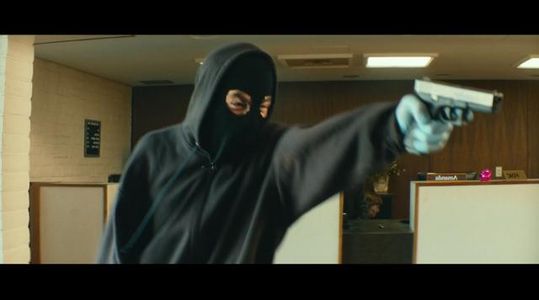
Brothers Toby and Tanner Howard (Chris Pine and Ben Foster, respectively) are about to lose their land to the bank, having just lost their mother and putting down a reverse mortgage to cover the medical bills. But after Toby finds out there is a large oil deposit underneath the farm, he is dedicated to paying off the mortgage by any means necessary. Toby contracts Tanner, recently released from prison, to help him rob banks of their small bills until they make enough to pay off the mortgage.

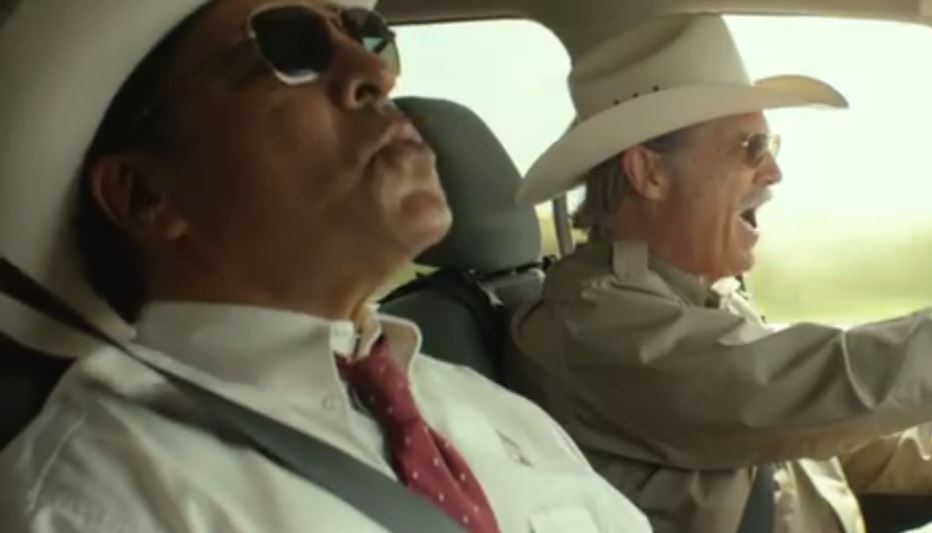
Meanwhile, Texas Ranger Marcus Hamilton (Jeff Bridges) is close to retirement and hears about several banks being robbed, making this his last case. Marcus is able to deduce the Howard brothers actions and seems to be behind the two every step of the way.

hellhighwater

Perhaps "Hell or High Water" feels so much like "No Country For Old Men" because of the Texas atmosphere, taking place mostly in rural country towns, where everyone is doing their best just to survive. It might be that both films are about aging police officers hunting down criminals who always seem to be on the run, someone they can never catch. But I think it has to do with the similar theme of confusion and worry for the next generation.

"No Country For Old Men" was about how the criminal mind had evolved to the point where we couldn't calculate or understand it. That criminals were no longer looking for something, but just wanted to invoke chaos and anarchy. They want to see others suffer, just because they could do it. Similarly, "Hell or High Water," is about how the banks, a system sworn to protect and safeguard the people of Texas, has been stealing everyone's money and forcing them out of them own homes. The banks have become so greedy, that they only see their clients as their next cash cow.

This is helped by the many vacant or run-down houses Marcus and his deputy come across during their travels, with rusted or broken-down cars and not a soul in sight. The deputy, who is part-Native American, gives the speech about how his ancestors land was stolen, and now the children of those thieving ancestors are getting their land stolen as well, except this time it is the bank that is stealing.
hellhigh

This makes Toby and Tanners crusade so fascinating. The two are only stealing money from the bank that holds the mortgage on their land - They intend to pay the bank back with their own money.

While a heist movie at its core, "Hell or High Water" is a piece filled with intriguing characters, mostly looking for their place in the world. There are no major gun-fights until near the end of the film, so if you expected a rough-and-tough shoot-em-up action piece, you'll have to look elsewhere. What you'll get instead are some well-acted scenes between Chris Pine and Ben Foster, who always have this friendly-yet-physical relationship, as well as Jeff Bridges wondering what he'll do with his life after the chase has ended.

hellorhigh

Overall, I enjoyed "Hell or High Water" for its world building and making this rural land look like it was once a wonderful place to live, but has been destroyed due to a cancerous economy. In a way, the film is about the remnants of that old world looking to build a better world. This is a smart, beautiful and well-written piece that I wouldn't mind watch again.

Final Grade: A-

Tuesday, September 27, 2016

Movie Review - "Steamboat Bill Jr." (1928)

steamboat

If you love classic cinema, this question is bound to come up - Who is funnier? Charlie Chaplin or Buster Keaton?

This answer always varies from film buff to film buff. Chaplin was more emotional in his comedy and love to have exaggerated body movements, like a Looney Tune. Keaton, on the other hand, was far more story-driven and was known for his stone-face expression, like all these crazy shenanigans had no effect on him. Chaplin was known for his sketches and segments, while Keaton was a stunt-man, pulling off insane jumps and moves that had audiences reeling and terrified back in the 1920s.

Both certainly had their strengths over the other, and it was easy to see why the two of them were the leaders in silent comedy. While I consider myself a bigger Chaplin fan than a Keaton fan, there is something to admire about the stunts that Keaton was able to pull off, most coming either "The General" or this film, "Steamboat Bill Jr."

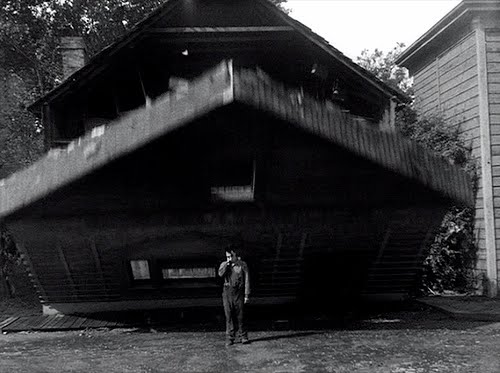
This is where Keaton perfected the famous cyclone sequence, where an entire town is destroyed by a storm and Keaton is stuck right in the middle of it. His bed is blown throughout the collapsing city, while he is later forced to move against the hurricane-force winds, while a large truck comes barreling the other direction. But perhaps the most notorious part is when the side of large stone building is about to fall right on top of Keaton, only for him to be standing exactly where the window is.

steamboatbill

As with every other Buster Keaton film at this time, there was no trick photography with this segment. That was a real building falling down on top of the real Buster Keaton. No wires if anything went wrong, no editing to make sure Keaton wasn't in danger, and no stuntman.

This scene has been parodied so many times that it has almost lost all meaning, but this is something to be truly admired. To pull off large-scale stunts like this, creating a miniature town only to have it be torn apart by a gigantic windstorm, in 1928 when nothing to that scale had been done before, says a lot when people are still parodying it. Almost 80 years later, and we're still impressed by Keaton's skill as a comedian and a stunt-maker.

However, outside of the cyclone sequence, "Steamboat Bill Jr.," does not have much else going on for it. There are a few other cute comedic sequences, like Keaton trying on a bunch of different hats and his strict father turning down every hat his son liked, but that's about it. Nothing too impressive about the rest of the film, but it is worth it for the final cyclone scene.

Final Grade: B

Thursday, September 22, 2016

Movie Review - "Robin and the 7 Hoods" (1964)

robin-and-the-seven-hoods

Every fiber of my being is telling me I should despise this movie. That it is confusing, convoluted, non-sensical and poorly paced. And yet, I loved every second of "Robin and the Seven Hoods." This one was just as big of a surprise as "Mister Roberts" was.

The film is set in 1920s Chicago, right in the middle of the Prohibition Era, when crime boss "Big" Jim Stevens (Edward G. Robinson) is gunned down at his own birthday party. He is replaced by the crooked Guy Gisborne (Peter Falk), who is willing to give every gang in the city protection from the police, but at the cost of half of their daily earnings. Gisborne is soon approached by Robbo (Frank Sinatra), who won't be apart of Gisborne's gang and sets out to make a name for himself in Chicago.

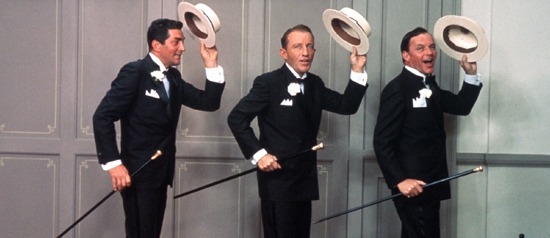
After a run-in with Big Jim's daughter, Marian (Barbara Rush), Robbo earns a large sum of money he doesn't want, and it is given to an orphanage. One of the caretakers for the orphanage (Bing Crosby) is delighted by all this and starts spreading the good word about Robbo, the modern-day Robin Hood.

The reason I say "Robin and the Seven Hoods" is confusing and convoluted is because it wants to be many genres at the same time - Gangster, comedy, musical, courtroom drama, as well as a modern retelling of Robin Hood. At times, it even feels like "Seven Samurai," where the gang of misfits help the villagers for no intended reward. And yet, I love the film because it is so tongue-in-cheek about everything, while still pulling off the 1920s-gangster feel and some beautifully choreographed musical numbers.

robin-and-the-seven

Normally, I'd say a film should stick to one or two genres, but "Robin and the Seven Hoods" tries to be four or five genres at once, all for laughs. Naming the love interest Marian and Robbo's best friend "Little" John (Dean Martin) is one thing, but turning their casino into a church within a couple of minutes to hide from the cops is so ridiculous that it is hilarious.

Everything about this film is cranked up to eleven and I can't help but appreciate it. Peter Falk as the eccentric gangster was pitch-perfect casting, from the voice and mannerisms to the need to feel important and constantly failing at it. The courtroom trail is short and sweet, especially when they give the verdict and shows that this town is smarter than it looks. But my favorite comedic bit is the last twenty minutes of the film, when Marian continually goes on the same type of date with different men, including Robbo, Little John, Gisborne and the deputy sheriff, in a bid for power and continually being shot down.

There was just something that really got to me about Marian's plans falling apart, only for her turn around and come up with another power struggle idea one second later. All her plans are the same, which might be why they're so great to see falling apart at the seams.

Overall, "Robin and the Seven Hoods" was a genuine surprise. At times, it feels like an authentic gangster film, but then it breaks into a musical number the next moment, all while telling the story of Robin Hood. I respect this movie and its filmmakers for having such a care-free attitude throughout the film and being able to pull off so many genres at once.

Final Grade: A-

Wednesday, September 21, 2016

Movie Review - "Black Sabbath" (1963)

black_sabbath_poster_02

My first adventure into the world of Italian horror. Or at least, an Americanization of Italian horror.

I got a taste of this genre with "Crimson Peak" last Halloween and I am beginning to see why Italian horror films, especially those by Mario Bava, resonate with horror fans. Part it might be the old-school style of filming, reminiscent of early Universal monster films like "The Mummy" and "Frankenstein," but have the added benefit of being shot in color. As great as some of the early Universal films were, horror works better when you can see the sunken and disturbing colors on a shocked face.

Another part might be that Bava believes in the concept that true horror comes from what we don't see, letting our imaginations and fears fill in the gaps for us.

But after doing some research on this film, "Black Sabbath," I found that Bava shot in the film in Italian, but was heavily changed, re-edited and even re-shot when the film was bought for distribution by Warner Brothers. The reason American companies were interested in this particular movie was because Bava had begun to make a name for himself around the world as the next great master of horror, and because Bava cast Boris Karloff as the narrator throughout the film, with Karloff still being the biggest name in horror films since "Frankenstein."

The version I saw of "Black Sabbath" was the American version, which did show the three horror anthology segments in a different order than Bava intended and lacks a proper ending narration from Karloff.

bsabbath_shot7l

I found "A Drop Of Water" to be the most fascinating segment, since it hooks you in from the beginning with a wonderfully vibrant color scheme and a rickety old house, yet there is a single occupant that is more than content living there. It is the shortest of the three segments but makes the most of its time with a simple story of haunting an old friend who has mistreated the dead.

"The Telephone" started off wonderfully, almost like a "Twilight Zone" episode, invoking mystery and intrigue about a man considered dead contacting his girlfriend through a blood-red phone, talking about how the two of them will soon be together forever. But by the end, most of the intrigue is gone and things are wrapped up a little too nicely for how strange it was trying to be.

Finally, we have "The Wurdalak," which feels more like a lost Universal horror film than anything else. It doesn't have the same level of intrigue and mystery as the other two segments, so this one feels out-of-place in "Black Sabbath." It does introduce a type of vampire I've never heard of, a vampire that only feeds on people they love, but it does not do anything with that premise outside of the usual vampire traits we have all heard of before.

Overall, "Black Sabbath" is hit-and-miss, or at least the American version is. I can't say anything for the Italian version, but this did make me want to check out more of Mario Bava's work and see his ideas of horror expanded upon. "A Drop Of Water" was brief yet satisfying, and the better parts of "The Telephone" were captivating and terrifying. But as a horror anthology movie, this one was so-so.

Final Grade: C+