Thursday, December 24, 2015

Movie Review - "Creed" (2015) - Legacy Of A Boxer

creed poster

At this point in time, I have only seen the first "Rocky" film. I'm unsure if I have talked about this, but sports films tend to bore me. At best, they're predictable tales of underdogs overcoming all odds and winning the big game in a heroic fashion. At worst, you get films like "Southpaw," which are a pain to sit through.

But "Rocky" was certainly different. Not only had the cliché of rags to riches in boxing not been fully utilized yet, but the film was less about boxing and more about second chances. About giving everything you have to reach your dreams, all driven by a performance that Sylvester Stallone has never topped.

Well, except for maybe his newest role in "Creed."

Stallone is a one-of-a-kind actor. Maybe attempt to imitate him, but few have ever reached the versatility and longevity of a man who has been an action star in three long-running franchises and other classics like "Demolition Man." He has seen his share of failures and ridicule, but anyone who can make a success in cinema and keep making people want to come back to see you nearly 40 years later gets nothing but respect in my book.

If there was one role that Stallone was born to play, it was Rocky Balboa. A man that he not only brought to life on the screen, but also created on paper by writing the screenplay for "Rocky." Like Stallone, Rocky has evolved over the years, from the underdog, to inspiration, to champion and back down again. Now he can add mentor to that list.

"Creed" follows the young life of Adonis Creed (Michael B. Jordan), the son of the late Apollo Creed, as he attempts to make it into the boxing world. Not wanting to have the stigma of his father attached to him, he takes on the name of Donny Johnson, and pleads that he will make his own name in boxing. But now trainer is willing to take Adonis under their wing in Los Angeles, thus causing him to move to somewhere he could find someone - Philadelphia, the home of Rocky Balboa.

creed_2

Rocky taking on the role of mentor and trainer to a new and upcoming boxer is good on its own, since he now becomes his trainer from the first film, Mick (Burgess Meredith), and pass on that knowledge to a new generation. But what elevates this even further is that Rocky is training the son of his rival and his best friend.

We're given several reasons about why Rocky would train Adonis, since Rocky is given plenty of opportunities to train arguably better boxers. Perhaps it is because he wants to keep the name of Creed alive. Or it could be redemption, since Rocky partially blames himself for Apollo's death in "Rocky 4." But by the end of the film, we know why he chose Adonis - because this kid motives him to be a better man.

We learn that everyone Rocky cared about, including Adrian and Paulie, have been dead for some time. His son has moved far away and doesn't want to be associated with him. He still visits the grave of his wife every day and reads her the newspaper. This is a man who lives in the past, but has taken the punishment that life has dished out to him and can't take anymore. Boxing is the only life he knows now. It might have been the only life he ever knew.

Creed-2015-Wallpapers

And with the arrival of Apollo's son, Rocky is once again given another chance, just like in the first film. Not just to fight, but to live again. To find a purpose in world and realize that even an old man make a difference.

Stallone's performance speaks volumes of the torture that Rocky endures, being separated from Adrian, Paulie and his son, unable to box, unable to live. And in turn, the chemistry between Michael B. Jordan and Stallone speaks beyond generations and to one of undying respect. Adonis adores Rocky for his skills and unbreakable will, while Rocky sees a man dedicated to a cause worth fighting for.

This is Stallone's best performance since "Rocky," and is amplified further by an equally great performance by Jordan.

creed 3

Combine this with wonderful cinematography during the boxing sequences, including one fight done entirely in one shot while showing both sides of the fight, and the impact of the sports world like that of "Trainwreck" from earlier this year, and you get the best sports film in a long time.

"Creed" certainly wipes the bad taste of "Krampus" out of my mouth and has given me plenty to think about.

Final Grade: A

Wednesday, December 23, 2015

Movie Review - "Star Wars: Episode VII - The Force Awakens" (2015) - Spoiler-Free Review

Star_Wars_Episode_VII_The_Force_Awakens

If there's one thing that the phenomenon of Star Wars has captured so brilliantly, it is a grand universal scale and size. The weight of these imaginative worlds coming together and their conflicts has always been massive, and the mythology of the force, the Jedi and the constant battle between the dark side and the light takes this beyond a war and into the realm of epic fantasy. Above all else, Star Wars is the definition of a cinematic epic.

This is why I adore J.J. Abrams addition to this universe, with "Star Wars - Episode VII: The Force Awakens." Unlike the prequels, this film feels massive, covering not only vast distances of space, but also time and the legacy of both good and bad people. This film is not just an excuse to show flashy effects and have lots of fights, in fact there is very little of that in this film, but to tell a tale that we're all familiar with and in a new way.

Set roughly 30 years after the events of "Return Of The Jedi," the remains of the Galactic Empire have now reformed into the First Order, still bent on ruling the galaxy and eliminating anyone who stands in their way, including the Rebellion. The greatest weapon of the rebels, Luke Skywalker, the last Jedi, has disappeared. But when a map to the location of Luke has been discovered, it becomes a race between the Rebellion's best pilot, Poe Dameron (Oscar Issac) with his droid-buddy BB-8, and the First Order, led by the dark force user Kylo Ren (Adam Driver), to find Luke.

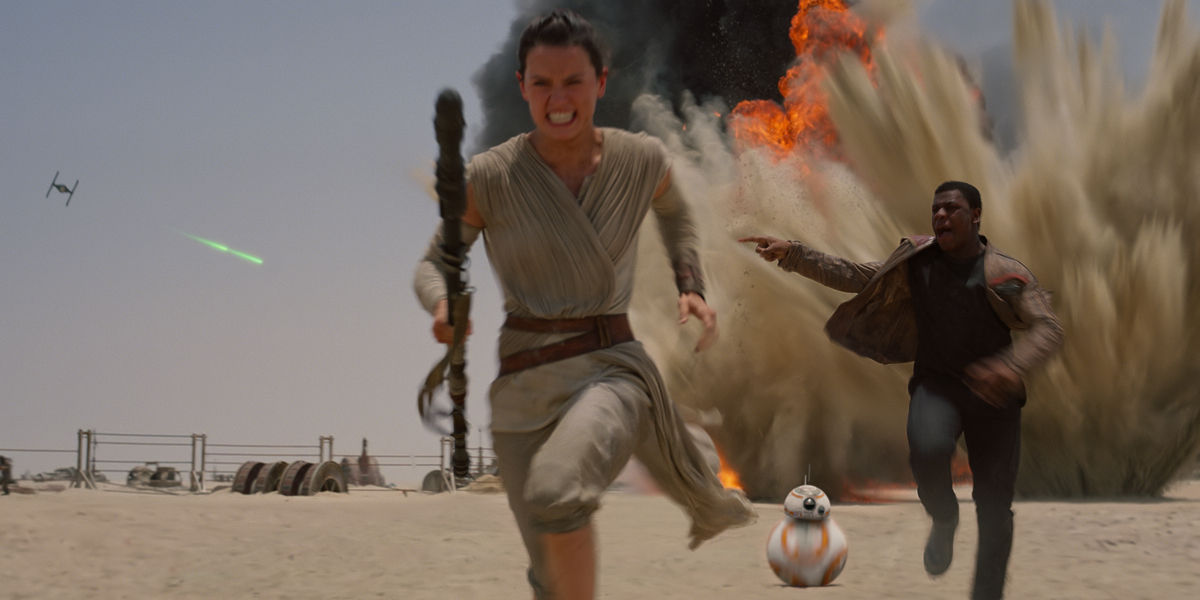
Along the way, we meet new players like Rey (Daisy Ridley), a young scavenger stranded on the planet Jakku, filled with decaying Star-Destroyers and relics of a war fought decades ago. Rey struggles every day to make ends meet, stealing parts from the broken-down ships and using those to buy food, always looking to the horizon as if she is waiting for someone.

Another new character is Finn (John Boyega), or FN-2187 for short. Finn is a Storm Trooper, having been trained his entire life to become a ruthless killer. But after witnessing the atrocities that the First Order is capable of, Finn takes the first opportunity he can to run and get away from the grasp of these savages.

Through a strange set of circumstances, Rey, Finn and BB-8 end up on an adventure that takes them through the heart of the galaxy, as they fight off the First Order and meet some old friends.

The-Resistance-Star-Wars-7-Force-Awakens-X-Wing

If there's one thing I loved the most about "The Force Awakens," it was the characters. Every new character that was introduced is lovable, sympathetic, or fun to be around. Finn was an especially great addition, as he often brought the comedy up and offered a neat perspective on the villains, that not all of them are evil and wish to make a difference in the universe. This is the kind of guy who loves exploring these planets while still enjoying the thrill of the hunt, especially when it involves destroying TIE-Fighters.

BB-8 is the cutest film character since WALL-E. Little to no CGI was used with this guy, as he rolls around like a soccer ball that somehow became sentient. Yet he is still so expressive, like when he gets lost in the deserts of the Jakku, afraid that he might never find his master again. BB-8 even gives a thumbs up at one point, despite not having any fingers or arms, so he gets points for being creative.

Rey, as previously mentioned, has been stranded on a desert planet since she was a little girl, but has fought and scrapped her way through it all. She is certainly more tragic, as she clings to the hope that whoever it is she's waiting for will return soon, but in her more quiet moments, she seems upset as if she knows the truth. One of the first scenes with her shows a massive wall of tally marks, to show how many days it has been since she was left here. The screen could not even show the full size of those tallies.

Like Luke in "A New Hope," Rey is stuck in this wasteland, but is fully aware of the galaxy around her. She strives to make something more than the life she has, and jumps at the first opportunity to try something different - even if that means getting involved in a galactic war.

Star-Wars-Force-Awakens-Rey-Finn-BB8-running

Finally, we have our new villain - Kylo Ren. It is difficult to talk about this guy without spoilers, but let's just say that he is conflicted between the dark side and the light. He is bound to the First Order, despite what he may wish, and is looked down upon by his master for not being as strong as he can be. He aspires to greatness, taking it upon himself to keep the legacy of Darth Vader alive. Ren idolizes Vader, but only as a sign of strength and loyalty to the dark side, unaware of what we know about him (yes, I'm saying that is a positive of the prequels, though I can't think of many others).

Without giving too much away, Kylo Ren is a sympathetic villain that sees the sides of the Rebellion and the First Order, but can't do anymore than what he is told to do.

To be honest, there was not a single character that I hated in "The Force Awakens." Every new character was a wonderful addition, they all had chemistry that made them work well off one another, and they gelled fantastically with the returning characters, especially Han Solo (Harrison Ford). Each of these characters has a distinct relationship with Han - Rey knows how the Millennium Falcon works without being told how, and Han can tell Finn is hiding something but trusts his intentions.

11222267_1007879549263646_8028576454601633718_o

Han Solo was always that necessary character in the Star Wars films that made the universe feel so expansive, that not every human had a connection to the force. Han always thought it was a stupid religion and was all superstitions, until he was proven otherwise. In "The Force Awakens," we see a man who has been through hell and back, and wouldn't mind doing it all one more time.

Some similarities have been drawn between "The Force Awakens" and "A New Hope," and I do think these similarities are unavoidable, but every time this film does something like they did in Episode IV, they add just enough new elements that it is forgivable. The two film are similar, but not identical.

These new elements, like these characters, their relationships with one another, the mystique of the First Order while still keeping the size of the Empire, give "The Force Awakens" is own unique atmosphere and vibe that is unlike any other Star Wars film. It is fun without losing its edge. The film can easily switch between an action-packed sequence of the Millennium Falcon begin chased by TIE-Fighters through a Star Destroyer half-buried in sand, and funny moments with BB-8 and Finn being unfamiliar with such an old ship.

jakku chase

Yet it never stopped feeling like Star Wars. I don't know if it was because of the sound effects, John Williams' score, the return of classic characters, the mythos of this universe or a combination of all these, but this felt like the logical continuation of this story - a more personal tale of how both light and darkness is reborn after so much destruction.

Like the great Star Wars films before it, "The Force Awakens" tells its story through visuals and not words. Many of the early scenes have little to no dialogue, especially the ones with Rey. So much it explained without ever saying anything, like the destruction of the Empire on Jakku and the world these scavengers now live in. "The Force Awakens" understands the power that cinema can have through the use of editing, juxtaposition and atmosphere.

"Star Wars: Episode VII - The Force Awakens" is the most fun I've had in theaters since "The Avengers." J.J. Abrams has created a work that not only honors the legacy started by George Lucas, but adds on to it. Each sequence stands on its own and there were so many moments that made me want to get out of my seat and cheer. It perfectly captures the size and scope of the Star Wars universe while making our connection to these characters feel more personal.

Final Grade: A

Tuesday, December 22, 2015

Movie Review - "Victor Frankenstein" (2015) - All You Need Is Five Minutes...

victor_frankenstein_poster

Within the first five minutes of the most recent adaptation of Mary Shelley's "Frankenstein," the mad doctor has removed Igor's hump, has him in a walking brace and helping his master use Star Trek-like techno-babble to reanimate the dead.

If that doesn't turn you away from "Victor Frankenstein," then you will probably enjoy this film. If you think this film is straying far too much from the source material, like me, then you are in for a long and irritating ride.

The problem with "Victor Frankenstein" is that the film cannot make up its mind on whether it wants to portray its protagonist as a hero, villain, anti-hero or something in between. He helps turn Igor into a civilized man, but he does that without asking Igor if he wanted this and keeps hammering this into Igor's mind throughout the film, as if he created him.

Victor-Frankenstein-Movie-2016-James-McAvoy

In fact, they use that line several times throughout the film, "I created you." No, Doctor Frankenstein did not create Igor. He saved Igor from being treated unfairly at the circus, and took him to a rundown factory where he would be treated unfairly and hunted by the police. I get that Frankenstein is egotistical, you have to be when you attempt to bring the dead back to life. But this is a man who continually ruins the lives of perfectly good people, while parading around town like he's a good but misunderstood man.

There is an attempt to give him a presence similar to that of Benedict Cumberbatch's Sherlock Holmes - an intelligent gentleman who lacks social skills but is ultimately trying to do the right thing. That's all well and good, but when you have your main character killing people who get in his way while he attempts to reanimate corpses, that attitude can turn your hero into a terrible person.

This certainly is not helped by James McAvoy's performance as Victor Frankenstein, as he screams nearly every line at the top of his lungs and we watch every drop of spit come flying out of his mouth. McAvoy's performance takes scenery chewing to a whole new level. I was afraid McAvoy was going to jump out of the screen and attack us for not loving his performance.

If there is one redeeming quality to "Victor Frankenstein" it would the other similarity to "Sherlock" - actor Andrew Scott (who played Moriarty in the show) as the inspector in charge of tracking down Frankenstein. His character is given several other cases throughout the film and is told to stop the hunt for the doctor, but he never stops, always with the same intensity in his eyes. As if the inspector takes offense to what Frankenstein is doing, much like the audience takes offense to this film.

maxresdefault16

As the film progresses, we find out about the inspectors past and his devotion to Christianity. He believes in his religion above all else, and what Frankenstein is doing here goes against everything he stands for. Some might say this is someone so blinded by religion that he can't see progress, but this is a man who comes from a tragic background and is desperate to make sure more lives are not ruined like his.

Scott plays the role like someone who is confused by all of this, unsure what to do and how to stop of, but will not waste a moment until this offense is dealt with. The film portrays the inspector as the villain, but I was far more sympathetic to him than I was for Frankenstein or Igor. The only shining point in an otherwise unworthy film.

Overall, "Victory Frankenstein" is far more concerned with current trends of shows and movies, like the sociopathic Sherlock Holmes and tragic-yet-comedic movies, that it so far removed from Mary Shelley's vision.

Final Grade: D

Friday, December 11, 2015

Movie Review - "Spotlight" (2015) - Separating Fact From Fiction

MV5BMjIyOTM5OTIzNV5BMl5BanBnXkFtZTgwMDkzODE2NjE@__V1_SY317_CR0,0,214,317_AL_

Every once in a while, perhaps once every five years, there comes a film that I do enjoy to some degree, but that I end up respecting more than anything else. These typically end up being the most important films of that age. A movie whose whole is greater than the sum of its parts, and challenges our ideas of what a film can and cannot do. By the end of these, you are left baffled and wondering, "Did I just watch a movie?"

A perfect example of this is "Citizen Kane." To be honest, I'm not the biggest fan of Orson Welles' first outing into the world of cinema, but the impact of the film cannot be ignored, nor can what it was able to accomplish in 1941. Welles' egotistical fingerprints might be all over the film, but it changed everything that we know about cinema today. If nothing else, I respect it more than most other films.

These are the intelligent films that are wise beyond their years, and don't try to gloat about what they can accomplish, merely allowing their actions to speak for themselves.

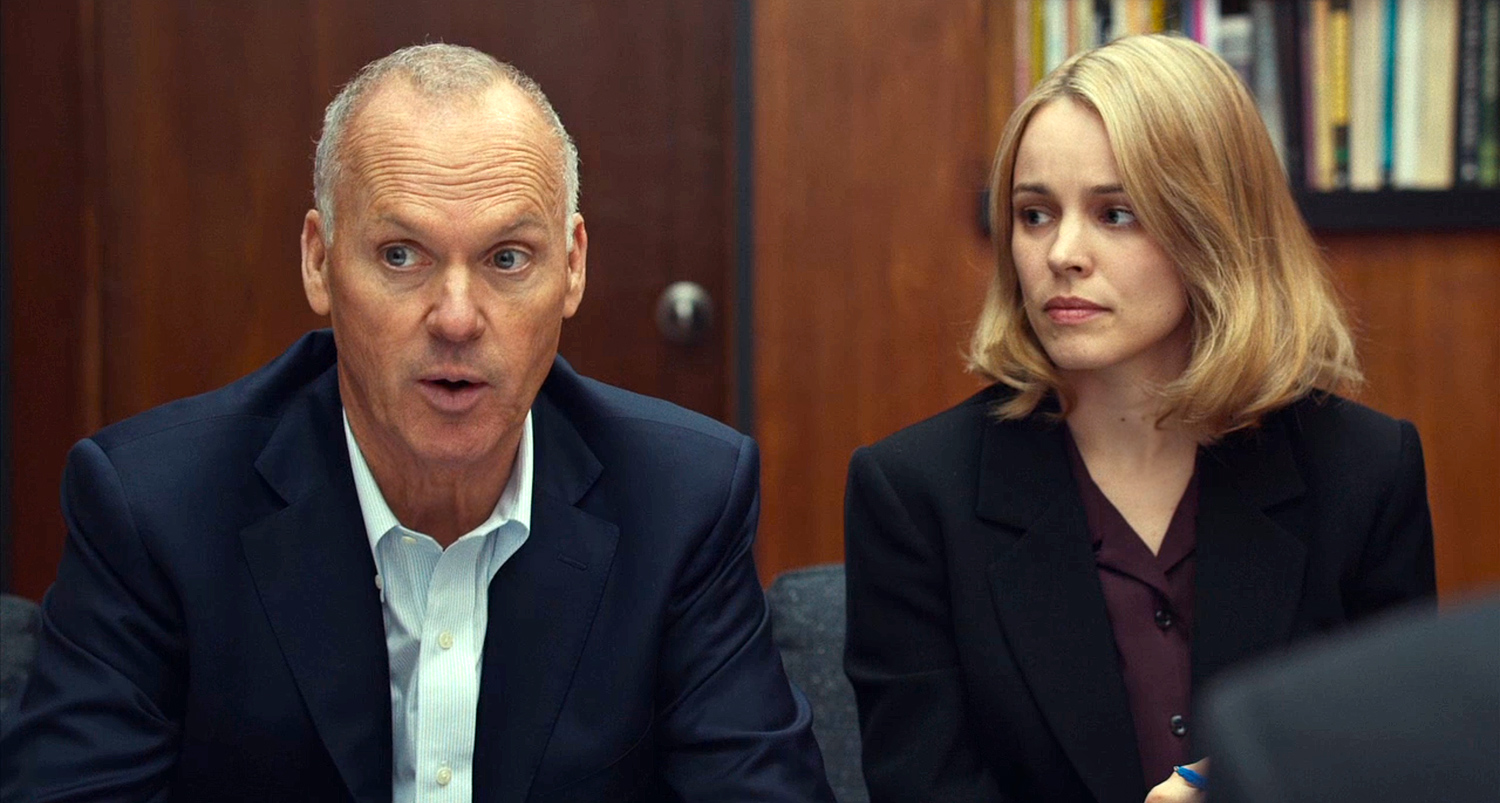
A new film has joined this category, "Spotlight." A film that is meticulous yet honest, unyielding yet kind, enlightening yet jarring. It follows the true story of a group of reporters and writers for the Boston Globe in the early 2000s that uncover a well-kept secret of Roman Catholic priests that molested children that dated back as far as the 1970s. Despite the backlash among the church and city of Boston unwilling to allow this to come to light, the reporters (played by Michael Keaton, Mark Ruffalo, Rachel McAdams and John Slattery) never stop to hunt down the truth about what happened, because they know it is what the people deserve.

spotlight

The highest compliment I can give "Spotlight" is that it never felt like a movie. I don't mean that I had an out-of-body experience, but that it didn't seem like I was watching actors trying to fit into their role, or that the director was manipulating the audience to feel a particular emotion. It felt like I was watching these real people doing their best to bring a terrible crime into the light despite all the people being against them.

This is because the film is based on of true events, but even then those types of films often manipulate the situation to make everything feel more grand and cinematic. "Spotlight" never goes out of its way to do that, seeing that as distorting the fact and turning it into fiction.

My belief is that film is one of the greatest illusions an artist can pull, and that can be true for any piece of fiction. You are making an audience of millions believe that everything you just showed them actually happened, and that they get emotionally invested in it because they thought it was real. If you do something jarring or off-putting that reminds us we're watching a film, you break the illusion. But what do you do when there is no illusion to begin with? With a movie like "Spotlight," you stick to the facts and make the audience think they're apart of cracking this case along with the reporters.

spotlight-data

To my recollection, two other films have done something like this and pulled it off spectacularly - "All The President's Men" and "Zodiac." Both of these films were about breaking the most difficult cases of their time, the Watergate scandal the Zodiac killer in San Fransisco respectively. Neither film was shy from telling the truth and the attention to detail was as close as it was for the reporters.

These films, along with "Spotlight," are shining examples that film can be more than entertainment and art, but a time capsule to those who persevered and conquered a system that was bigger than themselves. That journalism is more than reporting the news, but it gives a voice to the voiceless. It reminds establishments, like the government or the church, that we will notice when they become corrupt and commit crimes, and that we will not stand for it.

spotlight2

Overall, I respect "Spotlight" more than any other film in the last five years. It is a shining beacon for the power of journalism and that you don't need an exciting climax or expansive fiction to tell a fascinating story. I may not have always been entertained by "Spotlight," but I appreciate that it stays true to the "Based On True Events" statement at the beginning of the film.

Final Grade: A-

Monday, December 7, 2015

Movie Review - "The Good Dinosaur" (2015) - When Dinosaurs Ruled The West

The_Good_Dinosaur_Promo_Art_03

Imagine a world where the meteorite that wiped out the dinosaurs missed the planet. What would change about the landscape of our planet? How would the dinosaurs evolved? Could you see dinosaurs becoming farmers, while some species like a T-Rex turn into cattle wranglers?

Yeah, me neither. But that's what we get out of Pixar's "The Good Dinosaur."

Of all the angles to take with bringing dinosaurs back to life, what Pixar did was off-the-wall crazy and borderline tedious. In fact, this story did not need to be told with dinosaurs at all. Our main character, Arlo, being a dinosaur never seems relevant to his journey of getting back home while overcoming his fear of anything that might spook him.

Perhaps "The Good Dinosaur" felt underwhelming because it came out so close to one of the best Pixar releases in a while, "Inside Out." But another reason might be that the film does nothing with its wonderful set up. Rather than seeing how much the world would change if velociraptor, Triceratops and T-Rexs' still existed in the world, we got a western that plays like an episode of "Gumby." At times, this film feels like a watered-down version of "The Land Before Time," while other times are straight out of "The Good, The Bad And The Ugly" or "Shane." This was jarring to say the least.

65428

But, to the films' credit, when it's good, it is impressive. The animation for the landscape is something I have never seen before in an animated film, where every tree feels like I could reach out and touch it, while the mountains and river look calming and dangerous all at the same time. Any time the sun sets, the sky looks though it is exploding with purple and orange.

When "The Good Dinosaur" wants to be a western, the cinematography puts Sergio Leone to shame. But what really sold me was a scene in which Arlo and the T-Rex wranglers talk about their scars and how they each got them. One dino got the tip of her tail torn off by a boulder, while another was attacked by a gator and had his face disfigured. They all wear their scars with pride and wouldn't change a thing about themselves.

good-dinosaur-t-rex-butch-arlo

Arlo comments about how fearless they are, but the lead Rex (voiced by Sam Elliot) says he was terrified while having his face ripped apart. He comments that it is perfectly normal to feel fear, and that we cannot stop it from happening. That fear is like a storm - it will come for you and you will notice it, but how you adapt to it is what makes or breaks you.

I've never heard it put quite like that, and it is not overblown or exaggerated. This is a message simple enough for children to understand, without dumbing anything down.

Outside of these elements, "The Good Dinosaur" tries way too hard to be every genre imaginable that it is hard to fully enjoy. It wants to be a coming-of-age tale, a fantasy, family comedy, tragedy, adventure, western, cartoon, a boy-and-his-dog story and epic quest all at the same time. Does it pull this off? Most of the time it doesn't, but a few quiet moments between Arlo and his human pet Spot that make the journey worth it.

Final Grade: C+

Wednesday, November 25, 2015

Mini-Review - "Frenzy" (1972)

Frenzy_movieposter

"Always make the audience suffer as much as possible." ~Alfred Hitchcock

Watching a Hitchcock film is like being dangled over the top of a twenty-story building - nerve-wracking, irritating, intense and nothing else like it in the world. Hitchcock is the one forcing you to look over the edge of that building and he enjoys every second of our torment.

The film to best personify that vision is Hitchcock's "Frenzy," a movie that came near the end of his career and saw him return to his British roots. By this point, the code of filmmaking that had been in place since Hitchcock arrived in America had been removed and replaced with the beginnings of the MPAA ratings. So Hitch took full advantage of that and that he was only bound by British filmmaking rules. He didn't seem to care if "Frenzy" got an R-rating, as long as it meant he could do anything he wanted, including opening his film with a naked dead body floating through London.

"Frenzy" is Hitchcock at his most barbaric, not afraid to pull any punches as to what can be shown on-screen. He'll show violent acts of passion and have the next scene be about the terrible cooking of a police chief's wife (which she never eats until the end, always forcing it on her husband). This is what makes "Frenzy" so endearing, the lighthearted nature of a serial killer on the loose in London and it works brilliantly.

"Frenzy" immediately differs itself from any other Hitchcock film with the amount of horrifying imagery throughout. Grotesque moments are implied in films like "Rear Window," "Vertigo" and "Shadow Of A Doubt," but we never see it in action. In the famous shower sequence in "Psycho," the knife is never shown cutting into the victim's skin and Hitchcock lets the audience paint the picture.

But with this one, nothing is left to the imagination and Hitchcock becomes brutal yet honest with the lengths this killer will go to.

The first half of "Frenzy" is spent following Richard Blaney (Jon Finch) and his unfortunate luck with women, jobs and race horses. Blaney becomes desperate for money and goes to his ex-wife for help. She is sympathetic but won't tolerate his anger and drinking habit, so she slips him some money and pushes him away. Not too long after that though, she ends up murdered by the "Necktie Killer" and all the signs point toward Blaney as the suspect.

In a way, the plot of "Frenzy" reminds me of "Psycho." The first hour of both films are drastically different from the second hour, always keeping you on your toes, never too sure what will happen to any of the characters. I can say I was pleasantly surprised by the final fifteen minutes of "Frenzy," because I did not see any of it coming. This film does a wonderful job of breaking away from the Hitchcock formula, while still having the flare of a Hitchcock masterpiece. Combine that with a great sense of humor and unforgiving cinematography, and you have the most underrated Hitchcock classic.

Final Grade: A-

Tuesday, November 24, 2015

Movie Review - "The Hunger Games: Mockingjay - Part 2" (2015) - Was Anybody Truly Hungry?

MV5BNjQzNDI2NTU1Ml5BMl5BanBnXkFtZTgwNTAyMDQ5NjE@__V1_SX214_AL_

And so the games come to an end. Not with a bang, but with a dream.

There has been a running theme throughout the previous "Hunger Games" films - being used by more powerful people to achieve their goals and collect more power. To be pawns in someone else's "games." Since the beginning, Katniss (Jennifer Lawrence) has been a tool for President Snow (Donald Sutherland) to keep his seat of power and control over the land of Panem, to remind the people who his way of life is what makes everyone else safe. But even when Katniss seems to break free of Snow's control, she falls into the palm of President Coin (Julianne Moore), and acts as the figure-head of her rebellion. Katniss thinks that she's fighting to take down Snow, when she's merely propagating Coin's agenda.

In the final installment of this franchise, "The Hunger Games: Mockingjay - Part 2," Katniss finally realizes that she is caught in the middle between the game of Snow and Coin, and wants to be able to think for herself. This makes the film less about ending a war, and more about finding yourself when all you've known is what someone else told you.

In this respect, Jennifer Lawrence nails her role and might have given her best performance in this franchise yet. While at times, Lawrence looks bored and uninterested, that might be on purpose. This is someone who had the role of "savior" thrust upon her, against her will, has seen thousands of people die for a cause that she doesn't fully believe in, and has been beaten down by the agenda of multiple presidents. This is a destroyed woman, who wants nothing more than to find a way out of all this, and the only way is to break free of all systems.

hunger-games-mockingjay-part-2-trailer-jennifer-lawrence

I've said in the past that the sole reason I was interested in the "Hunger Games" franchise was to watch Jennifer Lawrence continue to do what she does best - teeter on the edge of professionalism, eccentricity and insanity. I also said that this franchise was made to showcase Lawrence's talent as an actress.

While I still stand by that, the last film had me intrigued by the story more than anything. By this point, I already knew that Lawrence was going to astound me with her acting abilities. What I did not expect was the methodical disregard for sympathy, as Coin and Snow use every last drop of blood to play their chess game. It comes across like both had every last move planned out to the most minute detail, including the use of poison in flowers.

As always, Donald Sutherland as President Snow captures the duality of a man who takes pleasure in the pain of others, while always remaining composed and proper. Normally, this would be a role that was one scar away from being a Bond villain, but instead we get a man who has imposed his will upon others while making them think it was their thoughts. There is a point in this film that summarizes up Snow perfectly, coming near the end of the film, and we finally seem him cackle, as he believes the game has been won.

hunger-games-mockingjay

With all of that said, "The Hunger Games: Mockingjay - Part 2" has some problems.

The previous two films have built up this final act as an all-out assault, trying to take back the world and free it from the clutches of the evil Snow. Yet, there are roughly three sequences that make the film feel like a war. Outside of those scenes, this feels small and uninteresting.

At about the halfway point, our motley crew of teenage heroes have to fight a hoard of "Mutts," though they might as well be straight out of a zombie movie. While the build-up to this scene was fine, with nice pacing and atmosphere in the cramped sewers, the pay-off was severely lacking, as the action sequence that follows is blurry, dark and far too fast to keep track of that it is impossible to tell what is happening. While this might have been a pivotal scene in the book, it was an unimaginative and poorly executed scene in the movie.

president_snow_

Overall, I was impressed by the "Hunger Games" film franchise. Going into each of these films, I did not expect other than to make us lose our minds over Jennifer Lawrence losing her mind. But each film in this series has been wonderful at messing with my expectations and giving us something a bit removed from the Hollywood formula.

When the weakest film in your series is the first movie, you know that something went right.

Is this a perfect ending to the "Hunger Games" franchise? No, but it was certainly a satisfying one that may or may not have been left up to interpretation on the fate of Katniss. Like the previous two films, this one has terrifying performances from Lawrence and Sutherland, Kubrick-ian production design and cinematography and a gripping conclusion to the story of Katniss' fight to find herself in a world of lost people.

Final Grade: B-