Saturday, August 15, 2015

Movie Review - "The Gift" (2015) - A Repackaged Gift

The_Gift_2015_Film_Poster1

Anybody else get a strange sense of déjà vu with "The Gift"?

I ask this because, after looking around at some of the critical responses to this film, as well as Joel Edgerton's inspiration for writing and directing this film, it always feels like there is one film missing. A key film that "The Gift" owes most of its success to, whether the filmmakers knew it or not. That movie is "Gone Girl."

"The Gift" desperately wants to recapture the success and acclaim of David Fincher's dark marriage thriller. "Gone Girl" was a sleeper hit from 2014, as it snuck up and surprised everyone with its roller coaster ride of emotions, where you were never too sure if these characters were good, bad or misunderstood people. With tight writing to keep up the mystery and nerve-wracking performances from Ben Affleck and Rosamund Pike, there was never a dull moment in "Gone Girl."

I get an equal feeling with "The Gift," though not as strong in the performance department. It is so strange though that Edgerton would say the films of Alfred Hitchcock and "Fatal Attraction" were his biggest inspiration in creating this thriller, yet never mention "Gone Girl." I won't hold it against this film though, since "The Gift" does do many things differently, such as adding a middle man to make the past seem more prevalent.

Simon and Robyn Callen (Jason Bateman and Rebecca Hall) are a married couple who have moved from Chicago to the Los Angeles area after Simon was hired on to a large business firm. The couple run in to an old friend of Simon's while in the city, Gordon Moseley (Joel Edgerton), a kind but socially awkward guy who is awfully nice to Robyn. Gordon finds their address, even though they didn't tell him, and he leaves several gifts on their doorstep, much to the irritation of Simon. Robyn wonders why Simon is acting this way, but Simon is unwilling to divulge his past to her, hiding something that Gordo "The Weirdo" is now obsessed with.

maxresdefault12

Much like "Gone Girl," it is difficult to discuss "The Gift" without giving away the many twists and turns throughout the film.

The driving force behind the film are the characters' obsession with the past. Gordon lives in the past, unable to move on and get over what happened because the world will not let him forget what happened. It painted such a sour image of him that this led Gordon to a criminal record and his family disowning him.

Simon, despite his insistence that he has moved on and made peace with himself over the incident, has not changed since then. He lives in his own world of success, and seems to forget the people he stepped over to get to this point.

Early on, Gordon talks about what Simon was like in high school. He won class president, but had the campaign slogan of "Simon Says!" He would use this slogan to make demands of what he thought the school needed, but Gordon is awfully specific about what Simon wanted, like more hours for sports. I think this has less to do with what Simon thought the school wanted and more what he wanted.

THE-GIFT-e1439015986252

After we learn about Simon's behavior as a kid, he probably did some terrible things to get into the class president position.

Gordon believes that the past is what makes us who we are, and that it impossible to move on from it without forgetting who you are. Simon believes the past is behind us and that we should never have to apologize for a terrible act we did years ago, even if its repercussions are still being felt today.

Or, as Gordon says, "You may be done with the past, but the past is not done with you."

My biggest complaint with "The Gift" is that most of the thriller bits are cliché and predictable. Outside of the last twenty minutes, the film acts like your typical stalker mystery, where Robyn paces around her new and vast house afraid that Gordon has sneaked peaks at her when she least expects it.

The-Gift-Trailer

There are even jump scares in this film, when those did not need to be there. As we've discussed before, jump scares are not scary but startling - the equivalent of yelling "Boo!" when no one expected you to. Several people who saw "The Gift" with me screamed when these scares happened, but were followed by laughter. As if to say, "I shouldn't have had to do that for this film. Screaming doesn't belong here."

Robyn is a welcomed addition to the film, where she takes an active role finding out what happened that made Gordon so strange, and a middle ground between Simon's anger and Gordon's obsession. She sees Gordon as a misunderstood misfit and wants to set things right, but agrees with Simon on Gordon being creepy and unpleasant to be around.

She is the biggest change from the "Gone Girl" storyline, acting as a mediator between two extremes. It is too bad that there were not many dynamic character changes between these three characters, aside from a revelation that comes two-thirds through the film. These characters remain stagnant, who refuse to budge on their positions with the past.

This makes "The Gift" far less of the emotional ride Edgerton was going for. Parts of the film work, especially the dialogue between Simon and Gordon as well as Robyn's role throughout the film. Rebecca Hall is in nearly every scene and she nails it every time. But other times, especially early on, are cliché and unnecessary. The ending makes the movie all worth it, but I just wish it didn't feel like "Gone Girl" until that point.

Final Grade: B-

Thursday, August 13, 2015

Paul's Favorite Films - Number Ten

contributor-favorites-evan-lee-s-top-10-favorite-movies-e9bb8e49-3bee-411a-ae8f-842faf125e65-jpeg-145521

We have now reach my top ten favorite films of all time. While films like "Strangers On A Train" and "Fargo" are immensely entertaining and capture a lot of the greatness of cinema, these ten films are not only some of my favorites, but are also the greatest films I have ever seen. I've gone over my 25 favorite films for months now, attempting to work out the proper order. But as many times as I've gone through the previous fifteen films, the top ten have always remained the same. These are the movies that I love more than any other.

Not to mention, there is an enormous range in the top ten, with films being as old as 1931 and as young as 2008, with no one genre repeating. Every film is wholly unique as the last one and capture the imagination and scope of cinema.

Let's start my top ten favorite films with...


I've often pondered about what I would consider the greatest film of all time. Not just what my favorite film is, but the single greatest achievement in filmmaking. A film that defines the power of cinema, and anyone could see to understand what a film can accomplish.

While obvious choices such as "Citizen Kane," "Vertigo" and "2001: A Space Odyssey" are certainly up near the top of that list, I do have my grievances with them, in particular with "Citizen Kane" and "Vertigo," to the point that I do not consider "Vertigo" Hitchcock's best work. Of course, the matter of the greatest film of all time is entirely subjective, like all film criticism, but there is one film I jump to when it comes to capturing a multitude of emotions and storytelling when it comes to cinema.

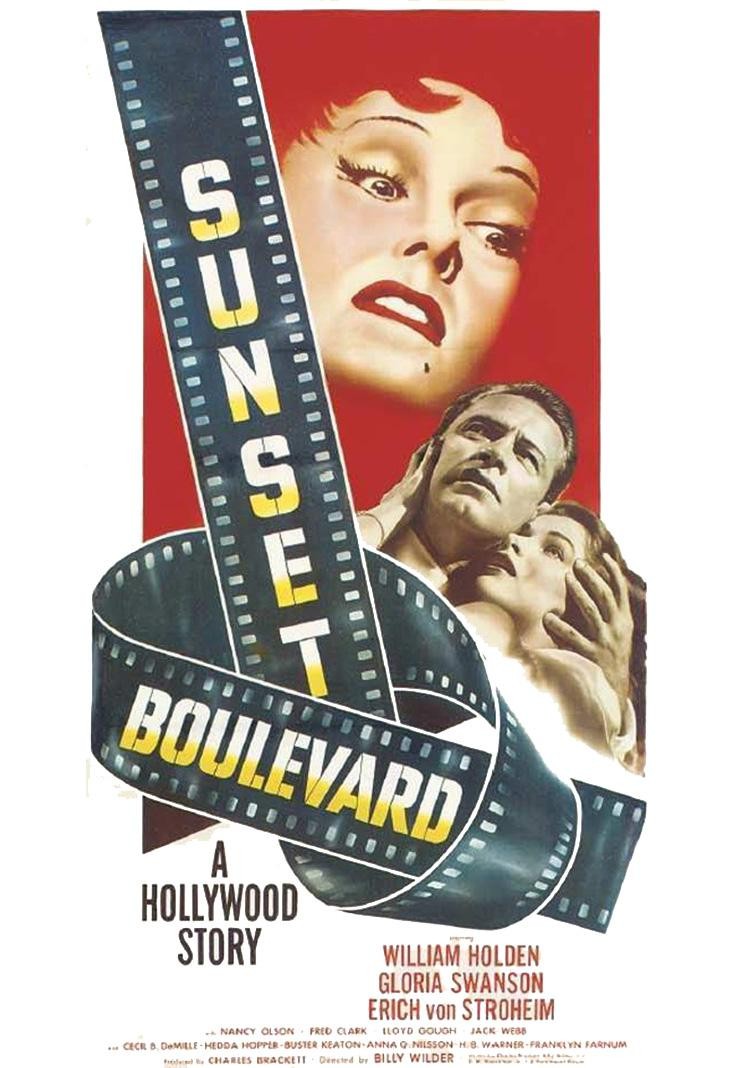
For me, the greatest film of all time is Billy Wilder's "Sunset Boulevard." This is a movie that understands the strengths and weaknesses of cinema, by showing the lives that are created and then destroyed by the weight celluloid carries. Film is not only examined, but judged for how cruel yet necessary it is for people. From both in front of and behind the camera, cinema is shown as a self-destructive art form with beautiful yet dangerous consequences.

Joe Gillis (William Holden) is a Hollywood screenwriter that hasn't had a successful script in months and probably hasn't eaten a decent meal longer than that. When the feds come to take away his car, which he is several payments behind on, Gillis runs as far as he can, and pulls into a mansion that appears to be abandoned. But as he observes the decaying ruins, he finds the house has two occupants, including the once famous silent movie star, Norma Desmond (Gloria Swanson) and her butler, Max (Erich Von Stroheim).

It turns out that Ms. Desmond is wealthy beyond reason, but has nothing to use her fortune on. She refuses to go out into the world, possibly afraid of how far it has come since the silent era of filmmaking. Norma promises to make a return to cinema though, because she has spent years writing a screenplay big enough to fit six movies to use as her magnum opus and let the world know that Norma Desmond is greatest actress, without saying a word.

hero_EB19990627REVIEWS08906270301AR

Part of the reason I consider "Sunset Boulevard" the greatest film is because of how close it resembles real life. As I said back in my look at "Singin' In The Rain," the end of the silent era is the most interesting era in filmmaking. While the Gene Kelly musical covered the topic in a positive and optimistic light, "Sunset Boulevard" is far more brutally honest - the beginning of talkies destroyed many careers and lives.

Gloria Swanson, who plays our aging silent star of a time long since passed, was a popular silent movie actress, and we see some of her silent roles in "Sunset Boulevard," also directed by her butler, Erich Von Stroheim in "Queen Kelly," "The Merry Widow" and the now famous "Greed." But once sound came around, Swanson disappeared and Von Strohiem pursued more of an acting career.

Now Swanson plays a star that has lost its shine, but does not see that as her fault. It isn't that she got bad at acting, but cinema became too much. The now famous quote, "I am big, it's the pictures that got small," being the key example of that.

 1e8328d4b06f8cdc01e720dae4aa20a8

"There once was a time in this business when I had the eyes of the whole world," says Desmond. "But that wasn't good enough for them, oh no! They had to have the ears of the whole world too. So they opened their big mouths and out came talk."

All Desmond does is sit in exile in a mansion that is falling apart, screening only movies of herself, planning a comeback that will never come. She claims the world still loves her, but that she has merely been forgotten.

This cuts even deeper when it comes to Erich Von Stroheim, who had an extremely promising career in the silent era, both in Germany and Hollywood. Max even points this out in the film, saying in the early 1920s, the most promising directors were D.W. Griffith, Cecil B. DeMille and himself, which was true. But after talkies were invented, Von Stroheim directed two sound films, both of which were poorly received, leading to the once very skilful director taking up acting roles where he essentially amounted to the token Nazi in American films during WWII.

Now Von Stroheim plays Max, a man who is just as obsessed with the past as Ms. Desmond is. The difference with Max is he felt life was at its best when he worked together with Norma, which might explain why Max was her first husband. But after attempting to break into film again, he realized his place was with Norma, and became her servant - forever loyal to her word and protecting her from the world that has long since passed her by, fiercely devoted to the greatness of Norma Desmond.
The point of "Sunset Boulevard" is made clear - the world of film is harsh and forever evolving.

Sunset-Boulevard-1950-Wallpapers-2

Filmmakers and audiences focus on the here-and-now, and rarely remember where it all came from. We discard the stars of the past at our leisure and have no regard for what that does to them. To many of these stars, cinema was their life, they cannot live without celluloid in their veins.

The relationship between Norma and Max is what makes "Sunset Boulevard" such an emotional piece. On her own, Norma's performance is over the top, near the point of parody. Her exaggerated gestures, wild movements and sneers make her seem like she is on the edge of madness throughout the film. But Max remains loyal and calm, because he sees more in her than just an aging movie star. He understands the restraint, courage and talent Norma has. Because he is dedicated to loving her, both the audience and Joe Gillis can find something to love about Norma as well.

"Sunset Boulevard" blurs that line between reality and fiction better than any other film I have seen. Real names of actors, like Tyronn Power, Bing Crosby and Alan Ladd, are used many times, famous silent stars like Buster Keaton are shown hanging out with Norma Desmond (nicknamed "the waxworks" by Gillis), and when Desmond visits Cecil B. DeMille on the Paramount studio set, DeMille is making an actual movie, "Samson And Delilah."

"Sunset Boulevard" understands the illusion of cinema and knows where reality begins, but to Norma Desmond there is no difference. She is obsessed with her star power and the movies she has created that she is blind to the world around her. Movie? Real life? To her, what's the difference?

Sunset-Blvd_-1

To top it all off, "Sunset Boulevard" might have some of the greatest dialogue in any piece of cinema. Nearly every line in the film is quotable for one reason or another, whether it is Norma's constant need to back talk how much cinema has changed, such as, "We didn't need dialogue. We had faces."

There was also Joe Gillis' constant voice over narration, which described in great detail how the mansion was falling apart and how sad Norma's condition was, pointing out there is nothing wrong with being 50, unless you try to acting like you're still 25.

"Poor devil," says Gillis. "Still waving proudly to a parade which had long since passed her by."
Of course, there is the closing line of the film from Norma as her whole life crumbles in front of her, but she has now becomes so enamored with the past that she is oblivious to the fact that she is about to go to jail. Like most Billy Wilder films, the closing line is one of the best lines in the film.

"I promise you I'll never desert you again," says Desmond. "You see, this is my life. It always will be. Nothing else. Just us, the cameras, and those wonderful people out there in the dark. All right, Mr. DeMille, I'm ready for my close-up."

To me, "Sunset Boulevard" respects cinema more than any other film I have seen. It understands the power it has over people and the type of art it can provide, but also that movies can just as easily destroy the lives it builds up. That cinema is intoxicating and people will do anything to get back the star power they once had. "Sunset Boulevard" cuts so close to life that it forces you to take a step back and fully appreciate the level of detail Billy Wilder put into understanding just how far cinema has come.

It is not only one of my favorite films, but also my pick for the greatest film of all time. So why "Sunset Boulevard" only number ten on this list? Well, like I said in the beginning, this is a countdown of my favorite movies, and while I adore this film to death, there are some other films I love more than this classic film noir.

sunset%20blvd

Tuesday, August 11, 2015

Movie Review - "Mission: Impossible - Rogue Nation" (2015) - Oddites In Filmmaking

mirn

Every once in a while, I've come across a rare oddity in cinema where I can think of several reasons why a film should not work, and I still managed to enjoy the film more than I should have. "Guardians Of The Galaxy" was an example of that last year, a film that I foolishly called junk food with no substance but was still quite enjoyable. A stance that has changed since then to reflect one of the more memorable science fiction films of the last few years.

"Mission: Impossible - Rogue Nation" falls into a similar category that might change over time. At the time I am writing this review, it has been five days since I have watched this film, but my opinion on it has stayed roughly the same - An enjoyable popcorn flick that has no reason to exist.

I have not been a fan of the "Mission: Impossible" movie franchise. Tom Cruise is a charismatic actor who is not afraid to perform some insane stunts, but the stories are often the failing point of these films. Unlike other spy movies, like the Bourne trilogy and most James Bond entries, which focus more on the character and their attempts to overcome their egos and/or flaws while saving the world, the "Mission: Impossible" films are solely about stopping a global threat by whatever means necessary.

Good for a summer blockbuster, but that does not hold up on repeat viewings. You watch it once, know everything that'll happen and don't bother with the film again. The only notable aspects to these films are the crazy stunts that Tom Cruise must endure, like free-climbing the tallest building in the world. That is honestly the only part I remember about the earlier entry in this franchise.

Yet, as much as I hate on "Mission: Impossible - Rogue Nation," I can still say that I enjoyed it more than I disliked it. Perhaps this is because the film does not fumble at any point. The story is coherent, the characters are likable and the stunts are top-notch. This film exists in a strange paradox land where I don't see many reasons to like it, but I do enjoy it.

Set some time after the events of "Mission: Impossible - Ghost Protocol," the Impossible Mission Force (IMF) is now down to four members, including Director William Brandt (Jeremy Renner), techie Benji Dunn (Simon Pegg) and field operative Ethan Hunt (Tom Cruise). Due to a recent mission involving terrorists using nerve gas, it has come to the attention of the IMF that there may be a higher power orchestrating these terrorist actions - the syndicate.

Hunt's suspicions are soon confirmed when the syndicate kidnaps him and intend to interrogate Ethan for information. While all of this is going on, the director of the CIA (Alec Baldwin) has called for a Senate oversight hearing to disband the IMF for their reckless disregard for protocol and endangerment.

r91zHND

What I found most fascinating about "Rogue Nation" was a speech Alec Baldwin's character gives when talking about Ethan Hunt. That he is both arsonist and fire fighter. Hunt might be creating these global threats to the world just so that he can be the one to shut them down. That his life is unfulfilled if he isn't stopping some megalomania from destroying the western hemisphere.

And for most of the film, Hunt's actions support this claim. He has tracked down the syndicate for several months, finding dozens of possible leads and actions, but has not come to a solid conclusion. He believes that it is held together by field agents from all over the world that have been considered dead, though no bodies were ever found. Hunt also thinks the syndicate is responsible for several terrorist acts all over the world, that have all had an impact on the economy or government of that country, causing a shift in power.

As Benji points out, it could be the syndicate pulling strings to change the world. Or, more likely, it could all just be a coincidence. Ethan has no proof that it is syndicate. In fact, he has no proof the syndicate even exists. Ethan could have created the syndicate in his mind so he would have a renewed purpose.

There is a surprising amount of depth for Ethan Hunt on this one, far more than any other "Mission: Impossible" film. The problem is that all of this basically amounts to a revenge plot, with Hunt wanting to get back at the man who captured him earlier in the film. Good build up, not so great pay off.

mission-impossible-rogue-nation-motorcycle-explosion_1920_0-e1433808025568

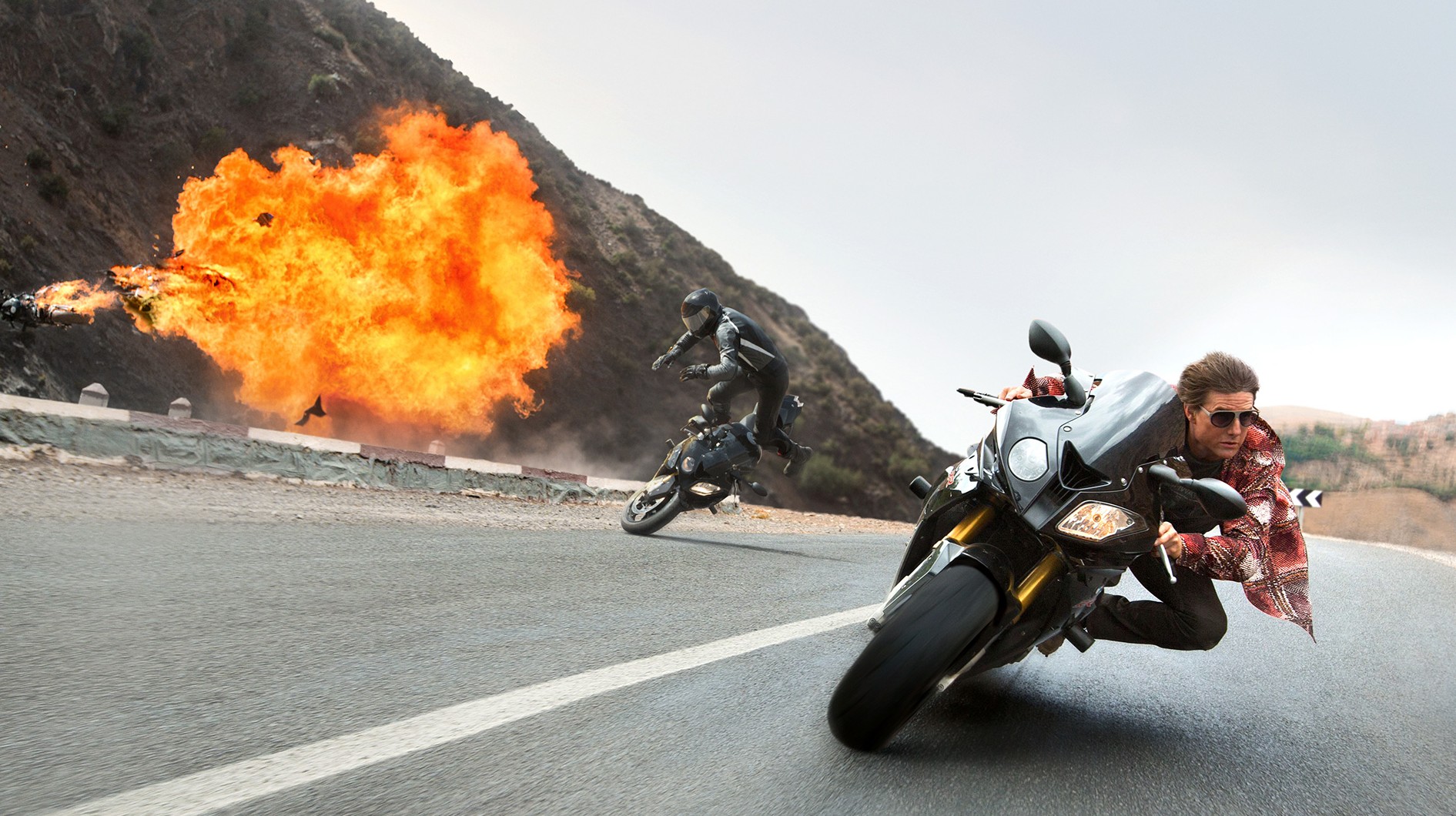
Like other entries in this series, the story of "Rogue Nation" is pretty forgettable. Most is spent on a disavowed MI6 agent working for the syndicate and her attempt to regain the trust of its leader (Sean Harris). She attempts to work both sides, helping Hunt hack into an underwater computer database, but then steals the data once he is out, leading to a motorcycle chase throughout Casablanca.

We don't learn much about her, even her name escapes me. All we know is that she loves being a spy but loves to dress up in skin-tight sexy outfits even more. This is what I mean about the story - the character that seems to be a major focal point is little more than a vehicle to get to the next scene.

That being said, I was never bored in "Rogue Nation." The action was consistent without that many gaps between each segment. Several were interspersed with some good character moments, like the previously mentioned Hunt making up the syndicate for his own gain, but also Benji attempting to work in a normal environment and failing terribly at it.

Simon Pegg gets several chances to shine in this film, as we see not only his comedic talent, but is ability to be dramatic as well. There are at least two points where Benji stands up to people bigger than himself, and he comes out being a man with his own mind and consciousness. Benji is the every-man that these films truly needed to keep them grounded.

The true star of "Rogue Nation" though has to be the stunt choreography. Much like with "Mad Max: Fury Road," there is very little computer effects throughout this film, so what we watch Tom Cruise weave in and out of traffic going well over 80 MPH, without wearing a helmet or any protective gear, that was really happening. But the true gem comes in the opening scene, where Cruise holds on to the outside of a plane as it takes off, without a parachute or support cables to keep him there. Just Cruise with a vice grip on that plane.

9716643-large

I'm not sure which stunt is more impressive, this or Cruise climbing that tower in Dubai. In any case, both stunts are worth the price of admission.

Overall, "Mission: Impossible - Rogue Nation" is what I wish "Jurassic World" was like - a film that doesn't take itself too seriously, while still treating its audience with respect. This is one that knows it is a popcorn film and does its best to entertain with spy intrigue, competent characters and much-needed stunts.

Final Grade: B

Sunday, August 9, 2015

Movie Reviews Of "Southpaw" (2015) and "Rush Hour 2" (2001)

southpaw_ver3

It has been a long time since a film nearly put me to sleep, especially in theaters, but "Southpaw" found a way.

The biggest problem with this Jake Gyllenhaal boxing movie is that the majority of the film is uninspired and taken from better boxing movies. Most of the film is spent on how Gyllenhaal's character has anger issues for no reason other than being a boxer, and how that is destroying everyone around him, which feels like it was taken directly from "Raging Bull" and "The Fighter." At one point, his life is destroyed and everything is taken away from him, but he is given one last chance to redeem himself in the ring, just like Rocky Balboa.

Boxing movies are meant to inspire and show that strength doesn't come from muscles and punches, but from determination and having a reason to fight beyond loving the sport. "Southpaw" take elements from other movies, but doesn't seem to grasp what it all means. Gyllenhaal starts at the top, already invested in his family and simply has anger problems. He has a multi-million dollar house and consistently fights at Madison Square Garden. Forgive me if I'm not invested in his fall and rise back to power, but that a spoiled brat of a character who consistently makes poor life decisions. It would be fine if those decisions seemed logical and thought-out, but "Southpaw" almost feels stream-of-consciousness, so all it gets is a roll of my eyes.

The only saving grace for "Southpaw" is Forest Whitaker, who plays the trainer that brings Gyllenhaal back up. Most of his scenes are forced and written exactly like any scene from "Rocky" that features Mickey, but Whitaker at least has a few emotional scenes where we find out his motivation to help out children.

Outside of that, "Southpaw" is boring, uninspired and a hodge-podge of other boxing movies. If you want the "Southpaw" experience, just have a boxing marathon of the Rocky movies and "Raging Bull."

Final Grade: D

Basic CMYK

Second verse, same as the first. Except even less prop fighting and martial art goodness, and more of Chris Tucker, though less obnoxious than the first.

At least this time, Chris Tucker learns to control the volume of his voice and can hold a conversation with a normal person, and without resorting to referring to Michael Jackson songs or dancing all over the place. Oh, he still does all that, but he is at least less willing to do all of that. Jackie Chan, however, is really starting to show his age, which is probably why there are so few extravagant fight sequences or ones that are mostly CGI.

The best part of "Rush Hour 2" is a fight sequence between Jackie and a gang of triad members climbing a building with a bamboo support structure, while Chris Tucker chases them up the building and interacting with all sorts of foreign customs. Jackie and the gang make it all look so simple, and it ends with a great stunt with Jackie and Chris holding on to one stick of bamboo on top of the building.

Overall, "Rush Hour 2," is more of what we got in "Rush Hour," except with a bit more characterization, better comedy from Chris Tucker, but less action. So it depends on what you want out of the films - If you want great action, watch the first film, but for comedy and characters, give this one a try.

Final Grade: C

Thursday, August 6, 2015

Paul's Favorite Films - Number 11


We finally have our first appearance of Alfred Hitchcock.

I have never watched a film where the Master of Suspense has yet to disappoint. Hitchcock's films are often basic and simple in terms of plot, but rich and eccentric in character and charm. His films are so often visually impressive that you wonder how he was able to pull off many of these shots in the 1940s and 1950s. Hitchcock took inspiration from the German expressionist film movement, with movies like "The Cabinet Of Dr. Caligari" and "Metropolis" giving him ideas on lighting and use of shadows.

Even the films by Hitchcock that I do not care for, like "Dial 'M' For Murder" and "Rope," still find ways to be visually stunning and have suspenseful moments.

Alfred Hitchcock knew how to make take the audiences' fears, turn them loose and photograph it insanely well. I can honestly say that no one makes a film like Hitchcock.

With that said, there are many movies of his that I adore. The extravagant "North By Northwest" was my introduction to Hitchcock, while "Psycho" is always a nerve-wracking piece of horror. One of my personal favorites is "Shadow Of A Doubt," which was one of the first films Hitchcock made after moving from England to Hollywood, and Hitchcock often said it was his favorite of all the films he made.

But in terms of edge-of-your-seat tension, and teeth-clattering suspense, there is nothing better than "Strangers On A Train." This is Hitchcock at his most manacle and unforgiving. Though he had made suspenseful movies before this, "Strangers On A Train" amps it up to levels I've never seen before, all paying off in the most satisfying conclusion to any of his films.

While on a normal train ride, two unsuspecting strangers meet - the tennis player Guy Haines (Farley Granger) and the odd Bruno Anthony (Robert Walker) who is full of "interesting" ideas. The two talk over lunch, though Bruno does most of the talking, as he pries into Guy's personal life, especially his romance with Ann Morton (Ruth Roman), the daughter of a senator, and how Guy is attempting to file for divorce with his wife Miriam (Laura Elliot). But Bruno begins to concoct a new idea about how to solve Guy's problem with Miriam and Bruno's aggression towards his father - the two swap murders, that way no one will suspect a total stranger as the murderer.

Guy humors Bruno's ideas, but Bruno takes it as approval. After a rough meeting between Miriam and Guy, where Miriam says she refuses to divorce Guy and will forbid him from seeing Ann, Guy is so furious that accidentally calls Bruno and hangs up without saying anything. This is all Bruno needs to set his plan into motion.

strangers-on-a-train

The wonderful thing about suspense is that a movie can build it up from the very first shot, and continue building it up throughout the entire film. It is like pulling a rubber band - you want to see how far it'll stretch and how tiny the band can get before it snaps. Perhaps you apply too much force and the rubber band goes flying out of your fingers, meaning you have to start all over again. You don't know when it will snap or how much tension you must apply to it before everything unravels.

But it does not mean anything if you don't see the rubber band snap. That is something Hitchcock understood and gave us in full force in "Strangers On A Train."

The first shots of the film are of our main characters shoes, as we see the eccentric feet of Bruno and the plain travel shoes of Guy. We don't see their faces until they meet each other. This way these characters are as much a stranger to us as they are to each other. We watch as Bruno slowly reveals everything personal about Guy's life, so that when Guy gets uncomfortable, we are right there with him. None should know this much information about someone they've never met, yet Bruno knows more than most and has some interesting ideas about "harnessing life energy" and being able to smell a flower on Mars.

This is sold to us through Robert Walker's performance that feels off-kilter. Bruno is someone who sees aggression in everything and anyone. He talks to a few elderly party guests about how everyone has wanted to murder another person at some point in their lives, but we know that he had the guts to go through with it. He is barbaric, yet sophisticated enough to know when to keep his mouth shut.

Strangers%20on%20a%20Train%203
Just ONE of your ideas for a murder, Bruno?

But worst of all, Bruno is persistent. Once he has gotten Guy's attention, even for just a moment, Bruno refuses to let go. You lock eyes with him, you must expect a speech about the best tools to murder a man. He will pursue his target for as long as he needs to, all with a creepy unnerving presence that says, "You will do what I say."

By the way he looks at someone, you can't be too sure if he is going to murder you or if he is only thinking about it.

Given Bruno's attitude towards other people, this leads to many dangerous scenes. Starting with the first time Bruno meets Miriam as she heads out to the town fair, he demonstrates his strength by breaking one of the games, and continues to follow Miriam on every ride she and her dates go on.
Bruno even takes a moment to buy popcorn, as if he is watching a film unfold.

Some of the craziest scenes in "Strangers On A Train," are enhanced by the cinematography, which plays to Hitchcock's strengths of shadows and absurdities. In one shot, Miriam and her dates are driving a boat through a cave, with Bruno right behind them. All we see are the shadows on the wall, as Bruno's shadow gets bigger and closer to the other boat and he slowly raises his hands up as if he is going to strangle her.

soat

In the following shot, we hear Miriam scream.

Another intensely creepy shot is when Guy thinks he has lost Bruno in the country club, attempting to play a round of tennis. But as he looks into the crowd, Guy notices every head following the ball back and forth, except for one - Bruno, staring directly at him.

I'm convinced Hitchcock made Guy a tennis player simply so he could use that shot.

All of these magnificent shots heighten the tension even further, as we watch that rubber band slowly be tighter and thinner. But, to me, suspense means so much more if it actually pays off in a satisfying climax. The problem with other thrillers is that they'll have tense sequences, but it does not amount to me, mostly talking about what the characters learned while being at gun point.

strangers-on-a-train-tennis-match

With "Strangers On A Train," everything the film has built up to comes together when Bruno and Guy meet face-to-face at the town fair and have a fist fight on the merry-go-round. A police officer accidentally shots the ride operator, causing the wheel to spin uncontrollably, getting faster every minute. We watch as the two duke it out, while people stuck on the ride scream to be let off the ride and to be left out of the fight.

For once, the climatic moment in a thriller matches the suspense that it has built up, as we watch the world around these two spin out of control. Not only is this ending exciting, but it is satisfying. That rubber band has not only broke, but it exploded.

"Strangers On A Train" is Alfred Hitchcock at his most suspenseful. It takes full advantage of the strange set-up, and makes it seem almost plausible with the eccentric Bruno and weak-minded Guy. The cinematography enhances the tense moments to the point that you're sure Bruno is everywhere. This is one of the most exciting thrillers I have ever seen and always gets my heart racing.

MV5BMTcwNzk0MTQxMF5BMl5BanBnXkFtZTcwNjM5NTIwNA@@__V1_SX214_AL_

Tuesday, August 4, 2015

My Film Quest Through 2015 - 100 New Films

Schindler's List, Oliwia Dabrowska

If you've followed my blog for most of 2015, you may have noticed that I've released a lot more reviews than I usually have. The reason for this is because, one of my many New Years Resolutions was to watch 100 films I have never seen before, and write reviews on as many of them as I can. These movies did not have to be new theatrical releases, but any film that I had not already seen at some point in my life.

And after I released my review of "The Exorcist," I had finally reached my goal. After nearly seven months of watching nearly five new movies every week and then finding the time to write my extended thoughts on each of them, 100 new movies have been seen.

This was one of the most fun and exciting times, since nearly every day I got to witness something new and watch kinds of filmmaking unfold. From old and nearly lost silent films, to animated films released only weeks ago, to everything in between, this has been a wild ride.

So, for your viewing pleasure, and to put down in a record, here are each of those 100 films, and my grade on each of them. As I recall, all but five of these movies have a review somewhere on the site. The only ones that don't are the first three, an animated trilogy released straight to DVD that was based on a manga in Japan, and "The Room" and "Sharknado 2," both of which were a Rifftrax Live experience, from the same creators as "Mystery Science Theater 3000," while they ripped apart a terrible movie, so it is hard to properly judge the movie when I could barely distinguish the movie from the riffing.

Other than that, all the other 95 movies have proper reviews. The grades in this list might be modified from my original reviews, as my thoughts on them might have changed over time, though only slightly.

516JRsJ5ndL__SX940_

1. "Berserk: The Egg Of The King" - B-
2. "Berserk: Battle Of Doldrey" - B+
3. "Berserk: Advent" - B
4. "Wild" - A-
5. "Big Eyes" - A-
6. "Top Five" - B
7. "Election" - A-
8. "Selma" - C
9. "Attack Of The 50-Foot Woman" - B+
10. "American Sniper" - A-
11. "War Of The Worlds" (1953) - C+
12. "Foxcatcher" - B
13. "The Way We Were" - B-
14. "Boyhood" - A
15. "Dale & Tucker Vs. Evil" - B
16. "Inherent The Wind" - B-
17. "The Imitation Game" - C+
18. "Zodiac" - B
19. "Whiplash" - A
20. "Top Hat" - C+

top-hat

21. "King Kong Vs. Godzilla" (Japanese Version) - B+
22. "The Theory Of Everything" - C+
23. "The Interview" - F+
24. "The Odd Couple" (1968) - C-
25. "Jupiter Ascending" - C-
26. "Father Of The Bride" (1950) - B
27. "Philadelphia" - B-
28. "The Hustler" - C+
29. "Project Almanac" - D+
30. "Easy Rider" - C-
31. "Kramer Vs. Kramer" - B
32. "Barbarella" - C+
33. "Kingsmen: The Secret Service" - B+
34. "Dr. Horrible's Sing-A-Long Blog" - A-
35. "An American Werewolf In London" - A-
36. "Them!" - B
37. "The King's Speech" - B+
38. "Nosferatu The Vampyre" - C
39. "The Fugitive" - B
40. "My Man Godfrey" - C

My_man_godfrey

41. "Melancholia" - C+
42. "The Second Best Exotic Marigold Hotel" - D+
43. "In Bruges" - B-
44. "Now, Voyager" - B-
45. "Superman II" - B-
46. "Wall Street" - D+
47. "The Public Enemy" - A-
48. "The China Syndrome" - B
49. "It Follows" - A-
50. "Viva Zapata!" - C+
51. "Die Hard 2" - C+
52. "Run All Night" - D+
53. "Chef" - B
54. "The Secret Of Kells" - B-
55. "Rushmore" - A-
56. "The Ghost & Mrs. Muir" - C
57. "Unfriended" - A-
58. "Crank" - B
59. "The Nightmare Before Christmas" - B
60. "Ex Machina" - C

1401x788-ExMachina_Alicia-Vikander

61. "The Man Who Knew Too Much" (1955) - B-
62. "The Magnificent Ambersons" - C+
63. "Avengers: Age Of Ultron" - B-
64. "The Room" - B
65. "Schindler's List" - A
66. "El Mariachi" - C+
67. "My Dinner With Andre" - B
68. "Unbreakable" -B
69. "Stella Dallas" - A-
70. "Mad Max: Fury Road" - A
71. "The Hunchback Of Notre Dame" (1939) - B-
72. "Papillion" - C+
73. "Time After Time" - B+
74. "Dark Passage" - A-
75. "Spy" - A-
76. "The Babadook" - C+
77. "Jurassic World" - C
78. "Greed" - B+
79. "Dirty Harry" - A-
80. "Equestria Girls: Rainbow Rocks" - D+
Disney•Pixar's "Inside Out" takes us to the most extraordinary location yet - inside the mind of Riley. Like all of us, Riley is guided by her emotions - Anger (voiced by Lewis Black), Disgust (voiced by Mindy Kaling), Joy (voiced by Amy Poehler), Fear (voiced by Bill Hader) and Sadness (voiced by Phyllis Smith). The emotions live in Headquarters, the control center inside Riley's mind, where they help advise her through everyday life. Directed by Pete Docter and produced by Jonas Rivera, "Inside Out" is in theaters June 19, 2015.

81. "Inside Out" - A-
82. "Hotel Transylvania" - B
83. "Soylent Green" - B
84. "Kung Fury" - B-
85. "Hannah & Her Sisters" - D
86. "Rubber" - C+
87. "All-Star Superman" - B
88. "Terminator: Genisys" - D
89. "Sharknado 2: The Second One" - D+
90. "Miami Connection" - C+
91. "The Shop Around The Corner" - B
92. "Varan, The Unbelievable" - C-
93. "Atragon" - B-
94. "The Giant Claw" - C
95. "Mortal Kombat" - C+
96. "Ant Man" - B-
97. "Mr. Holmes" - B+
98. "The Incredible Shrinking Man" - B-
99. "The Red Shoes" - C-
100. "The Exorcist" - A-

162525-horror-the-exorcist-screenshot

Since the selection of movies is so fruitful in this list, and because there were so many that I adored, it seems applicable that I count down my ten favorite. So, just for the sake of argument, here are my ten favorite of these 100 films.

10. "Election"
9. "Dark Passage"
8. "The Public Enemy"
7. "The Exorcist"
6. "An American Werewolf In London"
5. "Whiplash"
4. "Inside Out"
3. "Boyhood"
2. "Schindler's List"
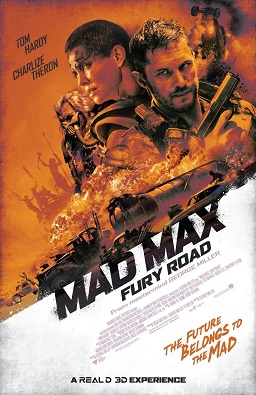
1. "Mad Max: Fury Road"
Max_Mad_Fury_Road_Newest_Poster

And, because I'm sure this question will get asked as well, here are the five films that I hated the most out of the bunch.

5. "Project Almanac"
4. "Hannah And Her Sisters"
3. "Wall Street"
2. "Terminator: Genisys"
1. "The Interview"

The_Interview_2014_poster

So that is what I've been working on for the last seven months. When I wasn't working or spending time with my family and friends, I was mostly watching these movies. What you can expect from me in the future is to finish up my Favorite Films countdown, as we will soon be reaching my top ten.

Thank you to every last one of you for your continued support and interest in my passion. I wouldn't be here without you guys and hearing each of your thoughts on my opinions and reviews keeps me going. All of you are amazing people and don't ever forget that.

Saturday, August 1, 2015

Mini-Review - "Rush Hour" (1998)

MV5BMjAyMzAyNzY5N15BMl5BanBnXkFtZTcwNjU3MTc0MQ@@__V1_SX640_SY720_

This is exactly what you would expect it to be. Lots of great prop fighting from Jackie Chan, and Chris Tucker being almost as annoying as Jar-Jar Binks.

Jackie Chan is an immensely talented entertainer, who is able to balance comedy and action without really trying, because his style of fighting is often hilarious to behold. Whether his drunk, falling from insane heights or fighting someone with a steering wheel, Jackie Chan is never short of awesome moments.

Chris Tucker, however, could burst ear drums just by being himself. I don't think there was a single moment in "Rush Hour" where Tucker wasn't talking with that unbelievably high tone of his that makes me feel bad for any dogs that happen to be around. Sometimes Tucker's comedy works, but most of the time he is running his mouth to an audience that wants him to shut up and get back to Jackie Chan whacking goons around with pool cues.

Together, Chan and Tucker make a buddy cop film that is not only formulaic, but has very little interesting going between the two of them. In most buddy cop films, the two will have their differences that make them butt heads as we watch the two learn to appreciate others and notice their strengths. But in "Rush Hour," these two have way too many similarities - they're both hot-headed, bold, don't trust others, lost a partner in the line of duty and charge ahead whether their superiors told them to or not.

The only different between the two is their ethnic backgrounds, which gets played out fast. In fact, Chan often knows the American culture that Tucker speaks of, including John Wayne and popular songs. Tucker even admits at the end of the film that he knew Chinese the entire time. Really, these guys are two peas in a pod.

Overall, "Rush Hour" has its moments of glory, especially when Jackie Chan pulls off some amazing stunts and fight choreography. But the plot is predictable, Tucker is hard to watch and listen to, and the buddy cop dynamic is some of the weakest I have ever seen. Watch a good Jackie Chan kung-fu flick instead of this and you'll get the same experience.

Final Grade: C+