Tuesday, January 20, 2015

Movie Review - "Foxcatcher" (2014) - Prosthetic Noses and Foxes

MV5BMTQ2MjQxNjYxOV5BMl5BanBnXkFtZTgwMzIwODUxMzE@__V1_SX640_SY720_

It has been a day since I watched "Foxcatcher" and I am still not sure how to feel about it.

There were certainly good aspects to the adaptation of John E. DuPont's obsession with wrestler Mark Schultz, and even great aspects that make the film worth watching. But then there are other points that left me confused and uninterested in several parts of the film.

Perhaps it is the undeniably creepy and off-putting atmosphere combine with the slow pacing throughout the film that makes some scenes unclear. Or it might be the lack of dialogue and letting the tension rise through Steve Carell's out-of-character performance. Most likely, it is a combination of both.

Mark Schultz (Channing Tatum) is an Olympic Gold-Medal wrestler, and wants to be seen as the greatest fighter in the world, even better than his older brother Dave (Mark Ruffalo). Mark gets his chance when John E. DuPont (Steve Carell) of the DuPont family dynasty takes up an interest in wrestling and wants to train Mark for the World Championship and the Olympics. As time goes on though, John seems to take more than a special interest in Mark and sees him as more than just wrestler and friend.

foxcatcher-channing-tatum-steve-carell

To start off, "Foxcatcher" is dripping in an unsettling atmosphere, while still having the tension be so thin that you could cut it with a butter knife. Both Mark and John are unhinged and obsessed with achieving their goals, no matter what the costs may be. If they can't get what they want, they will beat themselves up, or beat anyone nearby.

Steve Carell's performance deserves the Oscar nomination, as it is other worldly at times. Channeling a bit of his inner Norman Bates, we get a character who wants to out-do his own legacy and be remembered as his own man, and not just another DuPont. Yet he still has the mindset of a spoiled child, obsessed with toys and sports and will use his money to get what he wants.

This leads him to claiming certain things as his "property" without realizing the ramifications.

untitled6

However, "Foxcatcher" does suffer from pacing problems, especially at the beginning of the film. For the first thirty minutes, we watch Mark wander around his hometown trying to make a living and being generally unhappy that he only has Top Ramen to eat. Later on, there are scenes where Mark and John share about two lines of dialogue and go no where. This is still quite unsettling, but there is a limit to all of that.

But my biggest complaint with "Foxcatcher" is how disjointed and unconnected many scenes are. For example, there is a scene where John enters in a wrestling tournament, that he supposedly paid off so that he could win, and then rubs it in his mother's face. While this does explain more of his character, that scene is never brought up again and ended as quickly as it started. Several points in the movie will remain unexplained and confusing. Combine this with the slow pacing, and there are some scenes where I stopped caring about the film altogether.

"Foxcatcher" offers up a fascinating experience, through the excellent atmosphere and performances always giving a sense of gloom and uncertainty. While I suppose the pacing and disconnected scenes add to this, they do take away from the film. There is a difference between unsettling and confusing, and "Foxcatcher" seems to get the two mixed up often.

493028287_640

That being said, there is still plenty of great things to enjoy about "Foxcatcher," even the lack of dialogue throughout the majority of the film helps contribute to how bizarre the film can be. It is certainly worth your time and I recommend "Foxcatcher" to those who enjoy a film where they're not sure what is going on.

Final Grade: B

Saturday, January 17, 2015

Movie Review - "American Sniper" (2014) - Sacrficing The Legend

american-sniper-poster

Imagine that the person you love most in this world came running at another person you care about with a machete. And the only way to stop them was for you to shot them. Could you pull the trigger? Did they deserve to shot? Could you live with yourself?

Now imagine doing this 160 times.

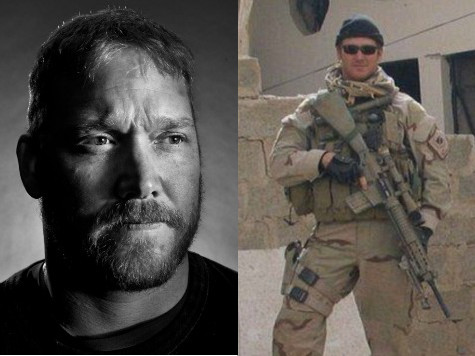
This is the tragedy of Chris Kyle, nicknamed "The Legend," and living up to that name by being the most lethal sniper in American military history. A man who saw no joy in killing, nor for the thrill of the hunt. This is a man believes in few things - Family, God and America. He would do anything to protect those that he cares about, even if that means self-sacrifice.

Not just laying down his life, but sacrificing his own happiness, thoughts and identity to serve and protect his country.

Such is the strength of Clint Eastwood's "American Sniper," as it hits at the core of many war films, but manages to hit it on the nose more than most others. Films like "The Hurt Locker" and "Full Metal Jacket" discuss the need to lose yourself in war, so that you can cope with all the death and destruction, but "American Sniper" makes it far more personal.

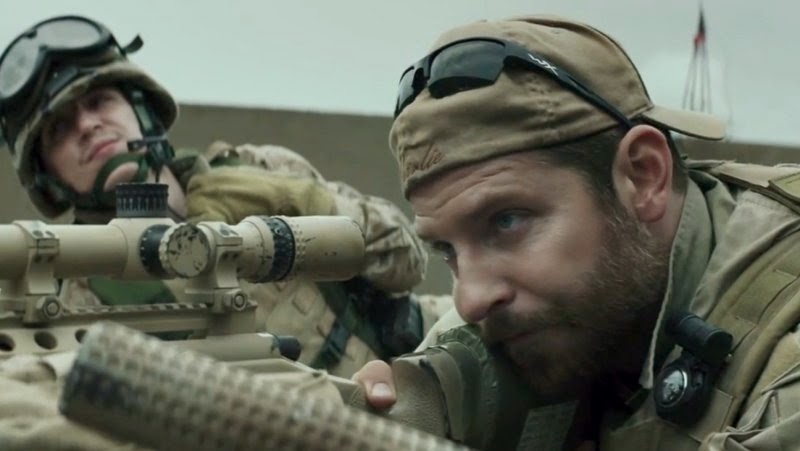
Chris Kyle (Bradley Cooper) has spent his young life being a wild cowboy, but finds no purpose or fulfillment out of it. When he learns about terrorist attacks in the Middle East, Chris enlists in the SEALS and puts his hunting skills to use and becomes an elite sniper. After the 9/11 attacks though, Chris is deployed to Iraq and makes a name for himself with his impeccable aim and zero hesitation. All the while, Chris thinks about his new wife, Taya (Sienna Miller) and the baby on the way.

American Sniper Movie

While I was watching "American Sniper" I thought back to how similar it was to "The Hurt Locker." A modern-day war film about one guy and his many dangerous, sometimes disjointed, adventures while trying to maintain his sanity and survive his tour.

But as soon as I thought about that, I realized that "American Sniper" was better in almost every regard. This was due to one simple reason - Bradley Cooper's wonderful and heartfelt performance.

In "The Hurt Locker," Jeremy Renner has the same blank emotionless expression throughout the majority of the movie. He is desensitized to the violence, which makes it harder to connect to him on an emotional level. Cooper, however, seems to feel regret and disgust for every kill he has to make. He does not want to take these lives, but he is forced to.

chris-kyle-sniper

In Chris Kyle's eyes, America is the greatest country in the world and those who threaten it with violence and death are evil people. If that's the case, there are a lot of evil people. They must be dealt with swiftly, before they hurt the people he cares about.

Like Chris says at one point, he is not protecting some dirt in the Middle East, but making sure these people do not attack San Diego or New York.

Yet once Chris gets back to his family, he can't stop thinking about those lives that he can't protect in Iraq. He can't stop seeing himself at the end of that sniper rifle. So much so that all he does is watch footage of the war, rather than raising his son or spending time with his wife.

Cooper hides behind shades and contemplation when at home, always thinking about the lives that he couldn't save. That is the heart of "American Sniper" and why reliability and understanding is so important in a war film.

AMERICAN SNIPER MOV

When I walked out of the theater, I not only noticed a massive line for the next screening, but also several people wearing shirts with the American flag and even one wearing a "The Legend" shirt with The Punisher logo on it. I then realized that Chris Kyle was more than just a great shot, but a role model to those attempting to survive in the Middle East. A reminder of how strong the will to serve and protect your country can be. To always stand up for your ideals and let no one get in your way.

Personally, I came out of "American Sniper" seeing a man dedicate and sacrifice himself to his country, even if that means he loses himself. Driven by an uplifting and tense performance by Bradley Cooper, an unrelenting atmosphere where the enemy could be hiding around any corner and tight pacing and editing that keeps the story grounded in reality, this is a war tragedy that never lets up but you never want to look away from.

Final Grade: A-

Tuesday, January 13, 2015

Movie Review - "Selma" (2014) - Documentary Or Drama?

Selma_poster

Race privileges and civil rights are a hard topic to discuss, especially in this day-and-age.

Where I've lived and the way I have grown up, race is not that much of a problem. I've been raised by the belief that everyone deserves the same rights and duties, no matter what their race, gender or orientation may be. I've never witnessed an act of hate due simply to the color of their skin and everyone gets a fair shake.

Part of this is because of the age we live in. During the civil rights movement, who would have thought that the highest paid athlete in America would be Lebron James? Or that actors like Denzel Washington and Lupita Nyong'o would win the highest awards for their craft? Or how about Oprah Winfrey being, well, Oprah? She is just her own brand now and is arguably the most powerful woman in the world.

rs_560x415-141107120307-1024_Selma-Movie-Oprah_jl_110714

And of course, the leader of the free world, the president of the United States. We really have made a lot of progress when it comes to civil rights.

The reason I bring this up is to show how the film "Selma" has left very little impact on me. While I'm sure this film will stir some people up, "Selma" left me feeling a bit cold about events that were already ingrained into me - that the civil rights movement was a very tough time period when African-Americans were suppressed and did not have any rights as citizens of America.

My response to that is - Man, it is a good thing we are passed that. So, what does this have to do with me?

150106180432-selma-movie-still-lead-segment-01-06-large-169

This is my problem with "Selma." The whole film comes across as a documentary about that time period with actors playing these significant roles - Danny Oyelowo as Martin Luther King Jr., Tim Boardbent as President Lyndon B. Johnson and Oprah Winfrey as her holy self. Rather than telling a story with relatable characters and showing their lives, "Selma" is recapping the major events of the civil rights movement that led to African-Americans claiming their rights to vote and be apart of this nation.

In showing how this came about, "Selma" does just fine. Every major moment is given the weight and importance that it deserves. How Martin Luther King Jr. became such an icon and leader in that movement is put on full display.

However, outside of being that leader, that figure which most people know about, we do not get to know much Martin Luther King. We know that he has a few fights with his wife, but that's about it. There is a person inside that legend, but it does not seem like we get to know him.

Last year, "12 Years A Slave" showed us an honest yet brutal portrayal of one the darkest times in American history. A time when African-Americans were treated worse than filth and inhumanly. While I had problems with the film, I still respect Steven McQueen and the film for bringing this often-forgotten story to light and never once flinching in the face of disgust.

While I could say the same thing about "Selma," there is this feeling that holds me back. It is most certainly honest, but to the point where it becomes tedious. Perhaps it is that "Selma" does not take enough chances with a story that has been told many times, or that it feels more like a documentary instead of flowing narrative.

selma-bridge

We've seen or have been taught these historical events already, so what else do you have?

Overall, "Selma" is average. It sits on the border of dull and excitement, unsure if it wants to be faithful to history or try something new. Each scene gets the job done at getting the point across and does not over stay its welcome. As a recap of that movement and a time capsule of mid-1960 Alabama, "Selma" is fine. If you're unfamiliar with that time period or Martin Luther King Jr, check it out. But if you already know about it, then this film probably won't do anything for you.

Final Grade: C

Friday, January 9, 2015

Movie Review - "Top Five" (2014) - Chris Rock Proves Comedy Is Alive

11181382_det

Now this is a step in the right direction.

For the past couple years, I've had nothing but complaints when it comes to the state of comedies in cinema. Aside from poor storytelling, films being nothing more than excuses to enact improve with little film work being done or just retelling the same jokes over again, comedies recently have not been funny.

I mean, isn't that the reason we watch comedies? To laugh? It should not be that hard, but filmmakers seem to have forgotten just what constitutes as comedy and instead focus on the grotesque, insulting and disrespectful.

Luckily, every once in a while, a shining beckon of hope shows up to make audiences remember that true comedy comes from the situations and circumstances, and not verbally ripping people apart. Last year, that was Martin Scorsese's' "The Wolf Of Wall Street," but this year we have Writer/Director Chris Rocks' "Top Five." While the film is not saying anything new, it does give us some fleshed out characters getting into all sorts of hijinks.

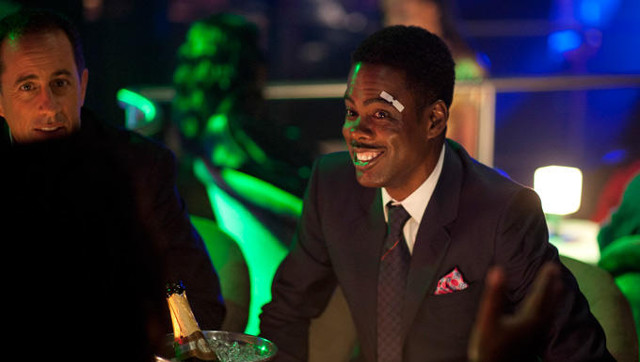
Andre Allen (Chris Rock) was once voted the world's funniest man and had a string of successful Hollywood blockbusters, but now finds himself wanting to be taken seriously. With the release of his new film about a Haitian Revolution and getting married to a big-name reality television star, Andre should be happier than ever before. That is until the New York Times sends reporter Chelsea Brown (Rosario Dawson) to follow Andre around for a day and see just how messed up his life truly is.

top-five-movie

What really stood out to me was how dynamic and diverse the lead characters were. These two are big names in their respective fields, but have their dark sides as well. Andre was an alcoholic who fells like he is not funny unless he is drunk, but has been sober for four years now. Chelsea has made many relationship mistakes and still suffers from her mistakes in the past.

"Top Five" fleshes these characters out at a reasonable pace, not unloading it all at once, but not saving it until the end either. It makes these two not only relatable characters, but feel more like people and not just a bunch of punch lines and pop culture references.

As for the comedy, "Top Five" provides continuous laughs throughout the film. The title is a constant question asked throughout the film, where characters will ask what the five best rappers of all time would be, but the comedy comes from people reacting to the lists.

That is the comedy of this film in a nutshell - reactions. Watching Chris Rock respond to a crazy situation with two sexy women and a drunk Cedric The Entertainer is funnier than the situation itself. Most of that comes back to the comedic timing and acting skills of the lead characters.

Top-Five

Yet, the film still takes the time when there is a serious moment to slow down and appreciate the dilemma. When Chelsea reveals some shocking secrets about herself, Andre does not immediately jump in with a snappy comeback, but has questions for her.

Aside from the lack of good jokes, this is what comedies are lacking today. That realistic approach to characters and the need to slow down and appreciate the situation, instead of just trying to make the audience laugh.

Overall, I appreciated "Top Five" more than I enjoyed it. While I did laugh throughout the film, the story itself was not that interesting, but the characters more than made up for that. I respect Chris Rock for taking such a bold step like this and coming out with a product that understands what makes comedy so great.

75

Final Grade: B

Tuesday, January 6, 2015

Night Of The Hopper

MV5BMTczNzI2MDc1Ml5BMl5BanBnXkFtZTgwOTU5NTYxMjE@__V1_SY317_CR0,0,214,317_AL_

"Wild" (2014)

When an actor has to carry a film solely on their own performance, that's a difficult task. It is a different story altogether when that actor is basically the only person on-screen for the majority of the film.

For example, "Forrest Gump" becomes all the better due to Tom Hanks captivating yet simple performance, same with the intensity of Burt Lancaster in "Birdman Of Alcatraz." But there are also several other factors that can be attributed to the success of those movies, like a good supporting cast or effective cinematography. On the other hand, you have a film like "127 Hours" where James Franco is the only thing we see for most of the film, and not much else.

If he gives us one reason to not care about him or doubt his struggle, the film falls apart.

This is the case in "Wild," as Resse Witherspoon takes it upon herself to carry this film all on her own, both figuratively and physically. We watch as she rarely speaks, interacts with others even less, and turns walking 1,000 miles into a touching and effective character piece.

Cheryl Strayed (Witherspoon) has had a rough couple of years and seems to have lost vision of who she wants to be. After arguing with several loved ones, she decides to do the impossible - walk the entire Pacific Crest Trail, from the Mexican Border to Canada, on her own. Everyone tells her that she can back out at any time and they'll still love her, but that will not be stopping her anytime soon.

maxresdefault5

What I love about "Wild" is that, without ever saying anything, we are told everything we need to know. Through some visual cuts, tight editing and a haunting performance by Witherspoon, we now know why Cheryl is going on this hike, what her life was like before that, and her concerns about when she finishes the hike.

It is using the visual medium to your advantage, while still telling a beautifully sad story.

Plus, unlike recent films such as "The Judge" and "St. Vincent," right away we know the characters motivations and reasons for why they are acting this way. Every character action is logical, well-thought out and performed well enough for the audience to understand with just a simple gesture or emotional response.

To watch Resse Witherspoon turn from this sickly sad woman into a proud, confident person, is just incredible. At the beginning of the film, she can hardly lift her 65-pound backpack or figure out what kind of flames she needs to operate her stove. But by the end, that backpack means nothing to her. In fact, it has become a part of her.

In a strange way, "Wild" takes place specifically in the mind of Cheryl Strayed. Many scenes are driven and edited through her memories and stream of consciousness. When she runs into a horse on her hike, she remembers taking care of her mother's horse, leading her to a touching scene with her and the horse in the rain. This is a odd yet effective way to show just how dependent the film is on Witherspoon and her performance.

Even when thinking, she has to keep the audience invested.

"Wild" is an excellent character piece, as we watch a good person have tragic events occur, and then witness that person rise from those tragedies to become someone she can be proud of. Driven by a stunning performance by Resse Witherspoon and nature-documentary level cinematography, this is one that is touching, gritty, and thrilling.

Final Grade: A-

big_eyes_15ce0090408_original

"Big Eyes" (2014)

Oh boy, Tim Burton.

Director Tim Burton has become a touchy subject these days, as his recent films have been, for lack of a better term, sucky. In particular, films like "Alice In Wonderland," "Planet Of The Apes," "Charlie And The Chocolate Factory" and "Dark Shadows."

But here is an interesting tidbit about all of those films - they're all based on a different source material. Even Burton's best films are based on other source material - "Ed Wood," "Big Fish," "Sweeny Todd: The Demon Barber of Fleet Street," "Sleepy Hollow" and even his Batman films.

The thing about all those good adaptations? They all added something new and innovative to the old stories that gave Burton's films their own unique flare, while still being those captivating stories. Burton tried to do the same with films like "Planet Of The Apes" and "Dark Shadows" but it just did not work.

Such is the life of an artist. Sometimes you have to put up with some crap to get to the good ones. And there is nothing wrong with that.

But my point is that Tim Burton has always been at his best when he finds creative and wholly original ways to adapt classic stories. Burton is a phenomenon of an artist, and one is not afraid to test the waters with his unique perspective.

Perhaps this is why Burton is the perfect choice to adapt the life story of Margaret Keane, a painter from the 1960s who was famous for painting children with enormous eyes. This has led to Burton's newest film "Big Eyes," that provides a fascinating modern tragedy of personality loss and being desperate.

Margaret (Amy Adams) has left her husband and moved to San Fransisco with her daughter, hoping to make a living off of her paintings. It's just too bad that 'no one wants to buy women paintings.' One day, she comes across a fellow painter, Walter Keane (Christoph Waltz) and is smitten by his charm and charisma. When Walter takes his paintings to a local art dealer, he shows off some of Margaret's paintings, but claims that he created them. Suddenly, the big eyed paintings start to take off and they begin to make more money than they need, even though Margaret has to live with the world thinking that Walter painted them.

463b0a17713a99ee_thumb_temp_front_page_image_file8452101407169435_fbshare

Some people have criticized this film for Waltz's portrayal of Walter Keane, making him out to be psychotic and delusional. Personally, I thought Waltz's performance was the best part of the movie. Not only does he give the usual charm and love for the world we have come to expect from Waltz, but underneath it all is a desperate man who wants to make it in the world. To be given a chance to show the world what he has, even if 'what he has' is not really his own.

But as the film processes, we watch as Walter deteriorates into a greedy, self-obsessed man who begins to think that he did create those paintings. All the while, Waltz eyes light up when he can do business and make a bigger name for himself. The more people who believe his story, the more paintings he sells, and more happy he will be.

It just so happens that, for his own personal happiness, he must destroy the life of his wife. In a way, this makes the story just as much about Walter as it is the story of Margaret.

Don't get me wrong, Amy Adams does a wonderful job as her mental state starts to break down. But Christoph Waltz blows her out of the water, as he is known to do.

Combine this with Burton's eye-popping color scheme and dramatic angles, and you have a tragedy about desperation and relevance that begs to be viewed for its performances as much as its cinematography.

Overall, "Big Eyes" captures the imagination and creativity of a Tim Burton film, while telling a modern story about desperation and personal identity. The best of both worlds, on top of two mesmerizing performances by Waltz and Adams. Certainly, one of Burton's best films.

Final Grade: A-

Thursday, January 1, 2015

Separating Art From Artist

Separating-the-Art-from-the-Artist_001

Bing Crosby beat his family. Marilyn Monroe was a well-known drug user. Babe Ruth was an alcoholic.

So why is that we remember these people fondly, when they did some terrible things outside of their chosen profession? Why is it that Bing Crosby has a monument to him at Gonzaga University? Why is Marilyn Monroe looked on as one of the greatest female role models? Why is Babe Ruth considered one of the greatest baseball players of all time and have his own candy bar?

There are a multitude of answers to these questions, by the most common you will hear is quite simple - You must separate the art from the artist.

If you try hard enough at anything, and I mean anything, you can make it an art form. You could be a janitor working the late shift, but if you excel at it well enough that you are praised for your work, you can make janitorial duty an art.

That is what separates a five-year olds' macaroni project from the Mona Lisa. They're both paintings, but only one of those is art.

I bring this up because the aforementioned people are all artists in their particular craft - Crosby in singing, Monroe in acting and Ruth in playing baseball.

marilyn-monroe-quotes-4

People admire them for how good they were and what they stood for. That they were able to stand out above the rest and give back to the world something that we had never seen before.

In the face of all that, their downsides just seem almost insignificant.

Yes, these three people did some things that were not great, but who are we to judge that aspect of their lives? Unless we have been in their shoes and understand what they have gone through, it seems unfair to disregard these people and all that they've provided for us.

After all, they're only people. We all make mistakes and do things that we're not proud of. It is okay to judge the products and art of people, but not the people themselves.

woody-allen-quote

In a perfect appreciation of art, we must analyze the art, not the person behind the art. If we did, then those mistakes and personal flaws would make watching a play, viewing a painting or watching a baseball game feel bitter, cold and unsatisfying. It would take all the joy out of art.

So what if Marilyn Monroe did drugs? That does not stop her from giving a hilarious performance in "Some Like It Hot." So what if Babe Ruth loved alcohol? He still hit 714 career home runs, a record which would stand as the greatest feat in baseball history for over 30 years.

Those achievements and accomplishments will stand longer than any personal flaws. Because they left an impact on the world and made people appreciate their profession a bit more. That is the beauty of separating the art from the artist.

Tuesday, December 30, 2014

Top Ten Twilight Zone Episodes


If you were to ask me what my favorite television show is, without hesitation, my answer would be Rod Serling's masterpiece, "The Twilight Zone."

Though many might classify this as an old science fiction show from the 1950s and 60s, beyond that veil lies a wisdom that remains to this day and is just as relevant as it was back then. Each episode of this anthology series shows supernatural stories reflecting human trails offered in a perfect blend of reality and fiction. Two subjects as different as day and night, Rod Serling is able to find that middle ground between science and superstition, and give us one of the greatest shows ever made.

We're here today to look at my top ten favorite "Twilight Zone" episodes. This one was difficult, as there was not a single episode out of the original 156 that I did not enjoy. Some were clearly better than others, but there was always that level of atmosphere and uncertainty about what new wonder the Twilight Zone would pull off next.

Also, for those of you who haven't seen these episodes or wish to see them again, I will not spoil the endings, as that is half the fun of watching a "Twilight Zone" episode.

Nick-Of-Time-the-twilight-zone-1065493_271_336

Ten: "Nick Of Time" (Season Two, Episode Seven)

A newlywed couple's car breaks down on their honeymoon, causing them to take a stop at a diner in the middle of no where while their car is fixed. The couple finds a little machine at a booth in the diner that, when you ask it any yes-or-no question, will always have the right answer, even if that answer involves events that haven't happened yet.

When people talk about William Shatner and his time on "The Twilight Zone" they immediately jump to the now-famous "Nightmare At 20,000 Feet." While that is certainly a good atmospheric episode where you're never too sure if the monster is really on the wing of the plane or if it's all in his head, "Nick Of Time" is a much more subdued outing that gives Shatner more range and emotion to work with.

Watching Shatner descend into madness as he keeps asking this toy question after question is both respectable and pitiful. He's wasting is life asking this thing questions about his future, but wouldn't you do the same thing?

4onthursday

Nine: "On Thursday We Leave For Home" (Season Four, Episode Sixteen)

For thirty years, a small group of space explorers have been stranded on a desert planet. They've barely been able to survive on their remaining supplies, always living on the hope that rescue is just a day away. One day though, rescue does arrive, and the survivors are promised to return to lives that they have craved for decades. If only their captain did not want to see the last bit of his power and work fade away when they leave this planet.

Season four was hit-or-miss. It is half the length of any other season, but each episode is an hour-long, twice the length of a regular episode. This meant there are some scenes that are added on just to give it more run time, and that there are several episodes with pacing problems.

"On Thursday We Leave For Home" though does not have any of these problems and benefits from the hour-long length. This one is more of a character study, as we watch the captain lose everything that he had gained, as well as his sanity. He is willing to keep his entire crew on this dead hunk of a planet, just so that he can keep up his totalitarian will and power.

This one is a space tragedy, with some great acting from James Whitmore and Tim O'Connor.

whipple6

Eight: "The Brain Center At Whipple's" (Season Five, Episode Thirty-Three)

At a manufacturing company that has stood for integrity and excellence for decades, the new owner has decided to make some changes. Namely, replacing all expendable employees with computers to save on cost and maximize efficiency. It's too bad that the list of "expendable employees" just keeps growing.

"The Twilight Zone" had many episodes like this - the dangers of relying too much on technology and losing sight of our humanity. "The Brain Center At Whipple's" succeeds over all others because it makes a good case for why we need technology, while still showing just how ugly it is. The new owner points out that machines don't need to be paid, can't get sick, don't need food or sleep and won't take maternity leave.

Then every other character points out how this is still a terrible idea. I especially love the man who has worked at that company for over twenty years, in a drunken rage after being fired and replaced by a computer, yelling at the owner, "When you're dead and buried, who do you get to mourn for you?"
This man was only thinking, like a computer. Never feeling or understanding that there is more to business than making the product.

Walking_jpeg

Seven: "Walking Distance" (Season One, Episode Five)

A young business man has his car repaired on the way back from a trip, only to realize that he is close to his boyhood town. He decides to take a walk in to town, only to realize that he has stepped back in time to when he was a kid. Eager to make his own life better, he sets out to find his younger self to tell him an important message.

This one makes the list for having a simple moral - No matter how hard we try, we cannot change the past. It is behind us, and there is no use looking back on it. Try looking ahead.

It is something we all do at some point. We all wish we could go back and tell our younger selves what our lives will be like and what changes they need to make to better our lives. "Walking Distance" asks, what is the point of dwelling on that anyway?

gameofpool_jpeg

Six: "A Game Of Pool" (Season Three, Episode Five)

Jesse Cardiff is the best poolshark around. He could live with this if had ever played the greatest poolshark ever, James "Fats" Brown, if he were still alive. Well, one day Jesse gets his wish and Fats gives him a chance to prove who the best is. But, if Jesse wins, he might be in for a bit more than he expected.

This one is all about the dialogue between Jack Klugman and Jonathan Winters, two contrasting actors and performances. One is loud, boisterous and full of himself. The other is subdued, quiet and well-mannered.

There isn't much too this episode, as it is just two guys playing pool. Yet the dialogue is heavy, always weighing down on Jesse about the legacy of being "the best" and what it takes to get there. It not only makes you appreciate the best athletes, but also what they leave behind them.

One-More-Palbearer--Twilight-Zone-1-12-62--038

Five: "One More Pallbearer" (Season Three, Episode Seventeen)

This one is a strange, and I often find it to be the more underrated "Twilight Zone" episode.

Paul Radin is a man who can afford anything he wants and is a success in life in every meaning of the word. And he wants everyone to know that, especially the people who ruined his life. So, Paul constructs a massive atomic bomb shelter in the heart of New York City and invites three people from his past to join him there. Paul then intends to make it seem like an atomic bomb is about to drop on the city and the only way to save themselves is to admit they ruined Paul's life and that they're lucky to know him.

This one makes the list for being both tragic and uplifting at the same time. Paul believes these people ruined everything and made him miserable and deserve to be punished. But in reality, these three people did Paul a favor and he is just being an asshole of the highest order.

Like I said in the beginning, I won't spoil what happens, but let's just say that these three innocent people do the right thing and Paul is left more tragic than ever before.

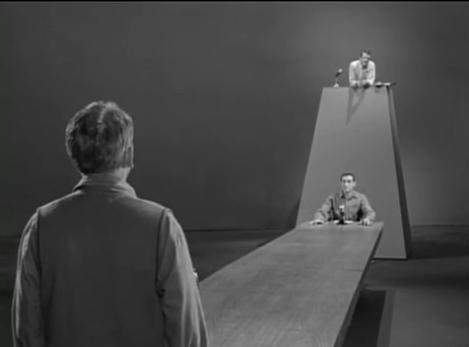
the-trial-of-the-obsolete-man

Four: "The Obsolete Man" (Season Two, Episode Twenty-Nine)

I feel it is better to let Rod Serling describe this one.

"You walk into this room at your own risk, because it leads to the future, not a future that will be but one that might be. This is not a new world, it is simply an extension of what began in the old one. It has patterned itself after every dictator who has ever planted the ripping imprint of a boot on the pages of history since the beginning of time. It has refinements, technological advances, and a more sophisticated approach to the destruction of human freedom. But like every one of the super-states that preceded it, it has one iron rule: logic is an enemy and truth is a menace. This is Mr. Romney Wordsworth, in his last forty-eight hours on Earth. He's a citizen of the State but will soon have to be eliminated, because he's built out of flesh and because he has a mind. Mr. Romney Wordsworth, who will draw his last breaths in The Twilight Zone."

This episode is, more or less, Rod Serlings' stance against dictators and totalitarianism. Where the single man becomes unnecessary, religion is nothing more than a farce and the public shares a collective brain.

Like the narration describes, this is a future that might have existed, and that is what makes this piece so strong. It doesn't point out one dictatorship in particular, instead talking about all of them. It is all capped off by a wonderfully uplifting performance by Burgess Meredith, a librarian who is no longer needed and must be killed, to show the need for the human soul.

tumblr_inline_mkqi1inWzO1qz4rgp

Three: "Will The Real Martian Please Stand Up?" (Season Two, Episode Twenty-Eight)

An alien spacecraft has just crashed in a massive snowstorm. The police find the wreckage, but no body. In a nearby café, they find a bus stopped and its passengers enjoying their meals. But when the police ask the bus driver how many passengers he had, they find that there is one more person in the café that was not on the bus. The question is, who isn't the human?

This one is a perfect mystery with an ingenious Twilight Zone set up. If the alien can copy a human appearance, how can you tell the difference? What questions do you ask an alien to tell that it is not from Earth? What if that alien has mental powers too and is influencing you whether you like it or not?

This one is just fun from start to finish. The diverse cast of characters, the mystery about who is the real alien, the comedy that comes from some of the crazier people in the café, the second guessing and the ultimate reveal and twist ending. Even after I've watched this one multiple times, I still get a kick out of it.

Eye-of-the-Beholder

Two: "Eye Of The Beholder" (Season Two, Episode Six)

In a dark hospital room, a young woman lies with bandages covering her face, eager to take the bandages off and see the world again. It seems that she has had an operation to make herself look more normal, but this is the third time she's had this operation and if this fails the doctors can't do anything else.

Most people remember this one for the twist ending, which I do adore. But I will always remember "Eye Of The Beholder" for its amazing cinematography, lighting and camera work. Everything is shrouded in darkness, mystery and secrecy. We don't see the faces of any character until the episode is more than halfway done. Yet, we do not need to see any one's faces, because the emotions are still on full display through body and camera movement.

This is easily the most suspenseful and atmospheric episode of "The Twilight Zone" as we know there is something sinister going on with this woman, but we're never quite sure what.

monsters1

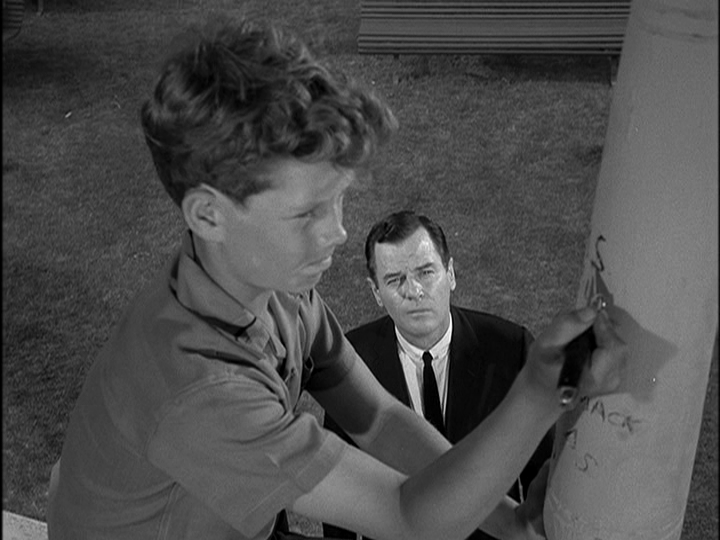
One: "The Monsters Are Due On Maple Street" (Season One, Episode Twenty-Two)

Maple Street, USA. Families are going about their daily routines, children are playing the streets, fun is being had. That is until all electronics stop working for some unexplained reason. The neighbors get together to try to figure out what's going on, and one of the children suggest that aliens might be the culprit. While initially laughed off, everyone else cannot come up with a better solution. This gets everyone riled up and thinking that the aliens might have sent out advanced parties to scout out the region, leading the once friendly neighbors to start pointing fingers at each other for suspicious behavior.

This one gets the number one spot because of how simple yet effective it is. The term "monster" is thrown around throughout the episode, but we're never entirely sure if it means the aliens, or our own fear and paranoia. We bring this upon ourselves by suspecting our friends and loved ones. This episode could take place at any time, and it would work just as well.

"The Monsters Are Due On Maple Street" is perfectly paced, relevant, and atmospheric. It encapsulates everything that I love about "The Twilight Zone," being both fantasy and reality while offering up a poignant statement on humanity. It never feels forced and is always exciting to watch.

untitled5

Here are a few honorable mentions:

"Time Enough At Last" (Season One, Episode Eight)
"Third From The Sun" (Season One, Episode Fourteen)
"People Are Alike All Over" (Season One, Episode Twenty-Five)
"A Nice Place To Visit" (Season One, Episode Twenty-Eight)
"The Night Of The Meek" (Season Two, Episode Eleven)
"The Little People" (Season Three, Episode Twenty-Eight)
"The Last Night Of A Jockey" (Season Five, Episode Five)