Tuesday, October 21, 2014

Film Pet Peeves: Update on Michael Bay and Roland Emmerich

Fargo movie Steve Buscemi

A while ago, I wrote an editorial on one of my biggest film pet peeves; the continued success of "filmmakers" Michael Bay and Roland Emmerich. In that editorial, I talked about why they continue to piss me off and how appealing to the lowest common denominator might work for box office success but makes for poor filmmaking success.

Looking back on it, I believe a more solid point is that Bay and Emmerich are good businessmen, but poor filmmakers. They know how to make a film look enticing to audiences. To make them want to go see their film, through clever marketing, bringing in big name stars and, of course, lots of mindless action that anyone can enjoy. To them, film is nothing more than an outlet to make money.

My problem with this is there is so much more to cinema than just a business. Filmmakers like Quentin Tarantino, the Coen Brothers, David Fincher and Christopher Nolan don't keep making movies to get some money (though that does certainly help), they do it because they're passionate about movies and love to make films that they can be proud of. Films that they can look back on and realize that it is an accomplishment that they can proud of. As opposed to Bay and Emmerich, who probably look back on "Transformers: Age Of Extinction" and "The Day After Tomorrow" as a big paycheck.

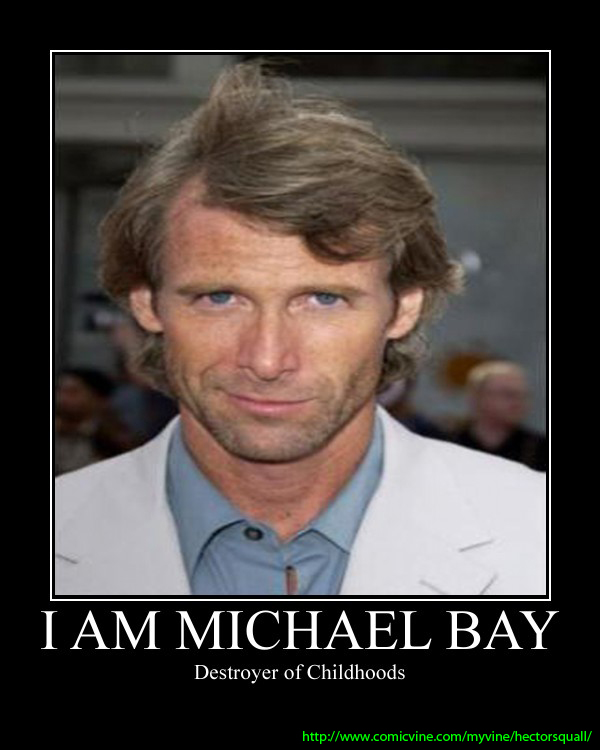
2249726-i_am_michael_bay_destroyer_of_childhoods_by_hectorsquall

Some responses to my earlier editorial have made the point that Bay and Emmerich's films are glorious eye candy that can be a pleasure to view. That people love to watch eye candy and their films personify that feeling.

I both agree and disagree with this assessment. I agree that people like to watch eye candy and that films by Emmerich and Bay encapsulate that feeling. But I disagree that this makes their films "good" or redeemable in anyway.

Film is, among other things, another form of storytelling so story, characters and substance should always take precedence over effects and style, unless the film is trying to be different like "Gravity" or "The Wind Rises." However I don’t think any film by Bay or Emmerich has tried to be different in that regard. Their films are high on adrenaline and extremely low on intelligence. There is certainly a time and place for that, but it always gets old fast and never has any staying power. The more you watch their films and you watch these racist characters and bland-colored characters fight, the more you realize just how irritating their movies can be.

A good film grows on you. The more you watch it, the more you end up loving it and appreciating. A good film is not just a waste of time or a way to keep you distracted, like many Bay and Emmerich films.

Their films may have made lots of money at the box office, but I do not care about that. It does not tell me anything about the movie, other than a lot of people went to go see it. These days, tons of people go see terrible movies, like "Transformers 2: Revenge Of The Fallen" and "Teenage Mutant Ninja Turtles" so box office success means even less.

bay_bluray

The whole point of my editorial was to say that I can’t say I like any Michael Bay or Roland Emmerich film. Instead of making the type of film they would want to see, they make the film that’ll make the most money. Their films come across like they have no passion for filmmaking and are just in it for the money. It is disrespectful to the art of filmmaking.
Finally, I understand this opinion is contrary to the majority opinion out there. Most people enjoy Bay and Emmerich's films, which is why they gross so much at the box office. As a result, my opinion may come off as biased.

To that I say, of course it is biased. There is nothing wrong with that though. It is impossible to do something like this and not be biased. Any time you give your opinion on anything, it will be biased. Your opinion is your bias. But that doesn’t stop me from believing it, even if it is contradictory to the majority. I don’t believe Bay and Emmerich are bad filmmakers just to be contradictory. I believe they’re bad filmmakers because that is how I legitimately feel. I have never enjoyed watching their films, even when I was younger and didn't understand film that well.

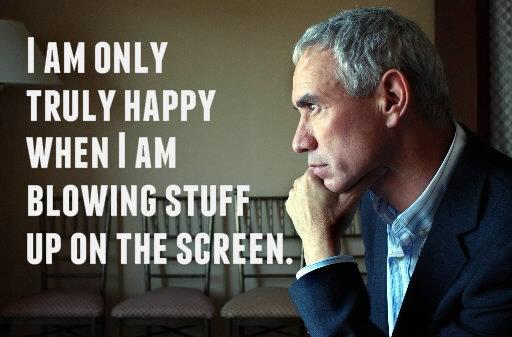
roland_emmerich_likes_to_blow_shit_up

I remember watching Emmerich's "Godzilla" and immediately hating it. As I left the theater, I contemplated what was wrong with it, but couldn't see anything other than the monster not being anything like Godzilla. But now I see that the characters are nothing more than stereotypes, the story is poorly paced and makes no sense, the sad attempts at humor are pitiful and the action sequences are ripped straight from other better films.

Let's face it; From a critical perspective, there are no good Michael Bay or Roland Emmerich movies. Every single one of them is tedious, repetitive, filled with far too much CG and not enough life in the actual human beings and are nothing more than dumb excuses to watch lame action sequences.

Roland Emmerich and Michael Bay are terrible filmmakers.

Monday, October 20, 2014

Why do we watch scary movies?

stephen-king-it

For as long as cinema has existed, filmmakers have done their best to scare the pants off audiences. From shocking moments of horror, to the gross instances of blood and guts, to even the disturbing points in otherwise whimsical Disney movies. These films have kept audiences screaming for years, running away from theaters in droves and yet they want more.

The horror film genre is one of the biggest branches of cinema out there, and it is not limited to just PG-13 and R-rated movies. Disney in particular has found a way to sneak in scenes of horrifying images in films like "Snow White And The Seven Dwarves" and "Pinocchio," yet they still get a G-rating.

So why is that something like horror films exist? You'd think that people don't like to be scared and that audiences would avoid that at all costs. Yet slasher and psychological horror films thrive. Why do we watch scary movies?

7

The first reason is how watching an intense scene can make you feel. Watching an alien burst out of John Hurt's chest gives people an adrenaline rush. People like to be excited, and these particular scenes make the audience thrilled when something unexpected happens. It keeps the imagination interested and envisioning more about what could be out there. It makes the viewer want more and feel that adrenaline once again.

But a bigger reason for why we enjoy horror films is that feeling of hope. In a well-executed film, where you are invested in the characters and root for them to get out of this perilous situation, despite the insurmountable odds they face, the movie is filling you with hope for both the characters and within yourself.

If Ripley can face a horde of aliens just to save a little girl, suddenly our struggles in life don't seem nearly as bad.

Aliens-1986-Poster

Don Blueth once said that you can put anything in front of a child and they'll enjoy it so long as it has a happy ending. This is reflected in many of his works, especially "The Secret of NIMH," "The Land Before Time" and "An American Tale." There are many horrific and disturbing imagery throughout these films, all while still being aimed towards children, yet they remain optimistic and positive about the future. It's all topped off by the happy ending, and the audience is extremely satisfied by both the ending and the film in general.

During all the terrible moments presented in horror films, we still continue to fight through it. We don't give up on it, or life, because we hope for better times. Hope that life will give us something to root for and look forward to.

Hope is a powerful tool. And what better type of film represents hope than triumph in horror films?

Finally, there is something to be appreciated with horror movies, especially for children. No matter what the scares might be, the film is challenging your perception of reality. Films like "Return To Oz" and "Freaks" are making you ask questions that you don't necessarily know the answer to. They are challenging you to reconsider what you know about your life, the unknown and the darkness. Some might even offer insight to a conundrum that you hadn't even considered.

Return-to-Oz-1

Children want to have questions put in front of them. It is why they ask their parents so many questions to begin with. But when they watch the tale of the Headless Horseman and Ichabod Crane, they're being challenged with questions they may not understand. This can bring forth emotions and feelings they have never felt before. It shows them that the world is filled with more questions than answers and there are some aspects of life they will never understand.

And that's okay.

It's alright to be afraid, that is a normal part of life. Everyone is afraid of something, but it is how we learn to overcome those fears that makes us stronger. With a bit of hope, people can learn to conquer their worst nightmares and become a better person as a result.

To me, that is the true strength of horror films. To teach people fear is something we must deal with on a regular basis, but that it can be dealt with. If we hope to live our lives optimistically and happy, then dealing with our biggest fears is the first step. Movies like "The Wolf Man" personify those ambitions and emotions, to show us both the light and darkness.

wolfman2

Are horror films for everyone? No. Depending on the tolerance of the person, some scary movies might be too intense. Horror films are like a rollercoaster; There are varying degrees of intensity, but there are some people who can't even handle to simplest ones.

To those who can handle scary movies, I say keep on watching them. It's perfectly fine to be scared by these films. Being scared is exciting and lets you know a bit more about yourself. Appreciate the challenge of horror films and you'll understand why audiences have watched these films for decades.

Still the scariest thing I can think of. Stop haunting my dreams, Will Smith-Fish!

Sunday, October 19, 2014

Ten Monster Movies To Watch

halloween-wallpaper13

Halloween. Ghouls, goblins, monsters and freaks.

Aside from Christmas, the last few weeks of October are my favorite time of the year. The smell of leaves is thick in the air and it is almost haunting at times. You look outside at the moon, hiding behind a thin layer of clouds, as if it has something to be scared of. Terror and scares are hiding in every little corner this time of year, waiting for the opportune moment to pounce on you like a crazed lion stalking its prey.

And I love it.

As much as we don't like to admit it, people like to be scared. It's why we go out in the dark of night on a cool October evening. Why we enjoy seeing the look of surprise on others' faces when you successfully scare them. And why we watch copious amounts of horror movies this time of year. There's just something so tempting about being terrified that we seem to seek it at times.

Speaking of those horror movies, in honor of the season, I should offer you some advice on what movies to watch over the next couple weeks. In particular, my favorite type of horror films, the monster genre.

There is something enticing, yet at the same time, disgusting, about monster movies. When we think of the term "monster," we think of a creature that doesn't belong in our world. An abomination that goes against everything we stand for and must be exterminated. But many monster movies leave the door ajar and paint a picture of the true monster being humans. In some cases, we created the monsters, and in others we are attacking and destroying someone else simply because they're different from us.

In any case, monster movies are exciting, thought-provoking, adventurous, suspenseful and are great to watch this time of year. So let's look at what I consider the ten greatest monster movies of all time. These are in no particular order, as I don't think I could bring myself to say what is the best monster movie ever. Instead, I'll try to have films of varying genres to give you a wide range to choose from.
MV5BNDcxODkyMjY4MF5BMl5BanBnXkFtZTgwOTk5NTc5MDE@__V1_SX640_SY720_

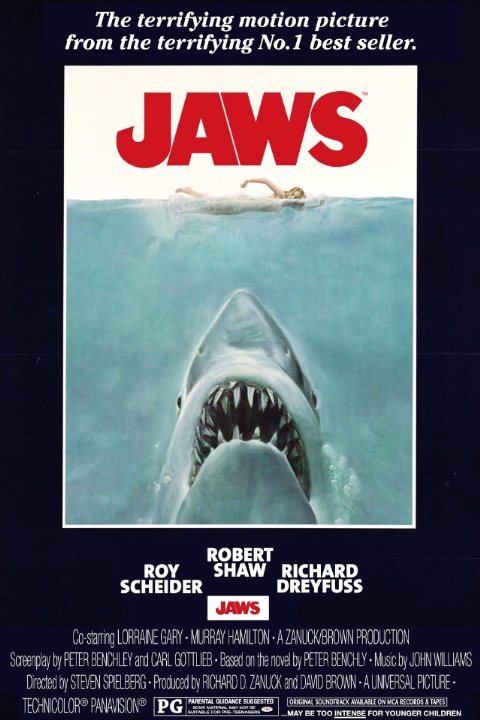
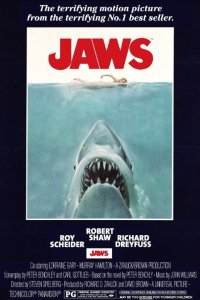
"Jaws" (1975)

I would describe "Jaws" as Steven Spielberg attempting to pull of Alfred Hitchcock, and succeeding.

This is a true work of suspense and tension. For years after this films release, people were terrified of swimming in open waters. Yet we hardly even see the dreaded shark for the majority of the film. For more than three-fourths of the film, the creature remains in the shadow, as we only see the aftermath of his attack, point of view shots of him about to strike and many statistics and notes about the unrelenting strength of the great white shark. All set to that eerie score by John Williams.

Like most good monster movies, it focuses more on the human element and how they're going to stop the monster, rather than overdoing it on the creature and making his presence less significant. We get plenty of scenes between Roy Scheider, Richard Dreyfuss and Robert Shaw, as they struggle among themselves aboard the Orca and stop the beast. One of the best scenes is Quint telling stories about how he got his scars in a humorous gesture, only for the tone to switch as he explains his hatred for sharks and we get a chilling story aboard the U.S.S. Indianapolis during WWII.

All the while, the shark is lurking in the background. Always the possibility of attacking, always unsure if our characters are safe.

MV5BMjE1OTIzMjUxNV5BMl5BanBnXkFtZTgwOTUwNzMxMDE@__V1_SX640_SY720_

"The Thing" (1982)

This is the ultimate tale of paranoia and suspicion, topped of with otherworldly practical effects and haunting score by Ennio Morricone, the composer of "The Good, The Bad and the Ugly."

For those who haven't seen this one, it is a remake of "The Thing From Another World" back in 1951. While the original focused more on being funny and trying to make a poignant statement on scientific research (though the scientist in that film was an idiot), the 1982 John Carpenter remake focuses more on surviving in the arctic while in the presence of a shape-shifting alien, who is slowly taking over the camp.

"If I was an imitation, a perfect imitation, how could you tell the difference," says one of the main characters. The answer is, you can't. You have no idea if you are the last remaining human in a group of imitations until it is too late. That is true horror.

What makes this film work even better is that none of the main characters are stupid. Every action that the characters take are rational, thought-out and logical. They don't go for the guns, because it would just spread out the cells of the alien and create even more of a problem. They burn everything the creature might have touched in case they might be infected. And no one trusts anybody else.

But the scary thing about "The Thing" is that the alien is just as smart as them.
king%20kong

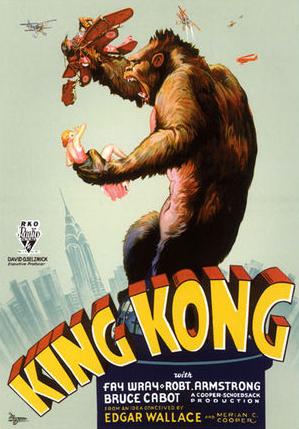
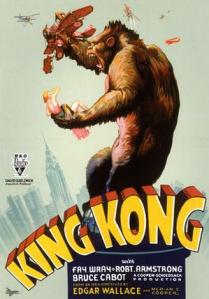
"King Kong" (1933)

If you forced me to say what I considered the greatest monster movie of all time, it would be a toss-up between "King Kong" and another film that I'll get to later.

I feel like I don't need to say much on the subject of the original "King Kong." It is a timeless tale about beauty, monstrosities both big and small, and the movie crew that filmed it. All leading up to one of the greatest climatic battles in cinematic history atop the Empire State Building.

What has stuck with me through the years with "King Kong" is just how impressive the special effects are. The way Kong moves and battles giant T-Rexs' is still stunning to watch today. And keep in mind, this was made nearly 80 years ago, and it is still amazing to watch Skull Island come to life.
One of the classics and one of the best monster movies ever made.
MV5BMTQyNTk4NzAyMF5BMl5BanBnXkFtZTcwMTM2ODE0MQ@@__V1_SX640_SY720_

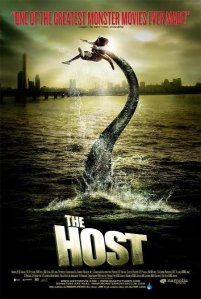
"The Host" (2006)

Monster movies love to promote their social commentary and make messages to the world about a variety of subjects that are hurting our world. Most of the time though, the messages are heavy-handed, overblown and forced down the audiences' throats. But in "The Host" we get an environmental message that is low-key and not forced upon us at all.

In this South Korean masterpiece, the dumping of many toxic chemicals in a nearby river has created a monstrous tadpole-like creature, which is now running amok and abducting people. One of the people taken away is a little girl, and the majority of the film is spent on her family trying to get her back, despite the government attempting to quarantine the area and keep the monster under wraps.

This one is more-or-less about how fear spreads easily, but that it is just one more hurdle that we all must face in our lives. Every character in the film has something to fear in their lives, even before they know about the monster, and don't like themselves as a result. But they're willing to let all that go to save a young innocent girl and make sure she doesn't grow up to be like them.
220px-A&cfrank

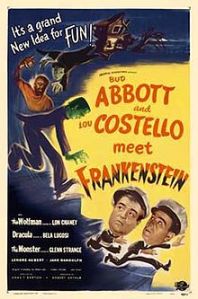
"Abbott & Costello Meet Frankenstein" (1948)

What? You didn't think these would be serious, dramatic films, did you? Nothing like a good old comedic monster movie. Especially when that film features Dracula, Frankenstein, the Wolf Man and a comedic duo at the top of their game.

This one offers just a bit of everything that you would expect it to have. Abbott and Costello's usual verbal back-and-forth, Dracula being sneaky and manipulative, the Wolf Man watching out for the full moon and back to Bud and Lou for some slap-stick with Frankenstein.

It is a blast to watch from start-to-finish. If it's not entertaining you with comedy, then the monsters and the atmosphere do that job just fine. This one is a combination of the best of both worlds.
Fly_poster

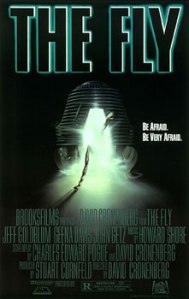
"The Fly" (1986)

This film scares the living crap out of me. It scared me when I was eight and saw this man slowly transform into something unhuman and monstrous, and it still scares me today. I cannot watch the final scenes without wincing in terror. Yet I cannot look away.

Another remake from a 1950s film of the same name, where a scientist creatures a matter transporter and ends up testing it on himself, only to find out later that a fly also got caught in there and his DNA has been mixed with the fly and is slowly turning into a half human-half fly creature.

What sets the 1986 remake apart from the original is David Cronenberg's creative touch. And by creative, I mean disturbing. We watch as Jeff Goldblum slowly loses his humanity, both mentally and physically. It's not so much that he begins to think like a fly, but that he gets so caught up in his own ego and the realization that all his work and progress will be lost forever. Like Goldblum says at one point, "I feel like I've been a fly, dreaming about being a human. And now the dream is over. And the fly has woken up."

"The Fly" is tragic, disturbing, gross and I love it. It's the tale of a man whose ambition and ego got in the way of scientific progress and has now lost his humanity.
untitled2

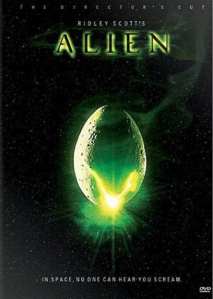
"Alien" (1979)

The perfect phrase to describe "Alien" is haunted house in space. It's why the tagline "In space, no one can hear you scream" is so applicable to this film.

This is one of the few films where I feel a tremendously slow pace is one of the biggest blessings it can have. "Alien" takes it time to show every section of this giant ship and how empty yet symmetrical it is. Long uncut shots of the ship, as we pan across, wondering just who is in charge and if the alien has already struck.

It is easy to see why Ash considers the alien the perfect life form and the ultimate killing machine. It's slick, sharp body, the acid blood, a second set of jaws and can hide just about anyway. Yet we will still never completely understand it, because it is alien. It is the unknown and the unexpected that terrifies us. This makes "Alien" a one-of-a-kind horror film.
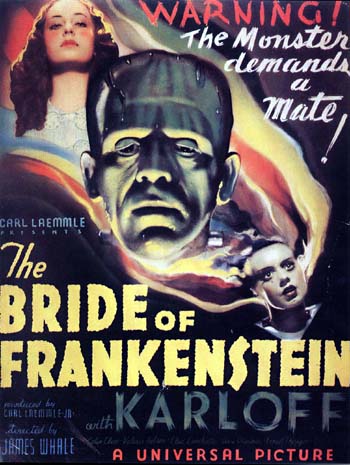
Bride_of_frankenstein

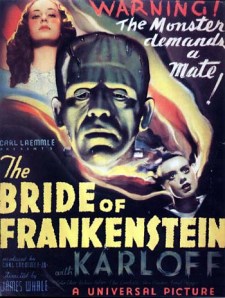
"Bride Of Frankenstein" (1935)

I mentioned that, aside from "King Kong," there was one other film I would consider for the title of greatest monster movie ever. "Bride Of Frankenstein" is that other movie.

Previously, I've discussed monsters from space, the ocean depths and creatures made by toxic chemicals and scientific mishaps. Now we get to discuss the true monster: humans. While there is a monster in "Bride Of Frankenstein" we see that he wants nothing more than to be treated equally and have a chance to live as much as anybody else. He doesn't want to hurt others, but we fear him because he is different.

Yet here is Doctors Frankenstein and Pretorius, the mad scientist that created the monster simply to see if he could and the one who wants to recreate it due to his own ego and arrogance. They resort to kidnapping, acting like gods and choosing who lives and dies and performing experiments that create people tiny enough to be put in glass jars.

So I ask you, in this case, who is the true monster?

By the end Doctor Frankenstein does learn the error of his ways and realizes just what he is doing by creating life by resurrecting the dead, but Pretorius is still set on creating a mate for the monster. That their "collaboration" is greater than any other act performed by man and that he will change the world.
freaks-poster

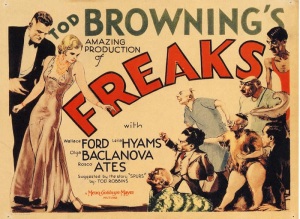
"Freaks" (1932)

Much like "The Fly," this one can be hard to watch, but I can't look away.

Though the concept of the Freak-Show is a bit of a cliché these days, it is only because film poorly captures it, opting to use actors and lots of make-up to make them look like freaks.

What if filmmakers actually used strange-looking people, like a real bearded woman or conjoined twins, or a man who has no arms and legs? Controversial? Certainly. But fascinating? Absolutely.

That is exactly what Tod Browning, director of the 1931 "Dracula" did. He sought out these people, treated them as equals and created a film that is unmatched in that category. Set in a Freak-Show with all the usual attractions, it follows one of the dwarves in the show falling in love with a normal girl who just wants to use him to gain publicity and intends to kill him when she is done with him.

Like "Bride Of Frankenstein" the true monster here is the average human. The so-called "freaks" merely want to be accepted and this show is the one place they can all do that. Most of them are content with living their lives like this, among friends. It isn't until they're treating unfairly by this woman and her boyfriend that they fight back. And boy, do they fight back.

This is the oldest film on this film, and as result, is the most terrifying. To think that this film was released in 1932 and was able to accomplish all that it did is amazing. While it was hated at the time of its release, it now gets the respect and admiration that it truly deserves.
Gojira_1954_Japanese_poster

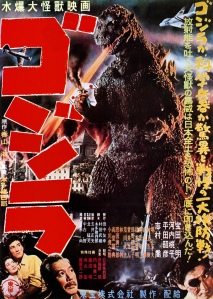
"Godzilla" (1954)

Don't act like you didn't see this coming.

Considering the legacy of Godzilla, being around for over sixty years, thirty films during that time and being labeled "The King Of The Monsters" it would be a crime to not put at least one Godzilla film on this list.

So I went with the one that is the most human in the series. The one that sticks with you long after you've watched it and realize just what this film means to Japan. Not only is about the horrors of the nuclear bomb, but it shares the desired hopes and dreams of the Japanese people following WWII; hope, prosperity and the will to survive.

Some people probably think I'm talking about "Godzilla, King Of The Monsters" with Raymond Burr. While that it still a good movie, that is merely the Americanization of the original Japanese film, simply titled "Godzilla." These are two very different films. The American one cut ten minutes from the Japanese version and added twenty minutes of their own footage, mostly to add in Burr's character to transcribe Godzilla's destruction of Tokyo, at the cost of cutting out many of the atomic bomb undertones and struggles of the Japanese people.

Most people have probably seen "Godzilla, King Of The Monsters" but I know that very few people who read this have seen the 1954 "Godzilla" as it was meant to be seen. That version is now available on DVD and Blu-Ray in the United States, and has now become a part of the Criterion Collection.

Of all the Godzilla films to watch, this is the one I would recommend to start with. It is not so much about a monster destroying Japan as much as it is about a rebuilding society trying to stop a monster from destroying them. It is not just a great monster movie, but a great film altogether.

Tuesday, October 14, 2014

The Rise Of The Hopper!

gone-girl-poster
"Gone Girl" (2014)

It has been a long time since I have watched a movie that has taken me on an emotional ride like "Gone Girl." This movie is able to balance so many despicable characters who do terrible things to the people they "love" only for them to be redeemed in the eyes of the audience and have a new person to hate.

Like with other mysteries such as "Prisoners," it can be difficult to keep up the level of intrigue and excitement in the audience, especially when trailers can give away some of the movies biggest plot twists and tell the audience essentially what will happen. But "Gone Girl" takes a different route than most others with its point of view storytelling.

Nick Dunne (Ben Affleck) is celebrating his fifth wedding anniversary with his wife, Amy (Rosamund Pike), by spending the morning at the bar he and his twin sister own. When he comes home, expecting their annual wedding scavenger hunt to begin, he finds their home is wrecked and Amy is missing. Nick immediately calls the police, who discover traces of blood all over the house and begin to fear that something terrible might have happened to Amy.

I dare not say anymore on the plot, because that would give away the many twists and turns "Gone Girl" has to offer.

What I can say is that I found myself root for and against every single character at least once over the course of the film. At times, Nick is sympathetic for having his wife taken from him like that, but other times we learn just how terrible of a husband he was and you want to slap him.

But at no point was I tired of watching these people and their struggles. If anything, showing both the good and bad sides makes these characters all the more interesting and relatable. It is only natural to hide secrets and hold back those bad thoughts and moments that we all have. And "Gone Girl" is all about those secrets.

I can honestly say that I was never bored with "Gone Girl." Every scene had a reason to exist and added to the tense and gripping atmosphere. The actors did a wonderful job at making these multi-faced characters worth watching, even Tyler Perry who plays the lawyer defending Nick and has a retainer worth $100,000.

David Fincher adds his usual charm to the film, making the unnerving atmosphere even more creepy and unsuspecting. It makes the film more unpredictable, which is great for a mystery.

I can't say much more about "Gone Girl" without spoiling it for you, so go out and see this one for yourself. You will not be disappointed.

Final Grade: A

hr_The_Judge_2

"The Judge" (2014)

I despise courtroom dramas.

Most of the time, they are simply two people talking back and forth over a crime that we most likely did not see, spouting legal jargon that I do not understand nor care about. Very rarely is there a courtroom drama that breaks free of this, but when it does it is films like "To Kill A Mockingbird" and "12 Angry Men" which break away from the tedious nature of the courtroom.

"The Judge" is a fine example of why the courtroom drama is boring and repetitive. Though the film has a stunning all-star cast, with Robert Duvall, Billy Bob Thorton, Melissa Leo and others, they cannot save a doomed script, riddled with clichés and unnecessary plot elements.

Hank Palmer (Robert Downey Jr.) is one of the best defense attorneys in Chicago and seems to keep his Tony Stark-like ego of being the best at everything. That all changes when his mother passes away and must attend her funeral in Carlinsville, Indiana, a place he had hoped he'd never return to, mostly because of his father, Judge Joseph Palmer (Robert Duvall). He tries to consul his family, while avoiding his father, and get out of there as fast as possible. But things change when the police find a dead body in the road and traces of his blood on the hood of Joseph's car.

Though that is a rough explanation of the plot, there is so much more going on, including a subplot about Melissa Leo's character, a former love interest of Hank, and the brothers of Hank who have their own problems to deal with. All the while, we're never told why Hank and Joseph hate each other so much, until the last ten minutes of the film.

Another problem with "The Judge" is its pacing. So many scenes drag on for longer than they need to be, all to give us clichéd dialogue and characters that have no reason to exist. The film takes its sweet time to get into the courtroom, as it would rather spend time in bars and looking at old film.

"The Judge" is two and a half hours long. In a story that could have easily been told in an hour and a half. The conflict between the leads is so forced and non-descriptive that it becomes infuriating to watch Duvall and Downey Jr. butt heads for all these unexplained reasons.

Overall, "The Judge" is cliché, poorly paced, unoriginal and far too long for its own good. While the cast does well with what they have to work with, they can't bring this film back. It's like trying to plug up the holes in an already sunken ship; it does not do you any good.

Final Grade: D-

Monday, October 13, 2014

Is "Seinfeld" really about nothing?

4117209_G

"Seinfeld" is often regarded as one of the most revolutionary and creative television comedies of all time. Many comedies these days, especially shows like "Modern Family" and "The Big Bang Theory," owe much of their success to the formula that began in Jerry Seinfeld and Larry David's brain child.

One of "Seinfeld"'s biggest claims to fame, and what set it apart from all other television shows at the time, was that it was a show about nothing. Where nothing is accomplished, nobody changes or learns anything and audiences would eat up how close it came to reality. Jerry, George, Elaine and Kramer were always the same people in every episode and, try as they might, they could never be anything more than what they were in the first episode.

But now that we've had some time to reflect and re watch many key episodes, can we still say that "Seinfeld" was a show about nothing?

Quote-seinfeld-30216478-1065-800

For that, we need to look at a summary of a basic "Seinfeld" episode. Most begin with a piece of Jerry's stand-up routine, which sometimes is a bit of hint as to the events of the episode, followed by one of our bumbling lead characters complaining about something they don't like, such as the owner of the newest soup restaurant. Then a subplot is introduced with another character, typically about an opportunity that has opened up, like Elaine getting romantically involved with JFK Jr. As the episode progresses, these two plots will cross in some way and ultimately lead to disaster for all of our main characters.

So the question becomes, is that "nothing"?

While it could be argued that nothing was accomplished, as our lead characters have not changed and these events will go unmentioned after the episode ends, something was at least accomplished.

"Nothing" implies that there is no substance. That the episode never wanted to say anything and went nowhere. I don't know about you, but from that plot description, it sounds like the show is about something. That may vary from episode to episode, but it certainly is not nothing.

Take, such as, the episode "The Bubble Boy," where Jerry, Elaine, George and his girlfriend, travel upstate to a log cabin and relax for the weekend. Along the way, they decide to visit a fan of Jerry, a boy confined to a plastic bubble, but due to George's need to make good time while traveling, Jerry and Elaine lose him while they travel in a different car and have to stop at a diner for instructions, getting caught up in a fan obsessed with getting Jerry's autograph. George, in the meantime, gets to the Bubble Boy, who is rude and unpleasant to everyone. Things heat up when they decide to play Trivial Pursuit and the two argue over the spelling on one of the answers, to the point where the Bubble Boy has to be rushed to the hospital and an angry mob forms to attack George for what he did.

Vlcsnap-2010-12-15-09h07m17s48_png_627x325_crop_upscale_q85

To me, that's not nothing. That is an instance of many little things adding up to the point where they become a big problem. On their own, these little things might be insignificant and meaningless, but when you put them in the hands of the right crazy people, they turn in monster problems. It can turn something like driving too fast to make great time into a weekend from hell and getting chased by an angry mob.

Because of this, I find that it is more accurate to say "Seinfeld" is not a show about nothing, but a show about the little things. How those little things are often taken for granted and when they stop being little things.

If you truly want a show about nothing, watch the first season of "Louie." In that series, random and unconnected events will happen however they please, with nothing really being accomplished by the end of the episode. There is no internal continuity, and Louis C.K. even said that if one episode messes up the continuity or message of another, that he doesn't care.

louie1__130809213006

Maybe back in the 1990s, we felt that "Seinfeld" was a show about nothing. But now that we have shows like "Louie" to compare it to, we can see that at least something happens in a regular episode of "Seinfeld." Kramer might burn down a cabin, or George becomes a hand model only to get his fingers badly burned by an iron.

It should also be pointed out that what happens in most episodes of "Seinfeld" has some relation to Jerry's stand-up routine at the beginning and end of each episode. So, another interpretation could be that "Seinfeld" is about how a stand-up comedian gets his material. That Jerry hangs out with people like George and Kramer because it gives him even more of a reason to go up on stage and make people laugh. All the hijinks and adventures he gets into makes for wonderful stand-up material.

In the end, there are many ways to interpret "Seinfeld" and what it is about. But to say the show is about nothing seems a bit out of date. That notion has given way to the show being about the little things, or how a stand-up comedian gets his material.

Friday, October 10, 2014

Mini-Reviews #1

Mini Movie Reviews
Man, I've watched a lot of movies recently.

To be more accurate, I've watched a few films over the last few months and have not written reviews on most of them. In particular, films on DVD, television and Netflix. I've continued to write reviews to all movies that I see in theaters, but anything else lately has taken a backseat.

So let's fix that with a new section of the blog, Mini-Reviews. I'd like to continue to talk about the movies that I watch, even if it is for a moment. These reviews will be about a paragraph in length and I'll do my best to condense my general feelings into that small space.

We'll begin by taking a look at...

H-Man (0)

"The H-Man" (1958)

Some people might write this film off as a "The Blob" rip-off, made by the same filmmakers as the Godzilla movies, but then you realize that "The H-Man" was actually released before "The Blob." Ishiro Honda, especially during his early days, had a tendency to combine other film genres with a monster subplot, like with "Rodan" and "The Mysterians." In the case of "The H-Man," it is a gangster movie with monsters that reduce other living creatures to piles of goo running around. As with most Ishiro Honda films, the effects are damn impressive, especially with how they're able to make the monsters move across walls and pipes. It's too bad the story and characters are so forgettable.

Final Grade: B-

doriangray1945-poster

"The Picture Of Dorian Gray" (1945)

This film is all over the place. Based off the novel by Oscar Wilde, the film follows a young Dorian Gray, who is extremely youthful for his age and wishes that he could stay that way forever, especially after meeting a wealthy socialite who includes in all sorts of seedy activities. After he gets his portrait taken, Dorian just might get his wish as the painting seems to be magical. This one is basically an updated version of Faust, a man who sells his soul to the devil in exchange for eternal youth, except that it finds a way to make the protagonist an even bigger jerk. Dorian takes the socialites words to heart and basically removes his morality along with his soul, leading him to all sorts of diabolical acts over a long time.

Final Grade: C

225px-Heatposter

"Heat" (1995)

Life sucks and it will only get worse as you try to help other miserable people. That is apparently the philosophy of "Heat" and its main characters, a famous LA police detective (played by Al Pacino) who has marital problems and a suicidal step-daughter, and a long-time criminal (played by Robert De Niro) who has problems connecting with everybody. Most of the film is spent watching these two work off of each other, as De Niro tries to commit one last grand heist and Pacino tries to stop him. The best scenes of the film are when they face-to-face with one another, especially their first meeting in a restaurant and they discuss their own problems and that they will stop at nothing to meet their goals. It is silent but menacing, showing off the incredible range of acting between Pacino and De Niro. Still, the problem is that the film is far too long for its own good and gets way too caught up with the uninteresting side characters that it gets lost along the way. Though it does lead to a unique final showdown on an airport runway.

Final Grade: B

judgement-lg

"Judgment At Nuremberg" (1961)

I walked away with a lot of new thoughts from this film, but the one that resonates with me still is that the Nazis, as evil and terrible as they could have been, were still people. They weren't monsters and they did what they had to for a reason. "Judgment At Nuremberg" is the trail of several former Nazis for their crimes during the regime, but this makes it clear that these men aren't the ones on trail, but all of Germany. We hear testimonies on both sides, and all of them are quite convincing, with the American side bringing up the lives of those effected by the Nazis have panned out, but the German side showing how what they did isn't so different from what the Americans have done. relocating thousands of people based solely on their nationality, medical experiments on the mentally challenged and dropping atomic bombs on innocent people. So in that regard, who is truly more evil? The Germans or the Americans? "Judgment At Nuremberg" is wonderful at taking something like judging Nazis and making it not as clear-cut as one would like to think.

Final Grade: A

MV5BMTY4MjYzMTg1NV5BMl5BanBnXkFtZTgwNzYwMDkxMTE@__V1_SY317_CR0,0,214,317_AL_

"Captains Courageous" (1937)

If this film came out today, it would be critically panned and forgotten within a week. But in 1937, this was something unheard of, and had such an amazing cast that it would be impossible to ignore. Directed by Victor Fleming, who also gave us "Gone With The Wind" and "The Wizard Of Oz," as well as starring Spencer Tracy, Lionel Barrymore and a young Mickey Rooney, this film follows Harvey Cheyne, a spoiled brat of a kid who has every handed to him by his rich father, falls off a cruise ship and is picked up a fisherman and told that they can't take Harvey back to land for three months, so they teach him how to fish and become a man. This type of story has been told time and again and will be told many more times. But the performances and personalities of the fisherman can be fun to watch, especially when competing against other fishing boats. I'd recommend watching this film with subtitles though, as almost all the main characters are difficult to understand with their thick varying accents and the constant sound of waves pounding against the boat.

Final Grade: C+

LittleCaesarP

"Little Caesar" (1931)

There's something about very old gangster films that I admire. Perhaps it is because they were made at a time in Hollywood where there were no restrictions or rules to filmmaking and they could show gruesome violence at its most beautiful. Maybe because the time of the gangster was still in effect while these films were being made, with Prohibition only recently ending as well as the Great Depression. Or it could be because the things we make fun of in gangster films these days are on full display here: Constant backstabbing, fast-talking high-pitched weasels who want to make it big, and as many "Ya' see?!" as you can imagine. If anything, gangster films like "Little Caesar" are a product of their times, but are certainly not for everyone. I respect "Little Caesar" more than I enjoyed it.

Final Grade: C

MV5BMTUzMTE0NTk4Ml5BMl5BanBnXkFtZTcwNjQ1OTMwOA@@__V1_SX640_SY720_

"Robot & Frank" (2012)

This film, more than most other science fiction films, gets right at the point of whether or not robots can have souls. That living creatures are a collection of thoughts and experiences that they're encountered over their lifetime, and that who we are comes from those experiences. So if a robot learns to not get bullied and can becoming an old man's friend, how is that robot any different from a person? Set in the not-too-distant future, where libraries are no longer needed and robots to help out those who need it are starting to come about, Frank Weld (Frank Langella), a former cat burglar with memory problems, is having a hard time adjusting to this new technological world, especially after his son gets him a robot companion. The robot (who is never named) wants to get Frank into gardening, but Frank has another hobby in mind: Getting back into cat burglary. This is everything a good sci-fi movie should be. It's relevant to the times, still has a sense of heart and wonder about the world, yet can be both funny, dramatic and touching. At times, it does not even feel like a science fiction film, but just a story about an old man who is out to try to have one last adventure in a world that has long since passed him.

Final Grade: A-

What I'll aim to do is continue to view movies on television, DVD and Netflix as I have been recently, and then every month or so I'll do another group of mini-reviews on the movies that I watched. If you like that idea, or completely disagree with it and would like to see full write-ups on these kinds of movies from now on, let me know in the comments below.

Wednesday, October 8, 2014

The Trouble With "Vertigo"

5373

WARNING: PLOT SPOILERS AHEAD!

In 1958, Alfred Hitchcock took one of the biggest risks of his long and illustrious career. By this point, he had already released a string of successful movies, both critically and financially, including "Rear Window," "To Catch A Thief" and "Strangers On A Train." But these films led up to one piece of work, which Hitchcock said would be his masterpiece; "Vertigo."

And "Vertigo" was met with a lukewarm response by critics and only did fair at the box office. At the time of the release, Hitchcock considered it a failure.

It wasn't until after Hitchcock's death in 1980 that viewers decided to give "Vertigo" a second chance.

This led critics to discovering there was much more to it than initially thought, in particular the cinematography, dark storytelling and reflections on how Hitchcock treated his leading ladies within the main character. Over the years, "Vertigo" has steadily risen in popularity, including being in the American Film Institute's Top Ten Films of All-Time in 2007. It would reach the height of its popularity in 2012 when Sight & Sound Magazine declared "Vertigo" the greatest film ever made, surpassing "Citizen Kane" for that title.

It seemed that Hitchcock's masterpiece had finally deserved its rightful place.

Vertigomovie_restoration

So why is it that something does not feel right about this?

For as much praise as "Vertigo" gets, some of it does seem a bit undeserved. But let me make this clear, I do not hate "Vertigo" or Alfred Hitchcock. Hitchcock is one of the greatest filmmakers and was the king of suspense. One thing people always forget is that Hitchcock knew how to work the camera to his advantage and make it just as much of a player in the scene as any of the actors. He revolutionized many filmmaking techniques that are taken for granted these days, including the dolly zoom used in "Vertigo."

As for "Vertigo" itself, there are many aspects to enjoy and immerse yourself in. Like many of Hitchcock's works, the pacing is tight and focused, always keeping you on edge. Even as the lead characters drive around the city, you're unsure of what the lead female psyche will make her do next. The score is atmospheric and haunting, much like the many themes of the movie. Also, the cinematography of San Francisco and its loopy terrain makes the film all the more tense and beautiful to look at.

I feel that "Vertigo" is at its best when we simply watch Scotty follow this woman around town, as she takes in the flowers or observes the paintings, and Scotty watches over her like a hawk. Few words are exchanged and not much is accomplished, but these scenes add a level of horror and creepiness to the film that would otherwise be absent.

Vertigo_1958_trailer_embrace

That being said, this movie has many problems that drag it down. In particular, "Vertigo" has an insanely convoluted story and an unlikable douchebag of a main character.

For those unfamiliar with "Vertigo" here is a basic plot description: John "Scottie" Ferguson (James Stewart) has retired from the police force after an altercation where a fellow cop died due to Scottie's acrophobia, fear of heights. But an old friend of Scottie decides to recruit him to do one last job; the man's wife, Madeleine (Kim Novak) appears to be possessed by a dead relative and intends to kill her. Scottie's job is to follow this woman around and make sure she stays alive.

As strange as this premise is, there appears nothing wrong with it on the surface. It is not until the film is halfway over that "Vertigo" gets crazy.

After Scottie attempts chases Madeleine to the top of a high church, but can't keep up due to his acrophobia, Scottie sees Madeleine's body fall from the top and land below, dead. Scottie, now completely out of it, wanders around aimlessly, as he had fallen in love with this woman. Things get so bad that he must be put in a sanatorium.

Once he is out, Scottie almost immediately finds another woman, Judy (also played by Kim Novak) who looks very much like Madeleine. Scottie follows her around, this time not being nearly as subtle about it, until Judy confronts him and takes pity on him, agreeing to go on a date with him. Yet, after a terrible date where Scottie can't stop obsessing over Madeleine, Judy keeps wanting to see him. She even agrees to start looking more like Madeleine, even dying her red hair blonde and getting dresses just like hers.

This all eventually leads up to the climatic reveal: The man who had hired Scottie to follow Madeleine had also hired Judy to look just like his wife and make Scottie follow her around instead of Madeleine, so that the man could murder his wife and get away with it. Scottie never actually saw the real Madeline, just Judy pretending to be Madeleine. The body that fell off of the church was the real Madeline, with her husband chucking her already dead body once Judy reached the top.

The reason Judy stayed around so long after the crime was complete was because she had fallen in love with Scottie and went through being made in Madeleine once again just to make him happy. Apparently, she would rather be a fake dead person who has Scottie than to be herself without this stalking obsessed womanizer who wouldn't kiss her unless her hair was just like Madeleine.

Picture-3

There is so much to discuss with the plot alone, but lets start with the basic question I've always had: Why did this one guy go to so many lengths just to murder his wife? I get that he wanted to make her death look like an accident, but did he really need to hire two different people to do very elaborate and distracting jobs? To do something like that, he clearly needed a lot of money, which he could have put to use in other places?

Of all the plans to murder someone else throughout the Hitchcock films, this guy's plan to murder his wife is by far the most elaborate, insane and easily collapsible plan of them all. What if Scottie had found out there were two Madeleine's? What if Judy decided to place her faith more in Scottie and tell the police what is going on? Why go with the whole possessed by a dead relative plan when it was just an act? Wouldn't it have just been easier to kill her with poison, take her body out to the middle of the ocean, tie a cement block to her legs and dump her over? Or hell, why did this guy want to murder his wife in the first place?

Yeah, that important question goes unaddressed. He just wants to murder his wife to see what it feels like. This wouldn't be nearly as bad if it weren't pulled during the last few minutes of the movie. We're led to believe that "Vertigo" is more about paranormal possession and getting over one's fears of the past, only to find out that this was all a convoluted murder scheme by a character that is on-screen for less than five minutes. This reveal makes me so scratch my head every single time I watch "Vertigo." Not only is it a moronic murder plan, but it reduces the roles of our main characters to pawns in this guy's scheme.

But then my favorite part of the plot happens: While Judy is telling Scottie about all that happened and Scottie scolds Judy about what she did, they have been climbing the same church tower that Madeleine died on. By the time they reach the top, Scottie has realized that he is over his fear of heights. All looks well for our couple, until they hear someone else climbing up the tower. Judy, scared that it might be the man who hired them, runs away but seems to forget that she is on a tiny ledge at the top of a large tower, and falls to her death. Out of the shadows comes a nun, who came to see who was climbing the tower. Scottie looks down at Judy's body, but at least his acrophobia was cured.

I'm not going to lie, this ending makes me laugh every single time. It is so sudden, so out of no where, and so disturbing that it is hilarious to me. It's made even more gut-bursting when you remember that this was supposed to be taken seriously. Yet here is our main female lead thinking that a man who hasn't followed her in months has suddenly come back, and runs over the edge of tower. That's something I'd expect out of a Looney Tunes cartoon, not an Alfred Hitchcock movie.

My overall point on "Vertigo"'s plot is that it is illogical and puzzling, even for an Alfred Hitchcock film. It works while Scottie is tracking Judy disguised as Madeleine, but once Scottie creeps on Judy after Madeleine's death, the film loses something. It becomes less about a man tried to redeem himself for his failure and more about stalking someone who looks like a dead person and making them look like that corpse. It's creepy and messed up, but that is what Hitchcock was going for, so I can't fault "Vertigo" for that.

I've talked about how Scottie does many unpleasant things in "Vertigo" but what really gets me is that Scottie is played by James Stewart, who is known for playing nice, lovable, average joe characters, like in "Mr. Smith Goes To Washington," "It's a Wonderful Life" and "Harvey." Yet here he is playing a guy who is so obsessed with a dead person that he makes another woman lose her identity and become this other person. He stalks, creeps and won't stop until he can get someone who never existed. That makes Scottie all the more disturbing.

vertigost

If the main character of your story is so unlikable and unsympathetic, then why should I care about anything he does?

Some people might argue that this was a change of pace for Stewart and that Hitchcock was going for a disturbing feeling. To those, I say this is disturbing for the wrong reasons. You can have a relatable and interesting main character and still have a creepy atmosphere. But by making your lead be played by a man known for how friendly he can be just makes me think that Scottie is going to go beat up Jefferson Smith and George Bailey after the film is over.

Certain actors carry stigmas with them: Robert De Niro is associated with gangsters. Humphrey Bogart is associated with detectives and military officers. Rob Schnider is associated with terrible Adam Sandler flicks. James Stewart is another one of those actors.

When you think of James Stewart, scenes of "It's A Wonderful Life" come to mind, where he gives up his happiness and chance at the life that he wanted to save the lives around him, or "Mr. Smith Goes To Washington," where he stands in front of Congress and the entirety of the United States to defend the lives of innocent people, no matter what the odds are against him.

Sometimes actors can go against their stigmas and give wonderful performances. And while Stewart does give a one-of-a-kind performance, seeing him demand Kim Novak to die her hair and wear Madeleine's clothes does not seem right. It could have worked, but because I see those eyes of his stare at me with unflinching obsession, I know that this is wrong.

0233

So the question is whether or not "Vertigo" deserves the title of "Greatest Film Ever Made"? I don't think it even deserves the title of Hitchcock's best film. I can think of at least five other movies made by Alfred Hitchcock that I thoroughly enjoyed and would not mind watching again, which include "Shadow Of A Doubt," "Strangers On A Train," "Rear Window," "North By Northwest" and "Rebecca" and "Psycho." Hitchcock's work has stood the test of time in many regards and many still continue to be as suspenseful today as they were upon their release.

But I would not call "Vertigo" a bad movie. For as much as I've bashed the film here, there is something to be respected. In a way, the movie is just as much about Hitchcock as it is Scottie. How he treated his leading ladies and used them as pawns in his own game of filmmaking. To him, they were nothing more than tools to be used to meet his goals, much like Judy was to Scottie. Hitchcock is putting himself on the screen for everyone to see, completely exposed and naked, in all his awkward, disturbing self. For that reason, I respect both Alfred Hitchcock and "Vertigo" for being so honest with us, but at the same time fun to watch.

Vertigo9

Is "Vertigo" the best movie ever? No. But is it a film that deserves to be watched? Most certainly, yes.